TRENDING

Sunday, 25 October 2026
----------------------
14 Jumada Al-Awwal 1448 AH
Cambodia and Thailand's fragile peace agreement is threatened by ongoing land border disputes, while a maritime arbitration process may mask deeper strategic motivations.
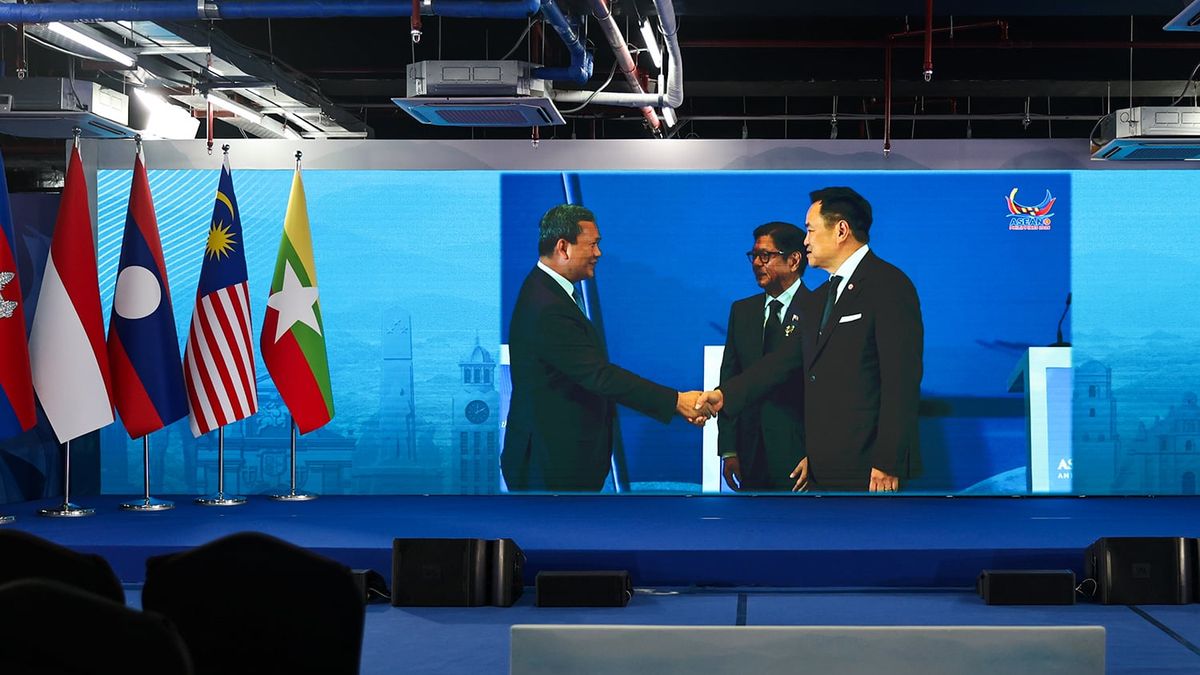
The fragile peace agreement between Cambodia and Thailand is under threat due to ongoing land border disputes. Despite a technical agreement to resolve their maritime boundary dispute through arbitration, the two countries' relationship remains unsettled.
Six months after fighting ended between Cambodia and Thailand, their relationship remains dangerously unsettled. The cease-fire remains in place, but small skirmishes have taken place along the border. A third round of fighting looks unlikely—but certainly not impossible.
The maritime boundary dispute between Cambodia and Thailand is a significant issue, with an estimated $300 billion worth of energy resources at stake. The trigger to Cambodia launching the arbitration process was Thailand tearing up a 2001 agreement declaring an intention to agree on a framework to jointly develop any valuable resources in the area.
Thailand's participation in the arbitration process may be motivated by a desire to assert influence over the process, particularly in relation to resource sharing. Thailand has also stated that it rejects the discussion of resource sharing alongside the maritime border at the conciliation. However, shared resources is a vital issue.
The Cambodia-Thailand border dispute has significant regional implications. The Association of Southeast Asian Nations (ASEAN) has attempted to keep Thailand and Cambodia moving toward a peace deal, but these efforts seem to have flopped. Without change, the border dispute will remain a frozen conflict, not a solved one.
The future consequences of the Cambodia-Thailand border dispute are uncertain. However, it is clear that the dispute will continue to pose a threat to regional stability and security. The arbitration process may provide a temporary solution, but it is unlikely to address the deeper strategic motivations driving the dispute.
Former Thai Prime Minister Thaksin Shinawatra received a royal pardon for corruption and conflict of interest on June 3. This move may be seen as a tacit admission of defeat by the billionaire who dominated Thai politics for decades.
Malaysia is facing two early state elections that could pile further pressure on the central government. The polls are a slugging match between nominal federal allies Pakatan Harapan (PH) and United Malay National Organization (UMNO).
An earthquake measuring magnitude 7.8 struck the southern Philippines island of Mindanao on June 8, killing at least 35 people and injuring over 200. The response to the disaster will be closely watched, particularly in light of the government's handling of catastrophic floods last year and a corruption scandal.
Singapore has launched a campaign against vapes, with punishments ranging from fines to imprisonment. The move is part of a broader effort to tackle the issue of vaping in the country.
The Cambodia-Thailand border dispute and the maritime arbitration process are significant issues in Southeast Asia. While the arbitration process may provide a temporary solution, it is unlikely to address the deeper strategic motivations driving the dispute. The future consequences of the dispute are uncertain, but it is clear that it will continue to pose a threat to regional stability and security.
* Cambodia-Thailand border dispute
* Maritime arbitration
* Southeast Asia
* Regional stability
* Security
* World
* Politics
* International Relations
* 8
* true
* false
* "Cambodia-Thailand border tensions mask deeper strategic motivations"
* The analysis is based on publicly available information and may not reflect the full complexity of the issue. Further research and analysis may be necessary to fully understand the motivations and implications of the Cambodia-Thailand border dispute.
Source referenced: FOREIGNPOLICY
This brief was synthesized by our Editorial Engine and reviewed by The Ground Narrative team.