TRENDING

Tuesday, 27 October 2026
----------------------
16 Jumada Al-Awwal 1448 AH
Days of anti-immigration violence in Belfast have shown how three decades of unrest in Northern Ireland still shape the contours of daily life, residents and academics said.
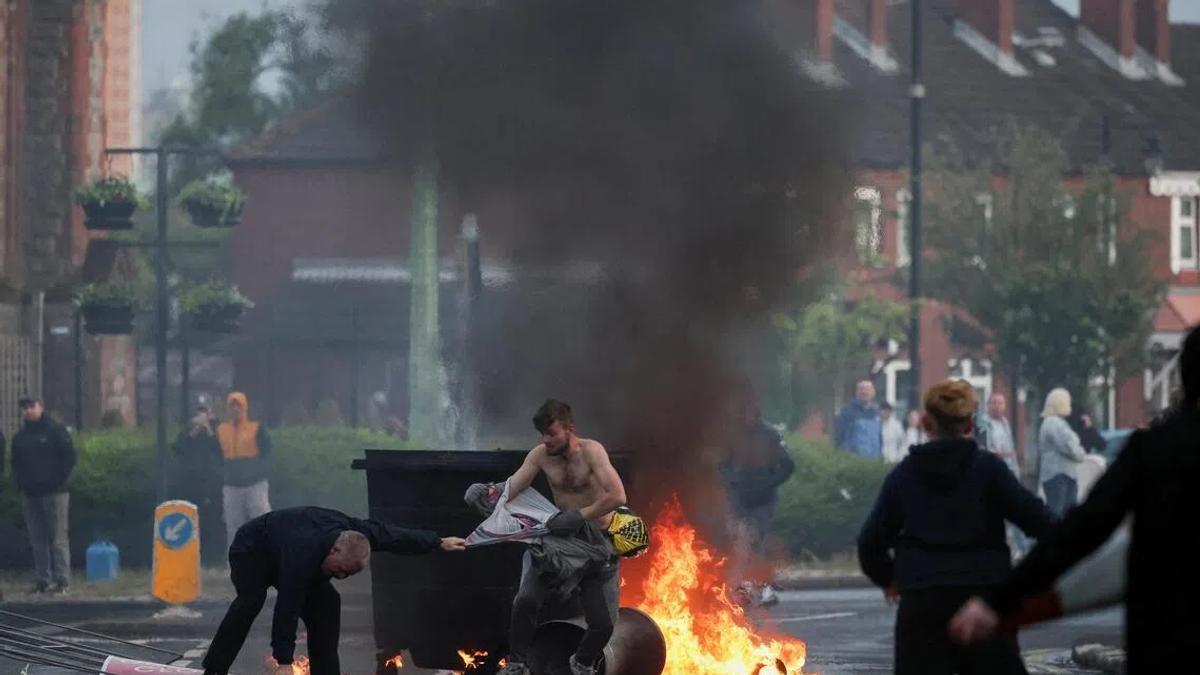
The recent anti-immigration violence in Belfast has exposed the lingering scars of decades of sectarian unrest in Northern Ireland. The riots, which broke out in primarily working-class neighborhoods, have highlighted the deep-seated divisions that still exist in the region.
The Troubles, a period of sectarian violence that lasted for three decades, ended with the Good Friday peace agreement in 1998. However, the legacy of this conflict still shapes the contours of daily life in Northern Ireland. The region remains divided, with high levels of community division and segregation, particularly in the most deprived areas.
The recent violence has been attributed to a combination of factors, including poor access to housing, healthcare, and education. Many residents feel disenfranchised and lack hope for the future, which has led to a perception that immigrants are taking their houses. This perception has created a new layer of division in an already segregated society.
The Belfast riots have significant regional implications. Northern Ireland is the British province with the smallest proportion of people from a minority ethnic background. However, in Belfast, the Catholic population has surpassed the Protestants since the Troubles ended. This shift has led to a sense of identity and cultural shrinkage among unionists, who see their culture and way of life being threatened by immigration.
The recent violence has marked a shift in some unionist and Protestant areas, away from the outgroup being Catholics towards people with a different color skin. This shift has been proudly claimed by some protesters, who have used AI-generated images of the Irish tricolour flag and British Union Jack knotted together to symbolize their unity against immigration.
However, this sentiment is a fringe opinion, and far-right voices on social media have embraced the idea that white people in Ireland are rising up against immigration. This rhetoric is not only divisive but also dangerous, as it can lead to further violence and instability in the region.
The Belfast riots have exposed the lingering scars of sectarian unrest in Northern Ireland. The region remains divided, and the legacy of the Troubles still shapes the contours of daily life. The recent violence has highlighted the need for greater understanding and dialogue between different communities. It is essential to address the root causes of the violence, including poor access to housing, healthcare, and education, and to promote a sense of unity and inclusivity in the region.
Source referenced: STRAITSTIMES
This brief was synthesized by our Editorial Engine and reviewed by The Ground Narrative team.