TRENDING

Tuesday, 27 October 2026
----------------------
16 Jumada Al-Awwal 1448 AH
Anti-immigrant riots in Belfast, Northern Ireland, have highlighted the region's long history of sectarian conflict and division, with experts warning that the violence may be a symptom of deeper social and economic issues.
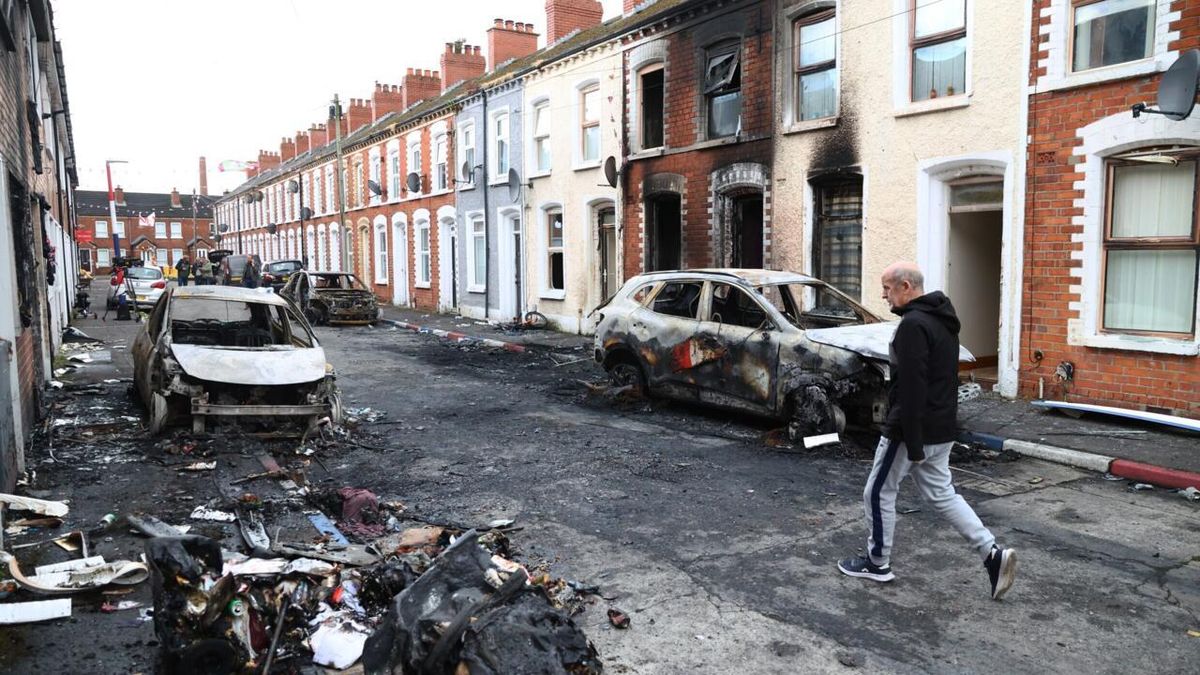
Belfast, Northern Ireland, has been plagued by sectarian violence for decades, with the Troubles, a period of conflict between largely Catholic, pro-Irish republicans and Protestant, pro-UK unionists, lasting from the late 1960s to the late 1990s. The Good Friday peace agreement of 1998 brought an end to the violence, but the legacy of the Troubles continues to shape the city's daily life.
The recent anti-immigrant riots in Belfast have exposed a deep-seated anti-immigrant sentiment in some unionist and Protestant areas. This sentiment has been fueled by the presence of minority ethnic groups, who are often blamed for poor access to housing, healthcare, and education. Experts warn that this sentiment is not only a symptom of deeper social and economic issues but also a reflection of the far right's growing influence in Europe.
Loyalist paramilitaries, which still exert influence in predominantly Protestant areas, have been accused of standing back and refusing to get involved in stopping the violence. This has led some to suggest that the paramilitaries may be deliberately fueling the unrest.
Some protesters have claimed that the riots are a call for a united Ireland, with the Irish tricolour flag and British Union Jack knotted together circulating on social media. However, experts warn that this idea is a fringe opinion and that the far right's influence is a major factor in the violence.
The riots in Belfast have significant regional implications, with the city's sectarian divisions and anti-immigrant sentiment threatening to destabilize the entire region. The UK government has been criticized for its handling of the situation, with some accusing it of failing to address the root causes of the violence.
The future consequences of the riots in Belfast are uncertain, but experts warn that the violence may be a symptom of deeper social and economic issues. The UK government must take a proactive approach to addressing these issues and working towards a more inclusive and equitable society.
Editor's Note: The analysis of the riots in Belfast is based on expert opinions and government figures. However, the future consequences of the violence are uncertain, and the UK government must take a proactive approach to addressing the root causes of the unrest.
Source referenced: FRANCE24
This brief was synthesized by our Editorial Engine and reviewed by The Ground Narrative team.