TRENDING

Tuesday, 20 October 2026
----------------------
9 Jumada Al-Awwal 1448 AH
The recent Aspen Security Forum has been criticized for its outdated perspectives, reflecting a U.S. foreign policy establishment seemingly disconnected from evolving global realities and domestic public opinion. Analysts suggest the conference highlighted a persistent liberal interventionist groupthink, failing to adapt to a multipolar world or acknowledge public fatigue with costly engagements.
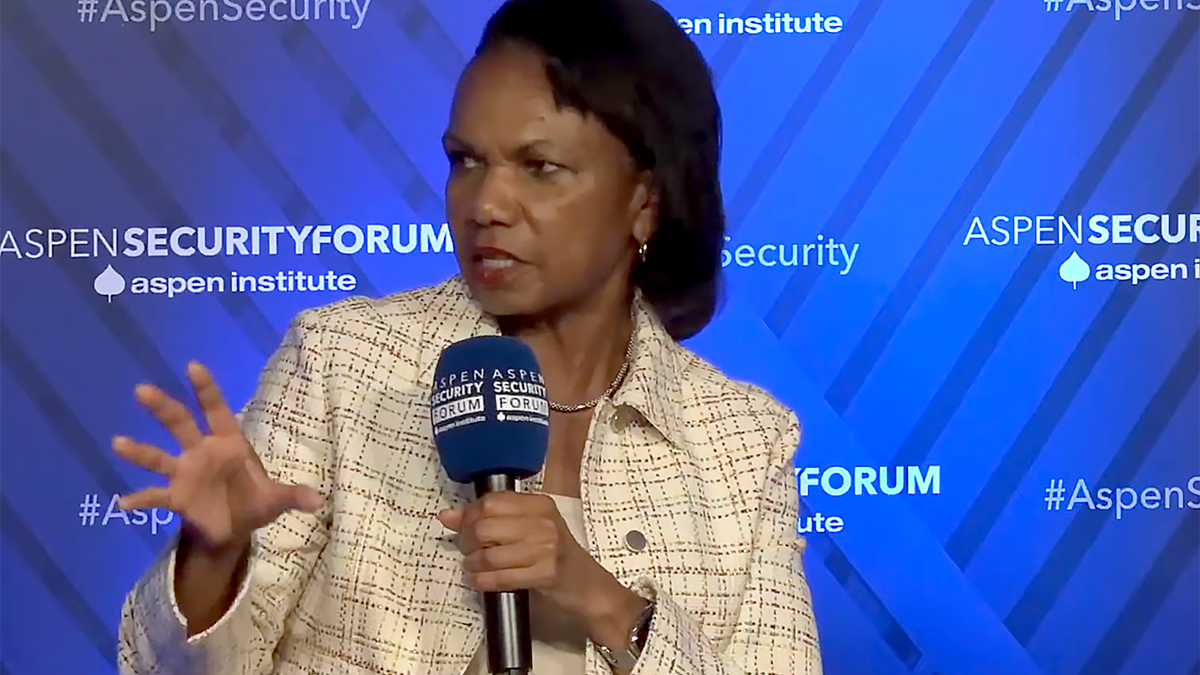
The recent Aspen Security Forum, a prominent gathering for the U.S. foreign policy establishment, has drawn significant scrutiny for its perceived inability to adapt to contemporary geopolitical shifts. Held in Aspen, Colorado, the conference, which concluded last week, was characterized by many as a 'time warp,' with discussions echoing debates from the 1990s and early 2000s rather than addressing the complexities of the current international landscape.
Critics argue that the forum, a traditional bastion for policymakers, politicians, and defense contractors, largely reinforced existing groupthink, often described as 'the Blob.' This insular environment reportedly fostered a consensus rooted in liberal interventionism, even as broader policy discussions in Washington and elsewhere begin to acknowledge a more multipolar world and a growing domestic preference for a more restrained, 'America First' foreign policy.
A central point of contention was the apparent disconnect between the forum's discourse and prevailing public sentiment. Speakers, including former U.S. National Security Advisor Condoleezza Rice, were noted for relitigating past decisions, such as the Iraq War, and endorsing controversial actions like former President Donald Trump's decision to bomb Iran. Rice's remarks, questioning the need to wait for an 'imminent' threat, underscored a proactive interventionist stance that many Americans, according to polls, no longer support.
The discussions frequently downplayed the significance of public opinion, with some speakers suggesting that public opposition to foreign policy initiatives, such as the ongoing U.S. war against Iran, stemmed from a lack of understanding or even foreign influence campaigns. This perspective, which posits that public views can be 'reshaped through clever communication' rather than genuinely considered, highlights a potential democratic deficit within elite foreign policy circles. A recent poll indicating only 30 percent American support for the war against Iran starkly contrasts with the forum's prevailing sentiment of 'doubling down and finishing the job,' even at the cost of higher energy prices.
While the forum featured a mix of Republican and Democratic participants, a striking observation was the bipartisan nature of the interventionist consensus. Even Democratic figures, while criticizing the Trump administration on procedural grounds or for its perceived lack of strategy, often expressed support for military actions. For instance, former Undersecretary of Defense for Policy Michèle Flournoy reportedly supported a previous 12-day war while critiquing the lack of a clear strategy for a more recent conflict.
Few dissenting voices, such as U.S. Senator Chris Murphy, who advocated for diplomacy with Iran and defended the Iranian nuclear deal, found themselves largely outnumbered and their positions dismissed as 'retreat.' This dynamic suggests that despite partisan differences on domestic issues, a significant segment of the foreign policy establishment across the political spectrum remains committed to an assertive, often military-first, approach to global affairs.
The persistence of this 'time warp' at a premier U.S. foreign policy conference carries significant geopolitical implications. If the U.S. foreign policy elite continues to operate within an 'epistemic bubble' that prioritizes a unipolar mindset and liberal interventionism, it risks misjudging the complexities of a rapidly evolving international system. The world is increasingly multipolar, with rising powers like China and Russia asserting greater influence, and non-state actors playing critical roles.
Discussions at Aspen, which reportedly included calls for intervention in Cuba or Venezuela and framed European defense in terms of combating 'woke' politics rather than core liberal values like immigration, suggest a failure to engage with contemporary challenges and ideological shifts. This insularity could lead to policies that are out of sync with global realities, alienate allies, and fail to garner domestic support, potentially undermining U.S. credibility and effectiveness on the world stage. The lack of urgency in discussing the war with Iran, with suggestions to let Iranians 'stew in their lousy economy,' indicates a long-term, coercive strategy that may prolong conflict and instability in a critical region without clear diplomatic off-ramps. The forum's inability to meaningfully integrate public opinion and adapt to a changing global power dynamic poses a significant challenge for the future direction of U.S. foreign policy and its role in fostering global stability.
Source referenced: FOREIGNPOLICY
This brief was synthesized by our Editorial Engine and reviewed by The Ground Narrative team.