TRENDING

Friday, 16 October 2026
----------------------
5 Jumada Al-Awwal 1448 AH
Armenia's upcoming parliamentary elections are poised to determine the nation's future geopolitical alignment, with voters choosing between closer ties with the European Union or a return to Russia's traditional sphere of influence. The outcome carries significant implications for regional stability, economic partnerships, and Armenia's long-term security posture in the South Caucasus.
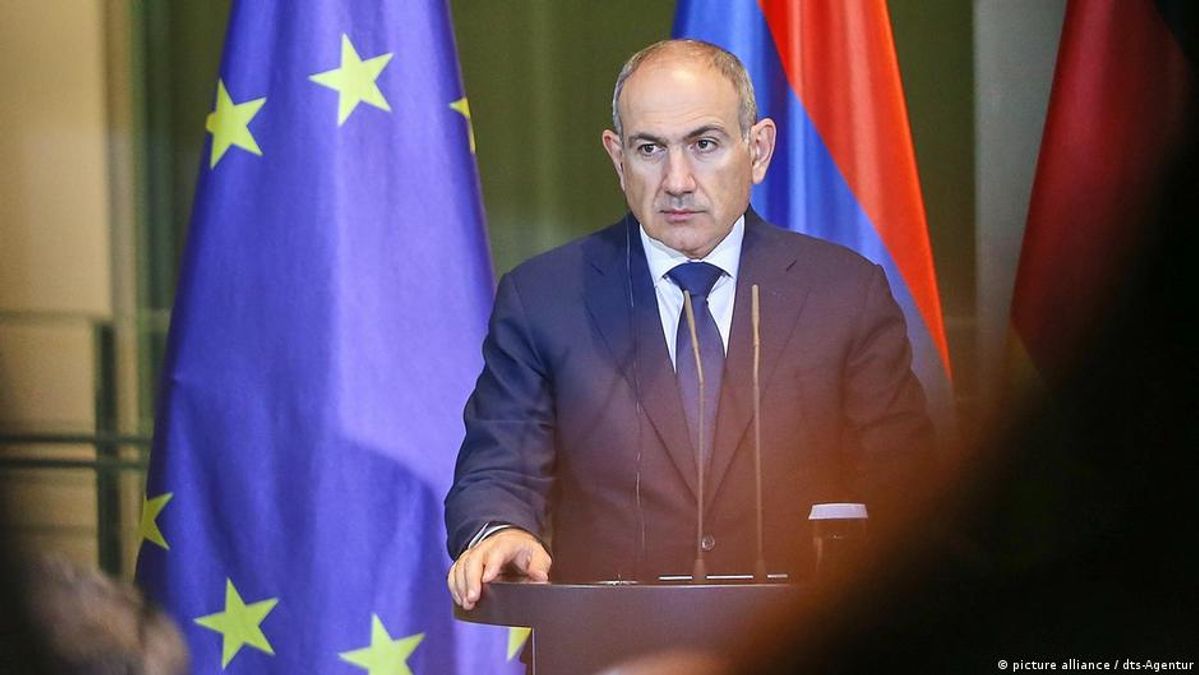
Armenia is on the cusp of a pivotal parliamentary election that will not only shape its domestic political landscape but critically define its future geopolitical orientation. The South Caucasian nation faces a stark choice: accelerate its integration with the European Union or revert to a closer alignment with Russia. This election is a significant moment for Armenia, reflecting deep-seated debates over national security, economic prosperity, and sovereignty in a volatile region.
The incumbent, pro-European Prime Minister Nikol Pashinyan's "Civil Contract" party, currently leads in pre-election surveys, with approximately 32% of respondents indicating support. Pashinyan's administration has actively pursued a foreign policy pivot towards the West, marked by efforts to distance Armenia from Russia and its Collective Security Treaty Organization (CSTO) military alliance. This shift is underscored by the Armenian parliament's recent adoption of a law to initiate the process of joining the EU and Pashinyan's commitment to securing a visa-free regime with Europe within two years. His hosting of the European Political Community Summit in Yerevan and a public declaration that Armenia is "no ally of Russia's" regarding the war in Ukraine further illustrate this strategic reorientation.
Moscow has reacted sharply to Yerevan's westward leanings, employing both economic leverage and political pressure. Russian President Vladimir Putin has threatened tariffs on Armenian goods and the imposition of new legal obstacles for Armenian citizens working in Russia. Furthermore, Russia, alongside other members of the Eurasian Economic Union (EAEU), has suggested a referendum on Armenia's EU or EAEU membership. Economic measures have already been implemented, with Russia's Federal Service for Veterinary and Phytosanitary Supervision imposing restrictions on various Armenian agricultural imports, citing alleged sanitary violations. Notifications have also been sent regarding the potential suspension of preferential gas and petroleum product supplies to Armenia, highlighting Russia's willingness to use trade and energy as geopolitical tools.
Beyond economic pressure, allegations of Russian interference in the Armenian elections have surfaced. An investigation by the Russian independent media outlet *The Insider* claimed that Samvel Karapetyan, a Russian billionaire and leader of the pro-Russian "Strong Armenia" bloc, had ties to Russia's Federal Security Service (FSS). Armenian security forces have also initiated criminal cases against pro-Russian opposition figures on espionage charges, which the opposition dismisses as "political prosecution." These developments underscore the intense struggle for influence in Armenia, with Moscow actively working to retain its traditional sphere of influence.
The pro-Russian opposition comprises several key forces, including Karapetyan's "Strong Armenia," the "Armenia Alliance" led by former President Robert Kocharyan (reportedly a close associate of Vladimir Putin), and the "Prosperous Armenia" party, which is officially partnered with Russia's ruling 'United Russia' party. These parties advocate for the restoration of a strategic alliance with Russia, viewing it as the primary security guarantor for Armenia, particularly in the ongoing peace process with Azerbaijan.
The contentious issue of Nagorno-Karabakh remains central to Armenia's domestic political discourse and its foreign policy choices. Following the 2023 war, Azerbaijan regained control of the breakaway region, leading to a mass exodus of ethnic Armenians. Prime Minister Pashinyan has centered his campaign on the idea of a "real Armenia," implicitly accepting the post-war territorial realities and denying calls to restore "historical borders" that include Nagorno-Karabakh. The opposition, however, criticizes this stance, insisting that Yerevan should advocate for the right of ethnic Armenians to return to their homes in Nagorno-Karabakh, a position that authorities warn could risk renewed conflict with Azerbaijan. Border security is a significant concern for Armenian voters, with 17% identifying it as their country's main challenge.
In parallel with its EU aspirations, Pashinyan's government has been deepening its dialogue with Washington. Recently, Armenia and the United States signed a charter on a comprehensive strategic partnership and a memorandum on rare earths. Furthermore, Armenia and Azerbaijan recently paved the way for an ambitious logistics project, informally dubbed "Trump's Route," aimed at connecting Azerbaijan with its exclave of Nakhichevan through Southern Armenia. This agreement represents a significant step towards alleviating the long-standing blockade imposed on landlocked Armenia by neighboring Azerbaijan and Turkey, potentially transforming regional trade and connectivity.
Armenia's foreign policy diversification is a direct response to perceived vulnerabilities and a strategic re-evaluation of its alliances. The crisis in relations with Russia escalated in late 2022 when the CSTO and Russia failed to provide military assistance during border clashes with Azerbaijan, leading Yerevan to question the reliability of its traditional security patron. The upcoming elections will therefore not only decide Armenia's domestic leadership but also its geopolitical trajectory, with profound implications for the balance of power in the South Caucasus and the broader East-West competition for influence in Eurasia. Despite polling data suggesting a lead for Pashinyan's party, the low response rate in surveys and a significant number of undecided voters indicate that the outcome remains uncertain, making this election a critical moment for Armenia's future. The choice between Brussels and Moscow will shape Armenia's security, economic prospects, and its place on the global stage for years to come.
Editor's Note: The original article contained some inconsistent dates (e.g., May 2025, August 2025 for events that appear to be recent or past). These have been rephrased to 'recently' or 'in a recent development' to maintain accuracy without fabricating specific dates.
Source referenced: DW
This brief was synthesized by our Editorial Engine and reviewed by The Ground Narrative team.