TRENDING

Wednesday, 11 November 2026
----------------------
1 Jumada Al-Thani 1448 AH
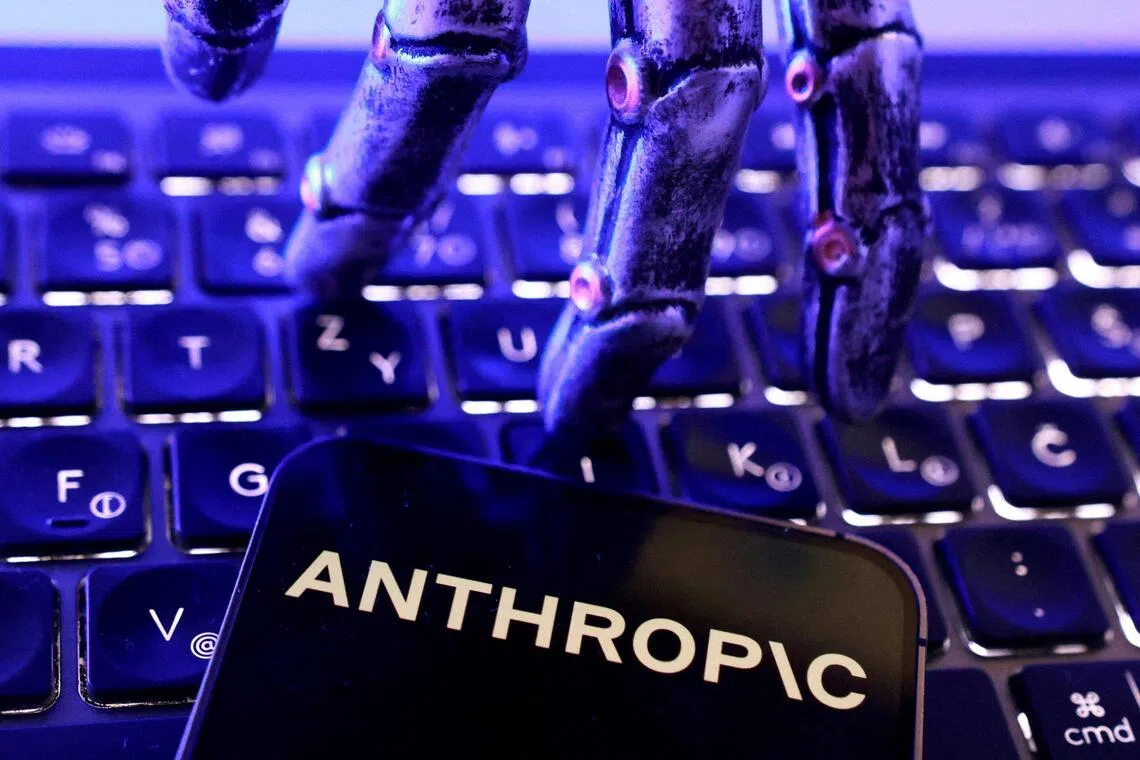
Anthropic is rolling out faster, cheaper AI models just as it readies a trillion‑dollar IPO. The move spotlights a clash of corporate ambition, national security, and everyday labor.

Anthropic announced the release of two upgraded language models, Fable 5.2 and Mythos 5.2, claiming 30% faster performance and 20% lower operating costs. The launch comes days before the company’s planned initial public offering, which could value the San Francisco‑based lab at over $1 trillion. Earlier this year, the U.S. Commerce Department briefly forced Anthropic to block foreign‑national access to its earlier versions, a reminder that the technology sits at the intersection of commerce and security.
- United States sees AI as a cornerstone of future economic dominance, funneling billions into research and incentivising private firms to scale quickly. Anthropic’s IPO is a litmus test for how much capital markets will continue to pour into the sector despite a broader tech slowdown.
- China is simultaneously racing to close the gap, subsidising domestic AI startups and leveraging state‑owned cloud providers to undercut U.S. pricing. The competitive pressure forces firms like Anthropic to accelerate model releases, even as they navigate export‑control scrutiny.
- The venture‑capital ecosystem has turned AI development into a high‑stakes betting arena. Investors chase outsized returns, betting that a single breakthrough model can lock in lucrative enterprise contracts and cement a market‑share lead.
The speed‑up in model performance is less about pure engineering than about signaling to customers and investors that a firm can out‑innovate rivals. Faster, cheaper models translate into more compute jobs sold to enterprises, which in turn justifies higher valuations.
U.S. policymakers are walking a tightrope: they want to protect national security without stifling the private sector that fuels growth. The brief Commerce Department ban on Anthropic’s earlier models illustrates how export controls can be wielded as a geopolitical lever.
Anthropic’s IPO will likely be a fundraising triumph, but it also hands the company a louder voice in Washington. Large shareholders often lobby for favorable data‑center zoning laws and for a regulatory framework that privileges incumbent AI firms over newcomers.
The headline numbers mask a labor‑intensive supply chain. Thousands of low‑wage workers in the United States, India, and the Philippines perform the data‑labeling that teaches models to understand language, often under precarious contracts.
These annotators face repetitive tasks, limited job security, and minimal benefits. While the models promise higher efficiency for corporate clients, the workers receive only marginal wage gains, if any.
Running large‑scale AI models consumes massive electricity, driving up demand on power grids already strained by renewable‑energy integration. Communities near data‑center hubs may experience higher electricity rates and increased heat emissions, yet receive few local economic benefits.
When a handful of firms dominate the AI stack, smaller startups and regional innovators find it harder to compete for talent and compute resources. This concentration can erode the diversity of voices shaping the technology, limiting the range of societal problems addressed.
Official statements highlight speed, cost savings, and compliance safeguards, but they often sideline deeper concerns.
The Commerce Department’s brief intervention was presented as a protective measure, yet the underlying message to foreign competitors was that U.S. AI firms operate under a veil of strategic secrecy. The narrative downplays how export controls can be used to maintain a technological edge.
Corporate releases rarely quantify the carbon cost of training next‑generation models. By focusing on efficiency gains, Anthropic obscures the fact that absolute energy consumption may still rise as more customers adopt the technology.
Press releases celebrate model capabilities while glossing over the human labor that fuels them. The lack of transparency about wages, working conditions, and unionisation prospects keeps the true cost hidden from investors and the public.
- Policy shifts: Expect tighter export‑control rules and possible AI‑specific legislation as Congress regains a Democratic majority. Watch for bills that tie AI funding to domestic data‑center siting approvals.
- Ballot measures: Local votes on data‑center construction in states like Texas and Arizona could constrain the physical infrastructure Anthropic relies on for scaling.
- Geopolitical AI race: Keep an eye on how China’s state‑backed AI initiatives respond to Anthropic’s market moves, especially in sectors like biotech where Mythos 5.2 is targeted.
- Labor organising: Emerging efforts by data‑labeling workers to form collectives may force firms to disclose wage structures and improve conditions.
- Investor sentiment: The performance of Anthropic’s IPO will signal whether capital markets still view AI as a growth engine or a speculative bubble.
By tracking these threads, readers can gauge whether the AI boom will broaden prosperity or deepen existing power imbalances.
Investors view the offering as a barometer of how much capital will continue to flow into AI after a broader tech slowdown, and whether the sector can sustain trillion‑dollar valuations.
The rapid rollout of powerful models relies on low‑paid data‑labelers and drives up energy demand, creating hidden labor and environmental costs that are rarely disclosed in corporate announcements.
Source referenced: CGTN
This brief was synthesized by our Editorial Engine and reviewed by The Ground Narrative team.