TRENDING

Sunday, 18 October 2026
----------------------
7 Jumada Al-Awwal 1448 AH
Albania faces widespread protests against a proposed $1.6 billion luxury resort project linked to Jared Kushner, sparking a debate over environmental protection, national sovereignty, and economic development. The controversy is further complicated by the spread of viral misinformation online, challenging public discourse and governance.
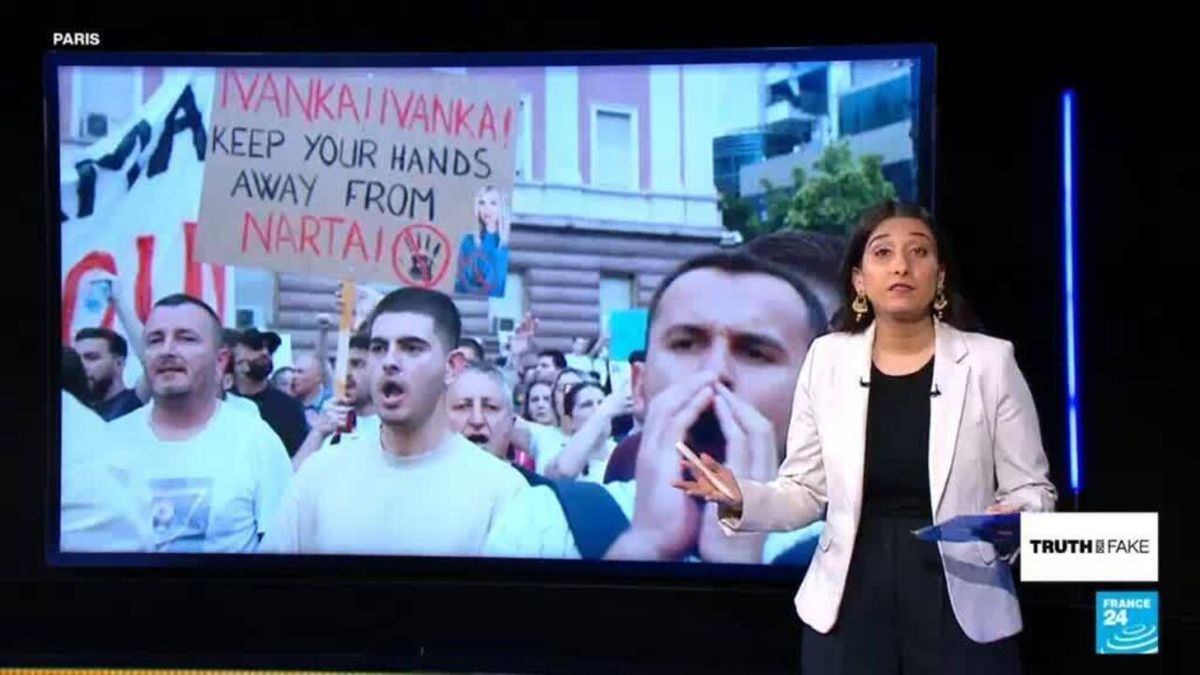
Albania has recently become the focal point of significant public unrest, as widespread protests have erupted against a proposed billion-dollar luxury resort project backed by Affinity Partners, a private equity firm linked to Jared Kushner, son-in-law of former U.S. President Donald Trump. These demonstrations, which have seen Albanians take to the streets for several consecutive days, underscore a complex interplay of environmental concerns, national sovereignty, economic aspirations, and the pervasive challenge of online misinformation.
The contentious development, valued at an estimated $1.6 billion, was announced in 2024 by Kushner's firm. It envisions the construction of luxury hotels on the uninhabited island of Sazan, a former communist-era military base, and within a protected wetland reserve. This reserve is a vital ecosystem, home to diverse wildlife including flamingos, seals, and sea turtles. The project's location within such ecologically sensitive areas has ignited fierce opposition from environmental activists and a significant portion of the Albanian public, who fear irreparable damage to these natural habitats. Protesters have symbolically adopted the flamingo as their emblem, dubbing their movement the "Flamingo Revolution."
Jared Kushner, a real estate developer with a notable past role as a Trump administration negotiator on sensitive geopolitical issues such as Gaza and Iran, has drawn scrutiny regarding the potential overlap between his business ventures and his previous political influence. His wife, Ivanka Trump, reportedly discovered the site during a leisure trip, expressing fascination with the location.
The core of the public's discontent stems from several key issues. Foremost is the profound concern for environmental degradation. Albanians are deeply worried that the massive coastal development will decimate the protected wildlife ecosystem, a sentiment that resonates strongly in a nation increasingly aware of its natural heritage. Beyond environmentalism, there is a potent nationalist sentiment, with many protesters asserting that Albania is "not for sale." This feeling is exacerbated by the Albanian authorities' decision to grant Kushner-linked investment firm special investor status, a move that critics perceive as an undue concession and a potential act of "selling" national land. The prosecutor's office has reportedly opened a probe into these changes, though details remain scarce.
Conversely, Albanian Prime Minister Edi Rama has staunchly defended the project, asserting that it will proceed. He argues that the luxury resort will be transformational for the former communist nation's tourism industry, a sector he views as crucial for economic growth and for bolstering Albania's bid for membership in the European Union. This stance highlights the perennial tension between economic development imperatives and environmental preservation, a dilemma faced by many developing nations seeking to integrate into the global economy.
Adding a layer of complexity to the protests is the widespread dissemination of misleading viral videos online. Footage falsely claiming to show the burning home of Prime Minister Edi Rama, or depicting thousands protesting against Kushner's project, has garnered millions of views. In reality, these videos were either dated, showing an anti-government demonstration from February targeting the former villa of communist dictator Enver Hoxha, or entirely unrelated, such as footage of Spanish football fans celebrating a promotion. This phenomenon underscores the significant challenge of misinformation in contemporary public discourse, where out-of-context or fabricated content can rapidly shape narratives, inflame tensions, and complicate the accurate reporting and understanding of events.
This unfolding situation carries significant geopolitical and economic implications for Albania. The controversy tests the nation's commitment to environmental protection and sustainable development, particularly as it seeks closer alignment with European Union standards, which often emphasize stringent environmental regulations. The granting of special investor status and the subsequent probe raise questions about governance, transparency, and the rule of law, factors critical for attracting responsible foreign direct investment and maintaining public trust. The involvement of a high-profile American figure like Jared Kushner also places Albania's investment climate under international scrutiny, potentially influencing perceptions of its regulatory environment and political stability.
Ultimately, the "Flamingo Revolution" represents more than just a local protest; it is a microcosm of broader global challenges. It encapsulates the struggle between rapid economic development and ecological preservation, the complexities of foreign investment in emerging economies, and the critical need for transparent governance in an era where information, both true and false, spreads instantaneously. The outcome of this dispute will likely have lasting consequences for Albania's environmental future, its economic trajectory, and its standing on the international stage.
Source referenced: FRANCE24
This brief was synthesized by our Editorial Engine and reviewed by The Ground Narrative team.