TRENDING

Tuesday, 27 October 2026
----------------------
16 Jumada Al-Awwal 1448 AH
Albania's capital, Tirana, witnessed simultaneous rallies for and against Prime Minister Edi Rama, highlighting deep political divisions fueled by a controversial 'Trump-linked' resort project. The escalating tension underscores challenges to governance, rule of law, and regional stability in the Western Balkans.
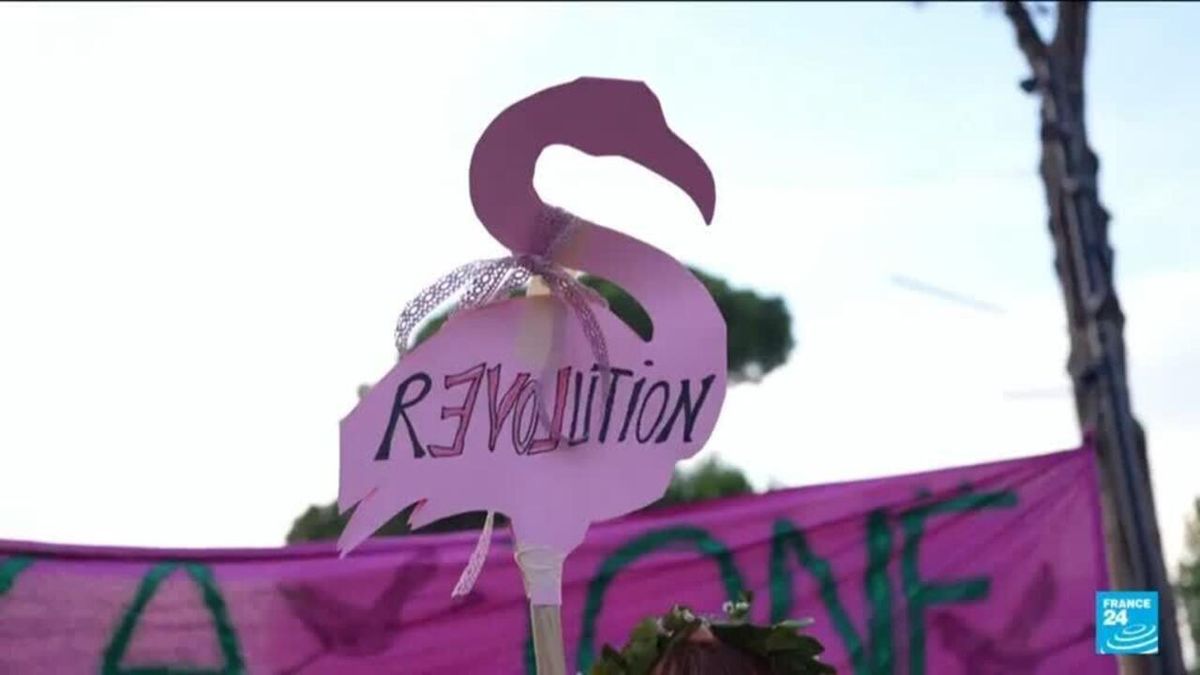
Albania's political landscape is experiencing heightened polarization, as evidenced by simultaneous demonstrations in the capital, Tirana, on Friday, June 13, 2026. Prime Minister Edi Rama rallied his supporters, projecting an image of continued popular backing, even as thousands of protestors gathered nearby, demanding his resignation. This dual display of public sentiment underscores a deepening political crisis, primarily fueled by a contentious 'Trump-linked resort row' that has become a flashpoint for broader discontent.
The immediate catalyst for the widespread protests appears to be the aforementioned resort project, though specific details regarding its nature, scope, or the precise allegations surrounding it remain largely undisclosed in public reporting. Nevertheless, the 'Trump-linked' designation suggests a high-profile foreign investment, potentially involving significant land deals, environmental considerations, or questions of transparency and due process. Such projects, particularly when associated with prominent international figures, often become symbols of perceived corruption, cronyism, or undue foreign influence, especially in nations striving for greater institutional integrity and European integration.
Prime Minister Edi Rama, a dominant figure in Albanian politics for over a decade, faces persistent opposition calls for his resignation. These demands are not new, often stemming from allegations of corruption, concerns over democratic backsliding, and dissatisfaction with economic progress. The current 'resort row' has seemingly galvanized these grievances, providing a concrete focal point for the opposition to rally public support. Rama's counter-rally, therefore, serves as a strategic move to demonstrate his enduring political strength and to project stability amidst the growing unrest.
Albania, a post-communist nation, has a history of political volatility and challenges in consolidating democratic institutions and the rule of law. Its journey towards European Union membership is contingent upon significant reforms in governance, judicial independence, and the fight against organized crime and corruption. The current political crisis, exacerbated by a high-profile investment controversy, risks undermining these reform efforts and casting a shadow over the country's commitment to transparent and accountable governance.
The internal political stability of Albania carries significant geopolitical weight, particularly within the fragile Western Balkans region. As a NATO member since 2009 and an aspiring EU member, Albania's trajectory is closely watched by international partners. Persistent political instability or allegations of corruption can have several far-reaching implications:
* Regional Stability: The Western Balkans remains a complex geopolitical arena, susceptible to external influences and internal fragilities. Instability in one nation can have ripple effects across the region, potentially impacting security cooperation and economic development initiatives.
* EU Integration: The European Union places a strong emphasis on rule of law, good governance, and democratic standards for accession candidates. A prolonged political crisis centered on transparency and potential corruption could significantly impede Albania's progress towards opening and closing EU accession chapters, delaying its integration into the bloc.
* Foreign Investment and Influence: The 'Trump-linked' aspect of the controversy highlights the intersection of foreign investment with domestic politics. While foreign direct investment is crucial for economic growth, the manner in which such projects are approved and managed can raise questions about national sovereignty, regulatory oversight, and the potential for undue influence. This scrutiny is particularly relevant in a region where various global powers vie for economic and political leverage.
* Democratic Resilience: The ability of Albania's democratic institutions to manage and resolve such political disputes through legitimate channels, rather than through prolonged street protests, will be a critical test of its democratic maturity. A failure to address the underlying issues transparently could erode public trust further and deepen societal divisions.
Economically, political uncertainty and controversies surrounding major investment projects can deter further foreign direct investment, impacting job creation and economic growth. Albania's burgeoning tourism sector, a key driver of its economy, could also be vulnerable to perceptions of instability or a lack of regulatory predictability.
Looking ahead, the resolution of the 'Trump-linked resort row' and the broader political standoff will be crucial for Albania's future. It will require a concerted effort from all political actors to prioritize national interests, uphold the rule of law, and engage in constructive dialogue. The international community, particularly the EU and NATO, will likely continue to monitor the situation closely, emphasizing the importance of democratic principles and transparent governance for Albania's Euro-Atlantic path. The current crisis, therefore, represents not just a domestic political challenge, but a significant test of Albania's commitment to its strategic goals and its role as a stable partner in a critical region.
Editor's Note: Details regarding the specific nature and allegations of the 'Trump-linked resort row' are not provided in the source article. Analysis is based on the reported political polarization and the symbolic significance of such a controversy.
Source referenced: FRANCE24
This brief was synthesized by our Editorial Engine and reviewed by The Ground Narrative team.