TRENDING

Monday, 19 October 2026
----------------------
8 Jumada Al-Awwal 1448 AH
A proposed luxury resort in Albania, linked to Jared Kushner, has ignited widespread protests, highlighting a critical tension between economic development, environmental protection, and governance transparency. The controversy poses significant questions for Albania's EU integration ambitions and its commitment to rule of law.
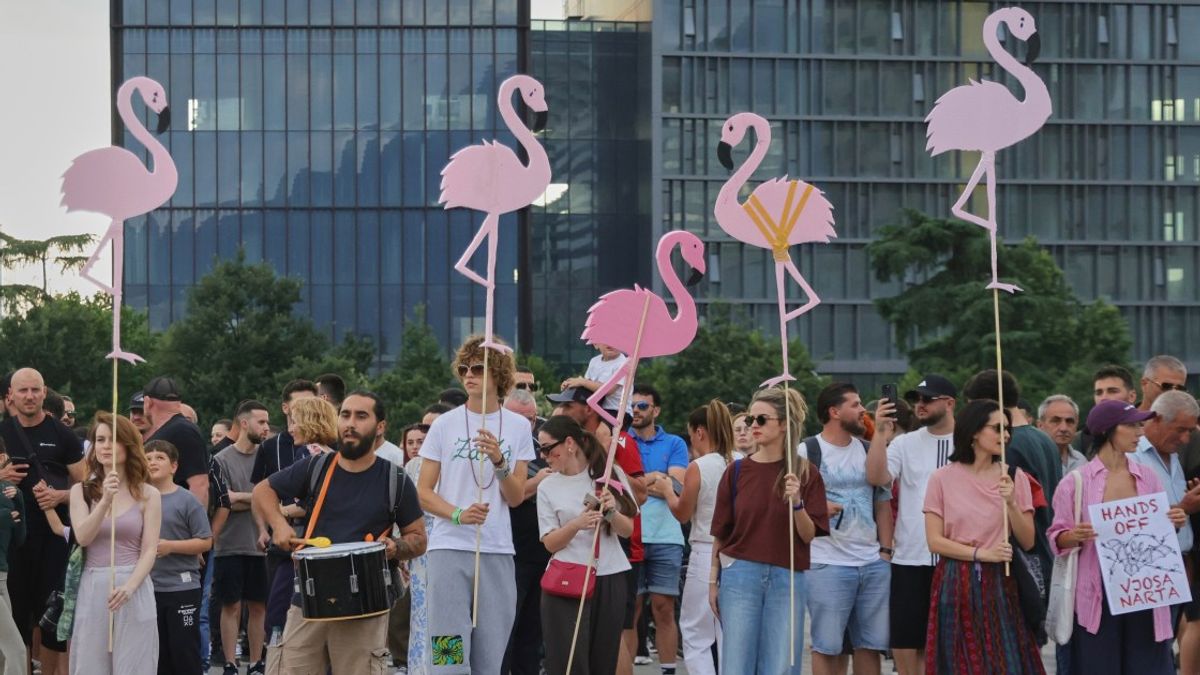
A proposed multi-billion dollar luxury resort project on Albania's Adriatic coast, linked to former White House advisor Jared Kushner and Ivanka Trump, has triggered widespread protests across the country. The controversy underscores a complex interplay of economic development aspirations, environmental protection, and concerns over governance and transparency, with significant implications for Albania's path towards European Union membership.
The development, spearheaded by firms linked to Kushner's Affinity Partners fund, envisions a sprawling complex of hotels, apartments, and villas within the protected Vjosa-Narta delta area and on Sazan Island, a former communist-era military base. Valued between $1.6 billion and $4.7 billion, the project was announced in 2024, with excavators beginning work in recent weeks, clearing land and installing fencing. The Albanian government, led by Prime Minister Edi Rama, granted "strategic investor" status to Atlantic Incubation Partners, a firm associated with Kushner's fund, facilitating the project's progression.
Sazan Island, once a restricted military zone, and the Vjosa-Narta delta, a vital biodiverse wetland and a crucial stopover for migratory birds, represent areas of immense ecological value. The transformation of these pristine and historically significant sites into high-end tourist destinations is at the heart of the current dispute.
Prime Minister Rama has championed the project as a cornerstone of Albania's strategy to become a major global tourism destination and to attract substantial foreign investment. He views such high-profile developments as essential for modernizing the country's economy, creating jobs, and distancing Albania from its communist past. Rama has publicly affirmed his commitment to the project, stating it will not be halted under his leadership and emphasizing the importance of remaining welcoming to investors. For the Albanian government, this investment is not merely economic; it is symbolic of the nation's progress and its readiness for deeper integration with Europe.
However, the project has met with fierce opposition from thousands of Albanians, including environmental campaigners, civil society organizations, and former landowners. Protests have escalated in recent days, with demonstrators clashing with security guards at the project site and rallying for consecutive evenings in the capital, Tirana. Critics argue that the development threatens to destroy one of Albania's most valuable biodiverse areas, which has remained largely undeveloped since the communist era.
Environmental groups, such as the Protection and Preservation of Natural Environment in Albania (PPNEA), have highlighted the ecological fragility of the Vjosa-Narta delta, particularly its role as a habitat for protected species like pink flamingos. They point to a controversial law approved by Albania's parliament in February 2024, which removed the ban on construction in protected areas, as a key enabler of such projects. This legislative change, coupled with the ongoing construction of a new airport in Vlora near another protected area, has fueled suspicions that a broader plan for luxury tourism development was orchestrated years ago.
Beyond environmental degradation, concerns about governance and transparency are prominent. Albania's special anticorruption prosecutor's office has launched an investigation into the changes made to the protected status of the Vjosa-Narta area, as well as allegations of bypassing public tenders and questions regarding the origin of funds used to acquire land titles. Property disputes, a common issue in post-communist Albania, further complicate the situation, with protesters demanding the return of land to former owners. Critics argue that the lack of public consultation and the opaque nature of the project's approval process undermine democratic principles and the rule of law. The absence of clear project announcements or signage at the construction site has exacerbated public distrust.
The controversy surrounding the "Kushner Island" project carries significant geopolitical weight, particularly for Albania's aspirations to join the European Union. While the Albanian government views foreign investment as a sign of progress, the EU places a strong emphasis on environmental protection, rule of law, and transparent governance as prerequisites for accession. European Council President Antonio Costa recently praised Albania's progress towards EU membership but explicitly noted that the accession process depends on meeting EU environmental standards. The current project, with its environmental impact and governance questions, could therefore become a critical test of Albania's commitment to European values and standards.
The involvement of high-profile American figures also adds a layer of international scrutiny. While it could signal Western confidence in Albania's economic potential, it also draws attention to the country's regulatory environment and its capacity to manage large-scale foreign investments transparently and sustainably. The cautionary tale of a similar Kushner-linked project in Serbia, which saw a withdrawal after charges of abuse of office and document forgery against government officials, serves as a stark reminder of the potential pitfalls when governance standards are perceived to be compromised.
The "Kushner Island" project represents a critical juncture for Albania. It embodies the nation's ambition for economic transformation and integration into the European mainstream, yet it simultaneously exposes deep-seated challenges related to environmental stewardship, property rights, and the integrity of its governance institutions. The outcome of this dispute will not only shape Albania's coastal landscape but also significantly influence its international standing and the credibility of its commitment to democratic values and sustainable development in the eyes of its citizens and the wider international community. The ongoing protests and investigations underscore the public's demand for accountability and a development model that prioritizes national interest and environmental preservation alongside economic growth.
Source referenced: ALJAZEERA
This brief was synthesized by our Editorial Engine and reviewed by The Ground Narrative team.