TRENDING

Sunday, 18 October 2026
----------------------
7 Jumada Al-Awwal 1448 AH
Nationwide protests in Albania against a luxury resort project, backed by high-profile international investors, have escalated into a national political crisis, highlighting a critical nexus of environmental protection, foreign investment, and governance challenges. The controversy underscores Albania's delicate balance between economic development and preserving its natural heritage, with significant implications for its domestic stability and international standing.
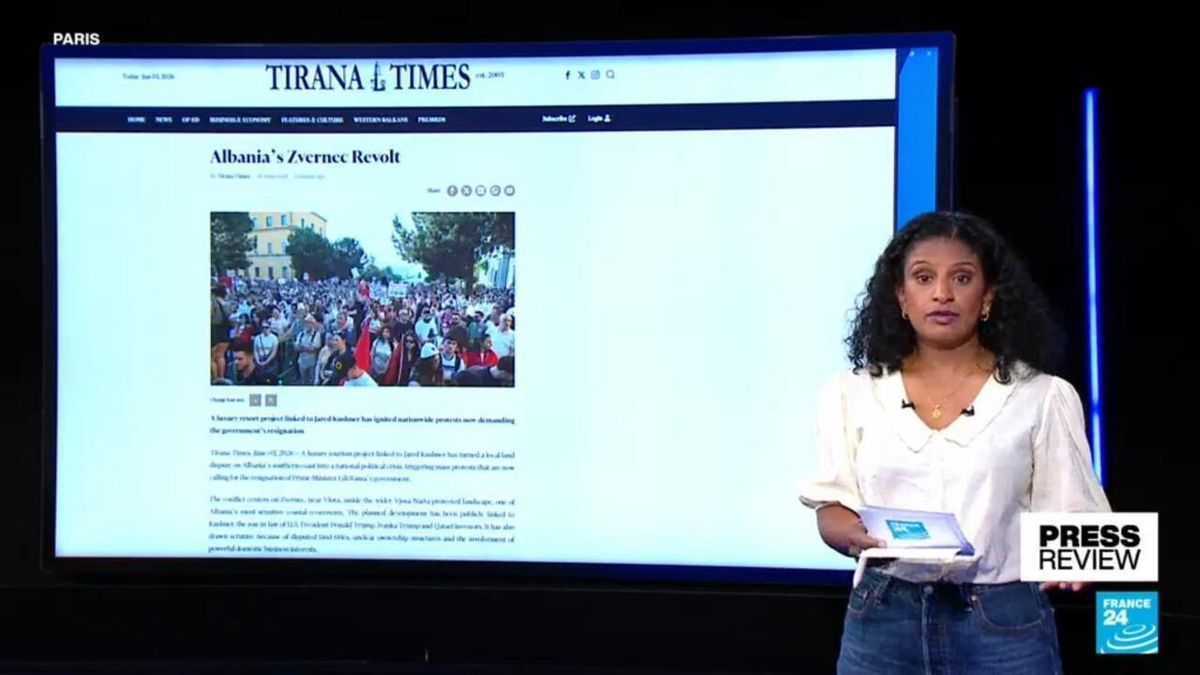
Albania is currently grappling with a significant internal political and environmental crisis, sparked by nationwide protests against a proposed luxury resort project on its southern coast. This burgeoning movement, dubbed the 'flamingo revolution,' encapsulates a broader struggle between economic development ambitions, the imperative of environmental protection, and deep-seated public grievances over governance and corruption. The controversy has not only drawn international attention due to the involvement of high-profile foreign investors but has also escalated into a national political crisis, challenging the authority and legitimacy of the ruling government.
The focal point of the unrest is a planned luxury resort in Zvernec, a pristine area along Albania's southern coastline. This ambitious tourism project is notably backed by Jared Kushner, former U.S. President Donald Trump's son-in-law, Ivanka Trump, and a consortium of Qatari investors. The involvement of such prominent international figures immediately elevates the project beyond a mere local land dispute, placing it under global scrutiny and raising questions about the influence of foreign capital in national development strategies. For Albania, a nation actively seeking to boost its tourism sector and attract foreign direct investment (FDI), the project represents a significant economic opportunity. However, the choice of location and the perceived lack of transparency surrounding its approval have ignited widespread public anger.
The Zvernec coastline is not merely a picturesque locale; it is a highly sensitive and protected ecosystem. This area serves as a vital habitat for a diverse array of wildlife, including flamingos, over 200 migratory bird species, nesting sea turtles, and monk seals. Environmental activists and local communities argue that the construction of a large-scale luxury resort in such a delicate environment poses an existential threat to its biodiversity and ecological balance. The 'flamingo revolution' moniker itself underscores the deep emotional and symbolic connection the protesters feel towards preserving this natural heritage. The movement highlights a growing global awareness of environmental stewardship and the increasing willingness of citizens to mobilize against projects perceived as environmentally destructive, even when championed by powerful economic interests.
The protests, initially focused on environmental concerns, have rapidly broadened to encompass wider grievances against the Albanian government. Public discontent has coalesced around accusations of corruption, the 'arrogance of power,' and general disgruntlement with Prime Minister Edi Rama's administration. Reports indicate that protesters are explicitly calling for the Prime Minister's resignation, framing him as a 'master thief and traitor to Albania.' This escalation transforms the land dispute into a profound challenge to the government's legitimacy and its commitment to democratic principles and the rule of law. The crisis exposes underlying tensions within Albanian society regarding equitable development, transparency in governance, and accountability of public officials. For a country aspiring to deeper integration with the European Union, such widespread accusations of corruption and authoritarian tendencies pose significant obstacles to its reform agenda and international credibility.
This unfolding situation carries substantial geopolitical and economic implications for Albania and the wider Balkan region. Firstly, the controversy surrounding the Kushner-backed project underscores the complex dynamics of foreign direct investment (FDI) in developing economies. While FDI is crucial for economic growth, the involvement of politically connected individuals can raise concerns about potential undue influence, regulatory capture, and the erosion of national sovereignty in decision-making processes. Transparency and adherence to local laws and environmental standards become paramount to ensure that such investments genuinely benefit the host nation without compromising its long-term interests.
Secondly, the crisis directly impacts Albania's aspirations for European Union membership. The EU places significant emphasis on environmental protection, rule of law, and good governance as core criteria for accession. The 'flamingo revolution' and the associated accusations of corruption and disregard for protected areas could complicate Albania's path towards integration, potentially delaying negotiations and raising questions about its commitment to European values. How the Albanian government manages this crisis—whether through genuine dialogue, transparent processes, and adherence to environmental regulations, or through repression—will be closely watched by Brussels and other international partners.
Finally, the internal political instability generated by these protests could have ripple effects on regional stability in the Western Balkans. While not directly threatening regional peace, a prolonged domestic crisis can divert governmental attention from regional cooperation initiatives, create vulnerabilities for external actors to exploit, and potentially slow down crucial reforms necessary for the region's overall progress and stability. The international image of Albania as a reliable partner and an attractive, responsible investment destination is also at stake.
The 'flamingo revolution' represents a critical juncture for Albania, forcing a confrontation between its pursuit of economic prosperity through tourism and its responsibility to protect invaluable natural assets. The outcome of this national political crisis will serve as a significant indicator of the country's commitment to sustainable development, democratic governance, and the rule of law. It will also test the government's ability to balance the allure of international investment with the legitimate concerns of its citizens and the long-term ecological health of the nation. The world watches as Albania navigates this complex intersection of environment, economy, and political will.
Source referenced: FRANCE24
This brief was synthesized by our Editorial Engine and reviewed by The Ground Narrative team.


