TRENDING

Sunday, 18 October 2026
----------------------
7 Jumada Al-Awwal 1448 AH
Across Africa, a complex interplay of military coups, contested elections, and public disillusionment is challenging the continent's democratic trajectory. Nations grapple with governance models inherited from colonial legacies, seeking systems that genuinely reflect local realities and deliver tangible benefits to their populations.
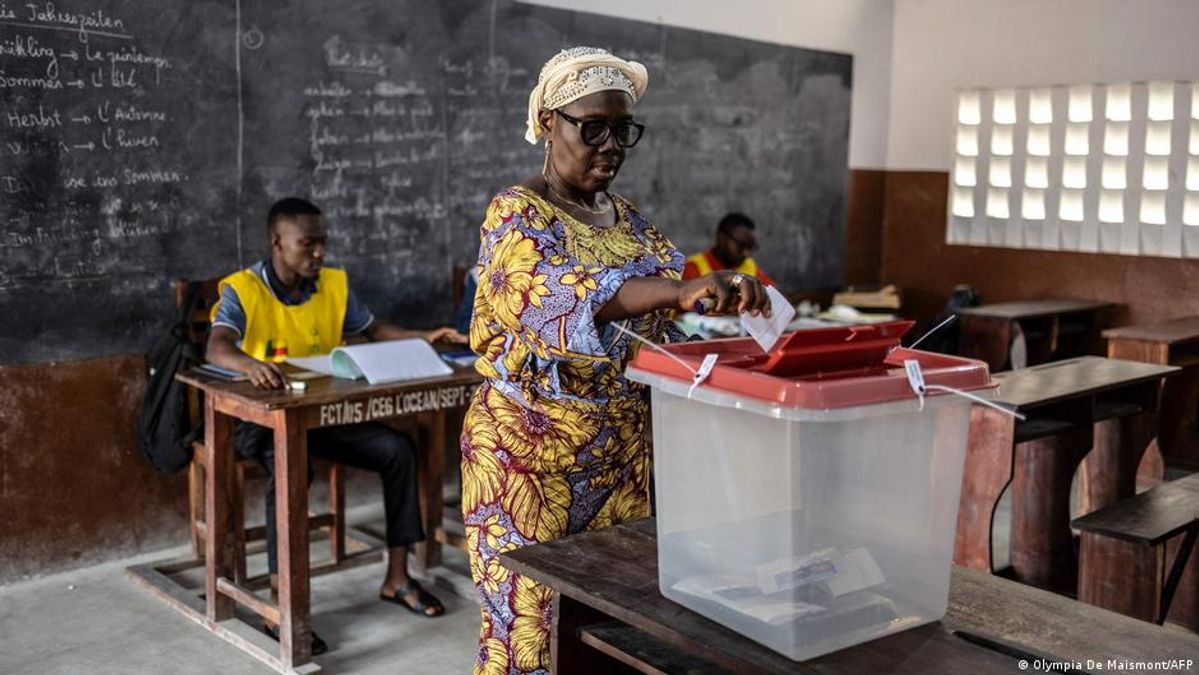
Africa is currently navigating a critical juncture in its political development, characterized by a discernible trend of democratic backsliding, a resurgence of military interventions, and widespread public skepticism towards established governance models. This complex dynamic is evident from the Sahel to the Horn of Africa, where nations are grappling with the efficacy and relevance of democratic institutions in addressing pressing socio-economic and security challenges.
Over the past four years, a wave of military coups has swept across West and Central Africa, fundamentally altering the political landscape of several nations. From 2020 to 2023, Mali, Burkina Faso, Niger, and Guinea experienced military takeovers, with Guinea-Bissau following suit in 2025. Further south, Gabon saw its military seize power in 2023, while Chad transitioned under a military council until 2025 following the death of its long-serving president. These coups are not isolated incidents but rather symptoms of deeper systemic issues, often fueled by public frustration with corruption, insecurity, and the perceived failure of civilian governments to deliver essential services.
In a significant geopolitical development, Niger, Mali, and Burkina Faso formally withdrew from the regional bloc ECOWAS in January 2025, subsequently forming their own security and economic alliance, the Alliance of Sahel States (AES). This move underscores a growing regional divergence and a challenge to established multilateral frameworks, potentially reshaping security cooperation and economic integration in West Africa. The leaders of these military juntas, such as Ibrahim Traore of Burkina Faso, have openly expressed disdain for Western-style democracy, arguing that it is ill-suited to their nations' immediate needs, particularly in the face of escalating threats from terror groups.
Beyond outright coups, the integrity of electoral processes remains a significant concern. The recent election in Ethiopia, for example, is widely anticipated to result in a victory for incumbent Prime Minister Abiy Ahmed, despite profound national divisions. Security concerns led to the suspension of voting in several areas, and the entire Tigray region was excluded from the election, reflecting ongoing tensions between regional and federal authorities following a devastating civil war from 2020 to 2022. This exclusion highlights how internal conflicts can undermine democratic participation and legitimacy, leaving significant portions of the populace unrepresented.
The factors contributing to this democratic erosion are multifaceted. A 2023 report by the United Nations Development Programme (UNDP) identified multidimensional poverty, inequality, manipulation of constitutional term limits, limited youth and women's participation, governance deficits, and high military expenditure as key drivers increasing the risk of coups. Crucially, the study also found that public support for non-democratic governance, including military rule, tends to rise when citizens are disillusioned with the performance of democratically elected governments.
Experts like Veye Tatah, from Africa Positive, emphasize that many existing governing systems, often shaped by colonial legacies, have not been sufficiently adapted to local realities, cultures, ethnicities, and lifestyles. When these systems fail to provide basic necessities like food, water, and education, public trust erodes, leading to questions about their utility. This sentiment suggests that the issue is not democracy itself, but its implementation and its ability to be socially rooted and responsive to local contexts.
While the challenges are significant, Africa remains a continent of diverse political experiences. Stable democracies like Ghana, Senegal, Cape Verde, Botswana, and Namibia continue to thrive, demonstrating the potential for robust democratic institutions. However, other nations present more complex pictures. South Africa, often seen as a beacon of post-apartheid democracy, grapples with high unemployment, inequality, and corruption, which have eroded public trust despite strong institutional frameworks. Its unique constitutional model, designed to embrace social diversity, offers a distinct path, drawing inspiration from non-Western examples.
Nigeria, Africa's most populous nation, exemplifies the ambivalence. Deeply divided by ethnic and religious conflicts, its political system has nonetheless shown adaptability, with the 2015 transfer of power widely hailed as a democratic milestone. Political scientists describe Nigeria's democracy less as a stable condition and more as an ongoing process, constantly adapting to internal pressures.
Ultimately, the current developments across Africa do not necessarily signal a definitive retreat from democracy but rather a period of renegotiation between authoritarian and democratic forces. The central question revolves around how political systems can be shaped to function effectively in people's daily lives, moving beyond abstract models to become lived political realities that genuinely serve the common good and foster responsibility over corruption and clientelism. This ongoing evolution will define the continent's geopolitical trajectory for decades to come.
Source referenced: DW
This brief was synthesized by our Editorial Engine and reviewed by The Ground Narrative team.