TRENDING

Sunday, 18 October 2026
----------------------
7 Jumada Al-Awwal 1448 AH
A temporary lull in violence along the Afghanistan-Pakistan border masks deep-seated conflicts over militant sanctuaries and border recognition. This pause is influenced by regional diplomacy and external power dynamics, but a return to instability remains highly probable.
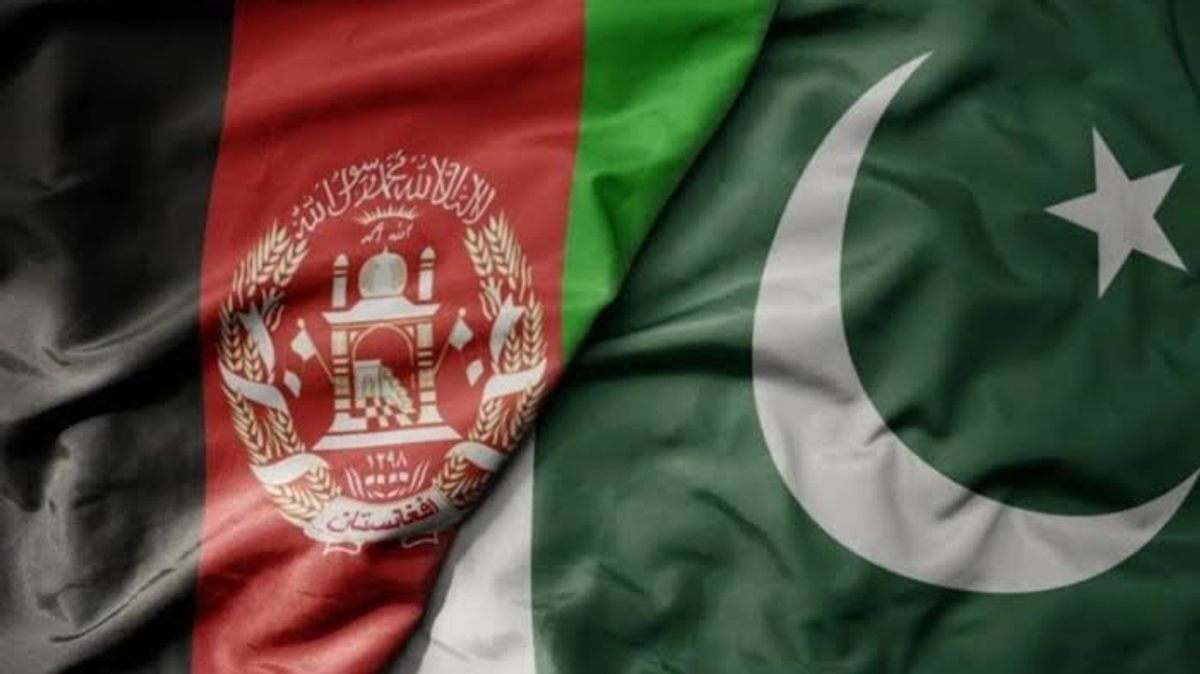
The historically volatile border region between Afghanistan and Pakistan is currently experiencing a fragile lull in violence, following months of intense cross-border clashes. This respite, however, appears to be a temporary pause rather than a resolution, as the fundamental drivers of conflict remain unaddressed. The core issue revolves around Pakistan's persistent accusation that the Afghan Taliban regime provides sanctuary to the Tehreek-e-Taliban Pakistan (TTP), a militant group responsible for numerous attacks within Pakistan. This complex dynamic is further complicated by the Afghan Taliban's strategic alliances, regional diplomatic maneuvers, and the involvement of external powers.
For months, the Afghanistan-Pakistan border, particularly near Pakistan's Khyber Pakhtunkhwa province, has been a flashpoint of violence. Pakistan attributes this instability primarily to the TTP, which it claims operates from Afghan soil with the tacit support of the Afghan Taliban. The TTP, an ideologically aligned but distinct entity from the Afghan Taliban, seeks to overthrow the Pakistani government and establish its own interpretation of Islamic law. Pakistan has repeatedly demanded that the Afghan Taliban take decisive action against the TTP, including verification mechanisms to prove their commitment.
However, the Afghan Taliban faces a significant dilemma. The group shares deep historical and ideological ties with the TTP, and turning against them carries substantial risks. A crackdown could provoke internal rebellions within the Taliban's ranks or push TTP members to join more extreme groups like the Islamic State-Khorasan (ISIS-K), further destabilizing Afghanistan. This intricate web of alliances and potential repercussions largely explains why, despite multiple rounds of internationally mediated talks—including a recent one in April facilitated by China—ceasefires have been achieved, but no concrete commitment from the Taliban to curb the TTP has materialized. China, with its considerable investment capital in Afghanistan, holds significant leverage, yet even its mediation has yielded only temporary truces.
The current lull in violence is not a sign of a breakthrough but rather a reflection of broader geopolitical considerations. Pakistan's elevated diplomatic role as a key mediator in the ongoing Iran conflict is a significant factor. Islamabad likely seeks to avoid new provocations along its Afghan border at a critical juncture in U.S.-Iran talks, where its mediation efforts are valued. Similarly, the Afghan Taliban, sharing a border with Iran, also has an incentive to avoid escalating one conflict while potentially grappling with spillover effects from another major regional crisis.
Adding another layer of complexity, Afghanistan recently signed a military cooperation agreement with Russia. While details remain scarce, Russia's special envoy for Afghanistan indicated the deal primarily concerns repairs to Russian-made equipment. Nevertheless, this development raises concerns in Islamabad, which fears the accord could bolster the Afghan Taliban's capacity to inflict greater damage in future conflicts. This move by the Taliban to deepen military ties with Russia could be interpreted as an attempt to diversify its international relationships and enhance its defense capabilities, potentially complicating future Pakistani military responses.
The international community's response to the border tensions has been nuanced. The United States and the European Union have expressed support for Pakistan's right to defend itself, suggesting that Islamabad might face limited international pushback if it resumes strikes against TTP targets in Afghanistan. The EU, through its strategic dialogue with Pakistan, has also linked preferential trade access to Pakistan's progress on good governance, environmental protection, and human rights, highlighting broader international expectations.
Despite the temporary calm, the underlying issues that fuel the conflict persist. The Afghan Taliban's reported warning to the TTP, as reported by Pakistan's Express Tribune, is unlikely to appease Pakistani officials, who view such statements as empty gestures without verifiable action. The long-standing disagreement over the formal recognition of the Durand Line, the de facto border between the two nations, further erodes mutual trust and complicates any lasting resolution.
Ultimately, the region appears to be trapped in a "depressing cycle": fresh outbreaks of violence lead to internationally mediated talks, which secure temporary ceasefires, only for fighting to resume once the immediate pressure subsides. Without a fundamental shift in the Afghan Taliban's policy towards the TTP and a resolution to the deep-seated border disputes, the current calm is likely to be fleeting. The strategic motivations of all parties, coupled with the complex regional and international dynamics, suggest that the Afghanistan-Pakistan border will remain a critical flashpoint for regional instability, with significant implications for security, diplomacy, and the broader geopolitical landscape of South Asia.
Source referenced: FOREIGNPOLICY
This brief was synthesized by our Editorial Engine and reviewed by The Ground Narrative team.