TRENDING

Sunday, 25 October 2026
----------------------
14 Jumada Al-Awwal 1448 AH
Ukrainian President Volodymyr Zelensky's recent actions, including naming a military unit after a controversial WWII-era militia and reburying a nationalist leader, have ignited a severe diplomatic crisis with Poland. These moves, intended to forge a national narrative, risk undermining a vital wartime alliance and fueling Russian propaganda.
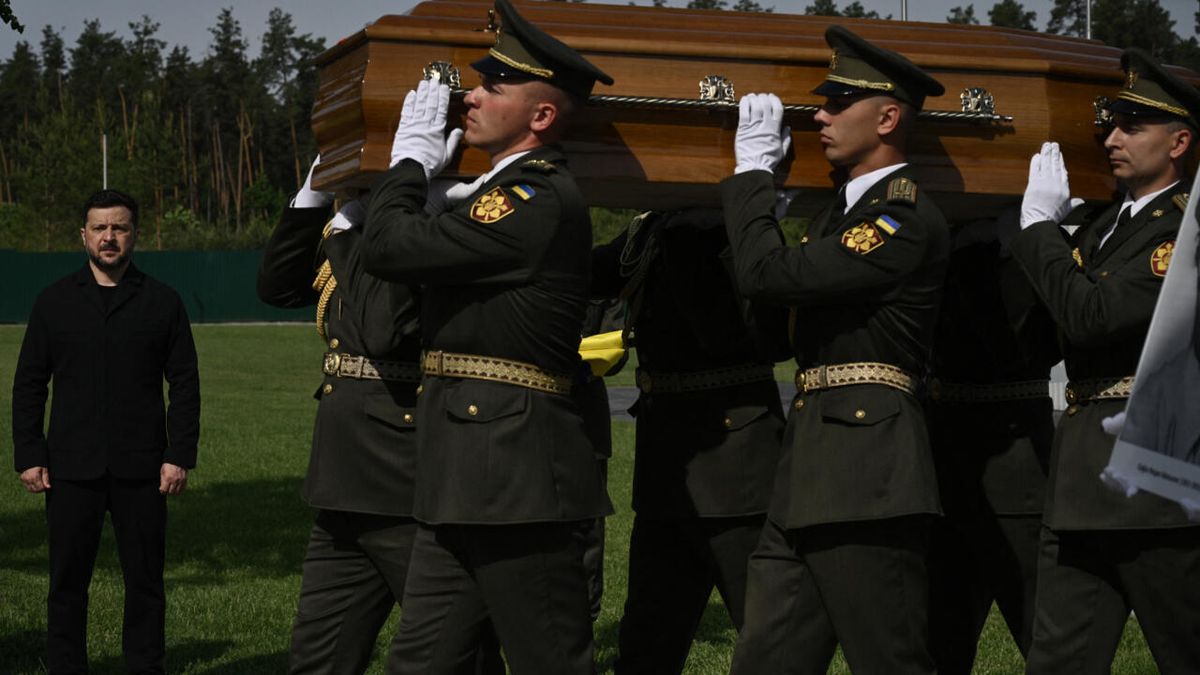
Ukrainian President Volodymyr Zelensky's recent decisions to honor World War II-era nationalist figures have triggered a significant diplomatic rift with Poland, a crucial ally in Ukraine's ongoing conflict with Russia. On May 26, 2026, President Zelensky signed a presidential decree bestowing the honorary title of "Heroes of the Ukrainian Insurgent Army" (UPA) on an elite unit within Ukraine's special forces. This action followed his presiding over the reburial of Andriy Melnyk, a leader of a branch of the far-right Organization of Ukrainian Nationalists (OUN) and an advocate for collaboration with Nazi Germany, at the National Military Memorial Cemetery near Kyiv on May 25.
The UPA, the armed wing of the OUN, is infamous in Poland for its role in the massacres of ethnic Poles and Jews in Volhynia and eastern Galicia during World War II. Polish historians estimate tens of thousands of civilians were killed in what the Polish state considers a deliberate campaign of genocide. Melnyk, who died in 1964, was repatriated from Luxembourg and reburied with full state honors, hailed as a national hero by the same president whose grandfather fought against the Nazi regime in the Red Army.
The Ukrainian president's actions have been met with profound shock and condemnation across Poland. Former Polish President Lech Walesa publicly expressed his dismay, stating he removed his Ukrainian flag badge, though affirming continued support for Ukraine's fight against Moscow. Former Prime Minister Leszek Miller likened the decree to Germany renaming a military unit after the Nazis' Einsatzgruppen. Conservative President Karol Nawrocki called for Zelensky to be stripped of the Order of the White Eagle, Poland's highest state honor previously bestowed upon him.
This controversy is particularly damaging given Poland's pivotal role as a logistical hub for Western aid to Ukraine and a staunch advocate for Kyiv's integration into NATO and the European Union. The historical wounds between the two nations, stemming from the inter-war period and the brutal partisan fighting of WWII, remain sensitive. As Professor Anita Prazmowska of the London School of Economics notes, the Polish state's profoundly negative attitude towards its Ukrainian minority in the inter-war period contributed to a complex dynamic where some Ukrainian nationalists saw Nazi Germany as a means to achieve independence from both Moscow and Warsaw, leading to collaboration and atrocities.
From Ukraine's perspective, these actions are framed within a broader effort to forge a common national narrative and rehabilitate historical figures who fought for the country's independence. Lesia Bidochko, a senior lecturer at the Kyiv-Mohyla Academy, explains that the significance of these figures is often more symbolic than historical, serving as a "defiant gesture" against Russia. The ongoing four-year struggle against Russian aggression has intensified a societal demand for the public celebration of independence fighters, even those with deeply problematic pasts, often framed within a decolonization discourse.
However, this internal nation-building imperative carries significant external risks. President Nawrocki correctly highlighted that "Glorifying the UPA has provided Russian propaganda with plenty of fuel for disinformation." Russian President Vladimir Putin has consistently attempted to justify his invasion as a campaign to "de-Nazify" Ukraine. Zelensky's actions, regardless of their internal motivations, inadvertently lend credence to this false narrative, potentially eroding international support and complicating Ukraine's image abroad.
Furthermore, the move could be interpreted as an attempt to appeal to ideologically hardline elements within Ukraine's military, such as the far-right Azov movement, which has campaigned for the rehabilitation of ultranationalist figures. While Ukraine faces immense pressure to mobilize troops, aligning with such controversial historical narratives risks alienating key international partners and undermining the moral high ground Kyiv seeks to maintain.
The reburial of figures like Melnyk and the potential return of others, such as OUN leader Stepan Bandera, signal a deliberate and ongoing strategy by Kyiv to establish a "pantheon of heroes." While understandable in the context of a nation fighting for its survival and identity, this approach creates a profound challenge for its foreign policy, particularly with neighbors like Poland. The tension threatens to weaken the united front against Russian aggression and could complicate post-war reconstruction and integration efforts with the European Union.
Balancing national memory with the imperative of strong international alliances is a delicate act. For Ukraine, navigating its complex history while maintaining critical diplomatic relationships will be crucial for its long-term security and stability. The current crisis underscores the deep historical wounds that continue to shape contemporary geopolitics in Eastern Europe, demanding careful consideration and diplomatic sensitivity from all parties involved.
Source referenced: FRANCE24
This brief was synthesized by our Editorial Engine and reviewed by The Ground Narrative team.