TRENDING

Friday, 16 October 2026
----------------------
5 Jumada Al-Awwal 1448 AH
A recent bison attack at Yellowstone National Park highlights the risks of human-wildlife conflict, particularly during mating season, and underscores the importance of maintaining a safe distance from wildlife.
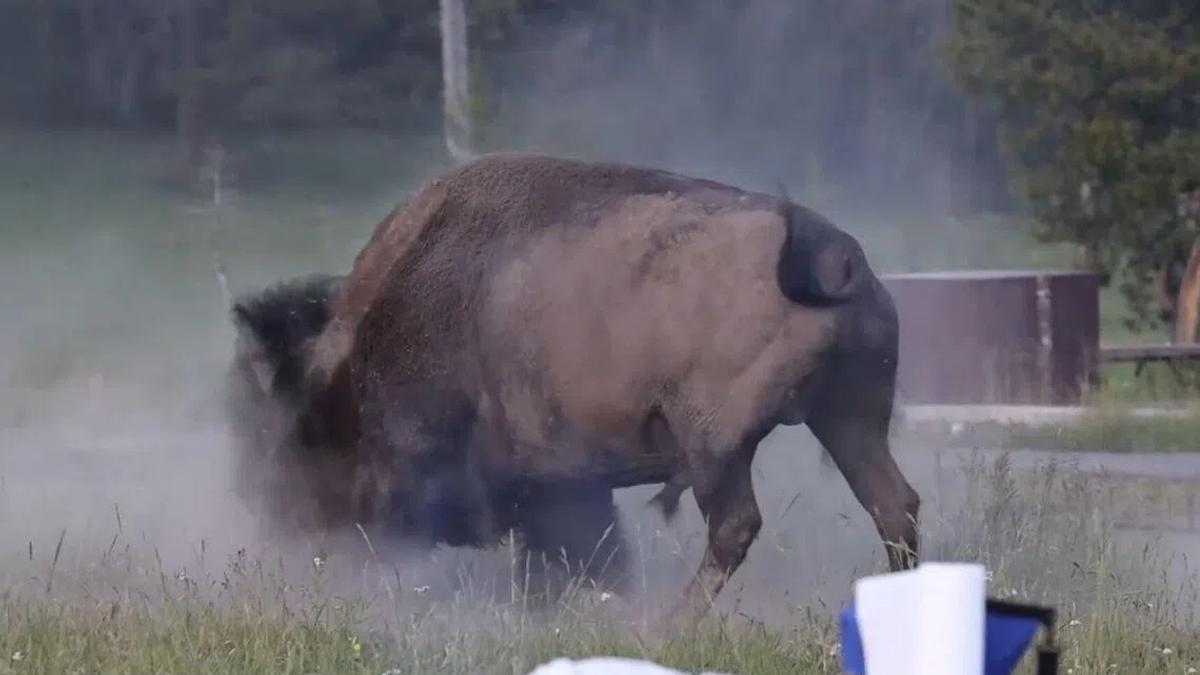
Yellowstone National Park, a UNESCO World Heritage Site, is home to an abundance of wildlife, including bison, elk, and grizzly bears. While these animals are a major draw for tourists, they also pose a significant threat to human safety. A recent incident at Bridge Bay Campground, where a bison charged and tossed a man into the air, highlights the dangers of human-wildlife conflict.
On July 10, a bull bison was spotted roaming the campground, visibly agitated and experiencing a surge of testosterone due to the start of mating season. The bison charged at a group of teenage boys, who scattered, before targeting a pick-up truck and its occupants. The grandfather, Carl Isom-McDaniel, was hooked by the bison's left horn and flipped into the air, suffering multiple broken bones.
The attack occurred during the peak of Yellowstone's summer tourism season, when the park is most crowded. This coincides with the start of mating season for the bison, which increases their aggression. The incident highlights the importance of maintaining a safe distance from wildlife, as mandated by park regulations.
The human-wildlife conflict in Yellowstone has significant regional implications. As the park's tourism industry continues to grow, the risk of human-wildlife encounters increases. This can lead to serious injuries or fatalities, as well as economic losses due to park closures or damage to infrastructure.
The recent bison attack at Yellowstone highlights the need for increased awareness and education about human-wildlife conflict. Visitors to the park must be reminded to maintain a safe distance from wildlife, as mandated by park regulations. Additionally, park officials must take steps to mitigate the risks associated with human-wildlife encounters, such as increasing the presence of park rangers and implementing measures to reduce the impact of tourism on wildlife habitats.
Source referenced: STRAITSTIMES
This brief was synthesized by our Editorial Engine and reviewed by The Ground Narrative team.