TRENDING

Sunday, 8 November 2026
----------------------
28 Jumada Al-Awwal 1448 AH
Hundreds of thousands of people across France have taken to the streets, protesting stagnant wages and the rising cost of living. The widespread demonstrations highlight deep-seated economic anxieties and a growing distrust in government policies, challenging the nation's political stability.
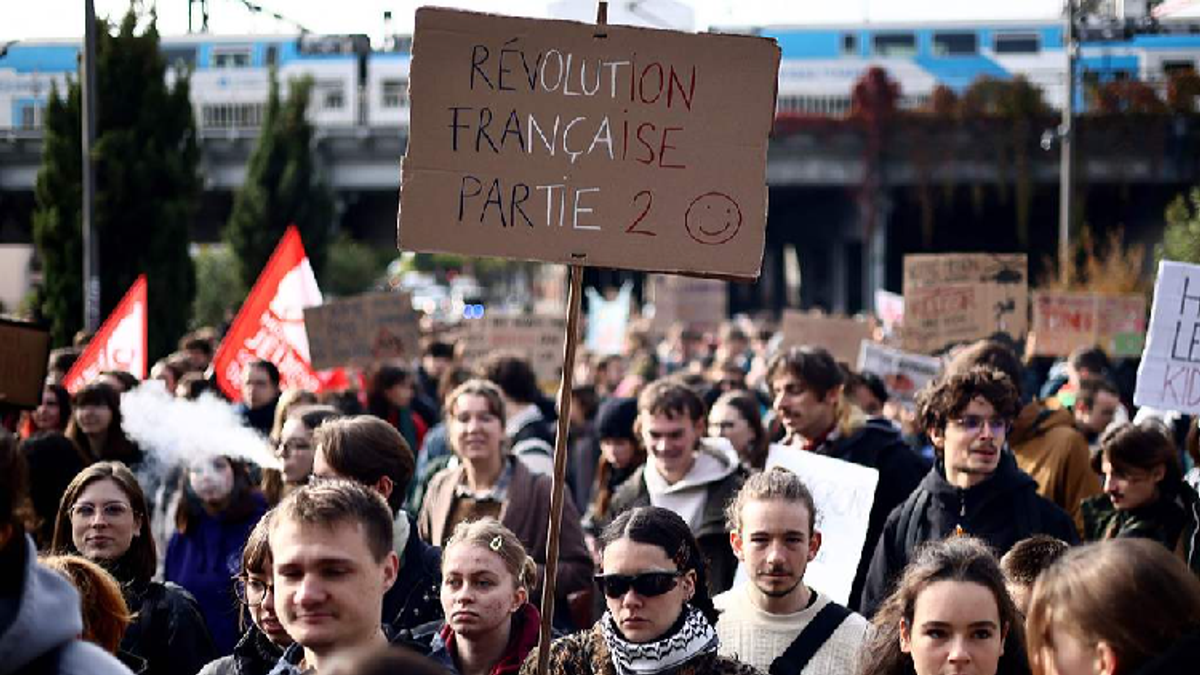
On November 3, 2026, France was gripped by widespread demonstrations as hundreds of thousands of citizens took to the streets across the country. Initial estimates from the French Interior Ministry placed participation at around 600,000 people, while the General Confederation of Labour (CGT) claimed nearly 1.6 million. The protests, which followed several rounds of mobilization since September, brought together a diverse coalition including students, teachers, civil servants, farmers, climate activists, and trade unions, all voicing collective demands for better salaries, improved purchasing power, and greater access to affordable public services and education.
These large-scale demonstrations in France are not isolated incidents but rather a recurring manifestation of deep-seated power struggles between the state, organized labor, and the citizenry. At its core, the current unrest reflects a fundamental tension between the French government's commitment to fiscal discipline and economic reforms, and the public's demand for social protection and a fair share of national prosperity. The government, under President Macron's administration, often frames its policies as necessary for global competitiveness and long-term economic health, even if they entail austerity measures or reforms to social benefits.
The power of organized labor, exemplified by the CGT's ability to mobilize significant numbers, remains a formidable force in French politics. Unions act as a critical counterbalance, leveraging collective action to pressure the government on wage negotiations, working conditions, and social welfare. Their higher estimates of protest participation are not merely statistical disagreements; they are a strategic assertion of popular legitimacy, aiming to amplify the perceived scale of public discontent and strengthen their bargaining position. The fact that transport services were largely maintained during this particular round of protests, as noted by French Transport Minister Philippe Tabarot, indicates a nuanced approach by unions, perhaps aiming to sustain pressure without completely alienating the broader public through crippling disruptions, or perhaps reflecting internal divisions on the extent of action.
Student mobilization, which initially spearheaded the current wave of protests, highlights concerns about future economic prospects and social mobility. Young people, facing an increasingly competitive job market and rising costs of education and living, are acutely aware of the long-term implications of current economic policies. Their activism signals a generational anxiety that governments often struggle to address effectively, as the benefits of long-term reforms often appear distant compared to immediate hardships. The involvement of farmers and climate activists further broadens the coalition, demonstrating how economic grievances can intersect with other societal concerns, such as environmental policy and the impact of global markets on local livelihoods.
Historically, France has a rich tradition of public protest, from the French Revolution itself to the student-worker uprisings of 1968 and the Yellow Vest movement. This cultural embeddedness of street demonstrations means that governments understand the potential for sustained unrest to escalate into significant political crises, capable of derailing policy agendas or even threatening political stability. The government's challenge is to navigate these pressures without appearing to capitulate entirely, which could undermine its authority, while also avoiding excessive force, which could further inflame public anger. The current protests are a test of this delicate balance, with the government's legitimacy and the effectiveness of its social contract hanging in the balance.
The true cost of these widespread protests is borne not by the powerful actors debating policy in Paris, but by the ordinary citizens whose daily lives are increasingly squeezed by economic pressures. The core demands — better salaries and purchasing power — reveal a fundamental struggle for economic survival and dignity for many French households.
For millions of French families, the rising cost of living means making difficult choices. Inflation, particularly in essential goods like food and fuel, erodes the value of stagnant wages. This translates into less money for discretionary spending, fewer opportunities for leisure, and increased financial stress. Parents may struggle to afford extracurricular activities for their children, or even basic necessities, leading to a pervasive sense of anxiety about the future. The promise of social mobility feels increasingly out of reach for many, fostering resentment and a feeling of being left behind by an economic system perceived to favor the wealthy.
When teachers strike and higher education institutions are disrupted, the immediate impact is felt by students. Lost classroom time, postponed exams, and uncertainty about academic schedules create stress for students and their families. For those in critical examination years, these disruptions can have long-term consequences on their academic performance and, subsequently, their career prospects. Beyond the immediate academic hit, the underlying issues of underfunded public education and inadequate teacher salaries signal a broader disinvestment in the future of the nation's youth, potentially hindering France's long-term human capital development.
While transport services were largely maintained during this specific round of protests, strikes in the state civil service imply potential disruptions to other vital public services. This could range from delays in administrative processes to reduced availability of healthcare or social support, disproportionately affecting vulnerable populations who rely most heavily on government provisions. Moreover, prolonged social unrest, even when focused on legitimate grievances, can fray the social fabric. The sight of mass demonstrations, while a testament to democratic expression, can also create a sense of instability and division within communities, eroding trust in institutions and fostering a feeling of perpetual crisis.
In the aftermath of such significant public mobilizations, powerful actors often engage in strategic framing and selective omission to manage public perception and maintain their narratives. What is downplayed or omitted provides crucial insight into the underlying power dynamics.
The French government, through its Interior Ministry, consistently provides lower estimates of protest participation compared to union figures. This discrepancy is not accidental; it is a deliberate tactic to minimize the perceived scale of public discontent. By quoting 600,000 participants instead of the CGT's 1.6 million, the government attempts to portray the protests as significant but not overwhelming, thereby reducing the pressure for major policy concessions. Highlighting the continued operation of transport services serves a similar purpose, aiming to project an image of control and minimize the perceived disruption to daily life, suggesting that the protests are not as impactful as they might seem.
Source referenced: CGTN
This brief was synthesized by our Editorial Engine and reviewed by The Ground Narrative team.