TRENDING

Sunday, 8 November 2026
----------------------
28 Jumada Al-Awwal 1448 AH
South Africa's long-dominant African National Congress (ANC) has suffered a historic defeat in recent local elections, failing to secure outright majorities in key cities. This outcome signals a profound shift in the nation's political landscape, forcing the former liberation movement into an era of complex coalition governance.
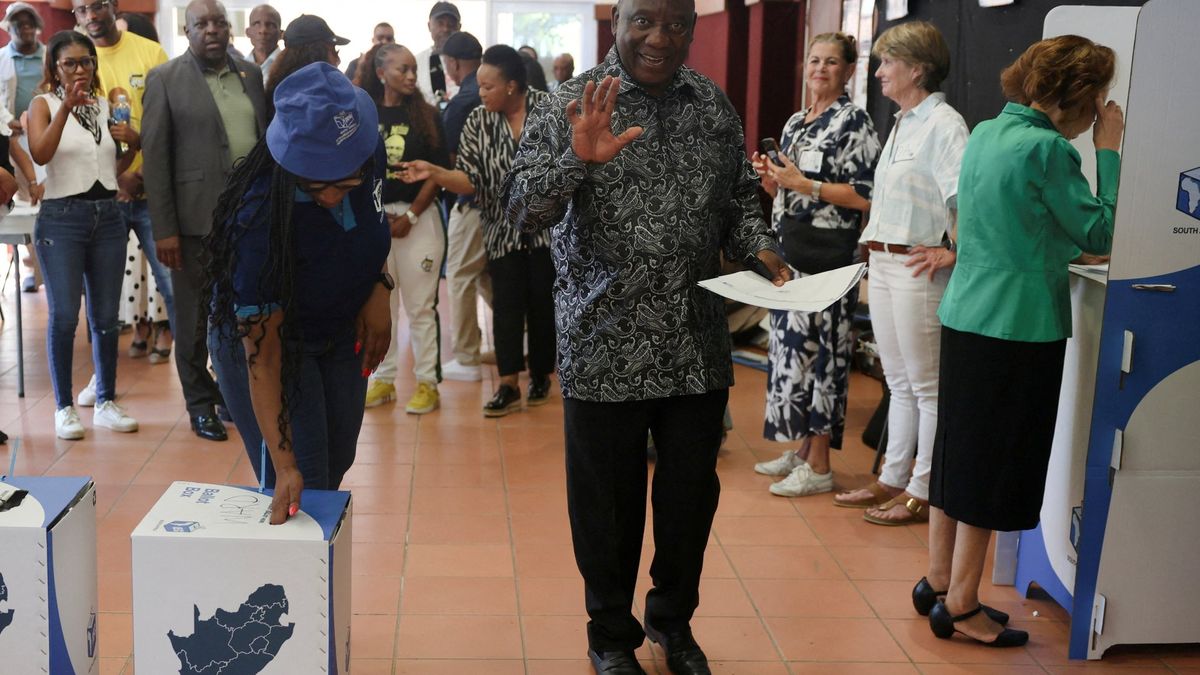
South Africa's political landscape experienced a seismic shift following last week's municipal elections in November 2026. The African National Congress (ANC), the party that has governed the nation since the end of apartheid, saw its national support plummet to just 31 percent. This represents a significant 14-percentage-point drop from its performance in the 2021 local elections. Crucially, the ANC failed to secure an outright majority in any of the eight major metropolitan areas, including the economic hubs of Johannesburg and Pretoria. The main opposition, the Democratic Alliance (DA), secured 25 percent of the national vote, while former President Jacob Zuma's newly formed uMkhonto weSizwe (MK) party emerged as a significant third force, capturing approximately 10 percent. With no single party achieving a majority in many councils, the results usher in an era of complex and potentially unstable coalition governments across the country.
The election results are not merely a setback for the ANC; they represent a fundamental recalibration of power dynamics in South Africa. For three decades, the ANC leveraged its historical legacy as a liberation movement, enjoying a moral authority that often transcended its governance record. That era is now demonstrably over. Voters, particularly a younger generation with no direct memory of apartheid, are increasingly prioritizing tangible service delivery and economic opportunity over historical allegiance.
At the heart of the ANC's decline are two intertwined forces: persistent economic stagnation and widespread perceptions of corruption. South Africa grapples with an unemployment rate exceeding 34 percent, a figure that disproportionately impacts its youth. Basic services, such as reliable water and electricity supply, have deteriorated significantly, leading to daily frustrations for millions. The constant threat of load shedding (scheduled power cuts) has become a symbol of governance failure, crippling small businesses and disrupting household life. These failures have chipped away at the ANC's credibility, transforming it from an untouchable liberation hero into a governing party held accountable for its performance.
The rise of coalition politics fundamentally alters the calculus of power. No longer can one party dictate policy; compromise and negotiation become paramount. This new reality introduces both opportunities for more inclusive governance and risks of instability. Coalitions, by their nature, are often fragile, prone to internal disagreements, and can lead to policy paralysis if partners cannot find common ground. The DA, campaigning on a platform of clean governance and efficient service delivery, has positioned itself as a pragmatic alternative, particularly in urban centers. The emergence of MK, however, complicates the landscape, representing a populist challenge that draws on a specific segment of the ANC's traditional base, often around identity politics and grievances linked to Jacob Zuma's presidency. This fragmentation of the vote means that power is now diffused among more actors, making governance inherently more complex.
Internationally, South Africa holds significant sway as a key player in Africa and a member of BRICS. Its internal political stability and economic trajectory are closely watched by global powers. A period of prolonged political uncertainty or ineffective coalition governance could impact foreign investment, its standing in multilateral forums, and its ability to project influence on the continent. The shift in local power could signal a broader weakening of the state, with implications for its capacity to address regional challenges or maintain its position as a voice for the Global South.
The immediate and most profound impact of South Africa's shifting political landscape will be felt by its ordinary citizens, particularly those who have long borne the brunt of inadequate governance and economic hardship.
For millions, the election results are a direct consequence of the daily struggle to access basic services. Unreliable electricity, often manifesting as hours of load shedding, means businesses cannot operate consistently, students cannot study effectively, and households face constant disruption. Water shortages, particularly in urban areas, force communities to queue for supplies or face health risks. Crumbling infrastructure, from potholes to inadequate public transport, adds layers of inefficiency and cost to daily life. While political parties negotiate, citizens continue to navigate these systemic failures, which directly impact their quality of life, health, and economic prospects.
The 34 percent unemployment rate is not merely a statistic; it represents millions of individuals, predominantly young people, without sustainable livelihoods. Political instability, whether real or perceived, can deter both local and foreign investment. Businesses require predictable policy environments and stable governance to commit capital and create jobs. If coalition governments prove to be volatile or ineffective, this could exacerbate South Africa's economic woes, further entrenching poverty and inequality. The promise of a better life, central to the post-apartheid narrative, remains elusive for too many, and a fractured political system risks prolonging this economic marginalization.
Decades of unfulfilled promises, coupled with visible corruption, have led to a deep sense of disillusionment among the electorate. While voting is an act of civic participation, the constant cycle of disappointment can erode faith in democratic institutions themselves. When citizens feel that their votes do not translate into tangible improvements in their lives, or that political leaders are more concerned with power struggles than public service, it fosters apathy and cynicism. This erosion of trust can have long-term consequences for social cohesion and the legitimacy of the state.
While official statements from the ANC acknowledge voter frustration and a need to
Source referenced: ALJAZEERA
This brief was synthesized by our Editorial Engine and reviewed by The Ground Narrative team.