TRENDING

Friday, 16 October 2026
----------------------
5 Jumada Al-Awwal 1448 AH
In the wake of devastating earthquakes, Venezuelan doctors and volunteers in La Guaira have converted a fast-food restaurant into an emergency clinic, underscoring the severe strain on the nation's public health infrastructure. This grassroots initiative highlights critical questions about state resilience and humanitarian response in a country already facing significant socio-economic challenges.
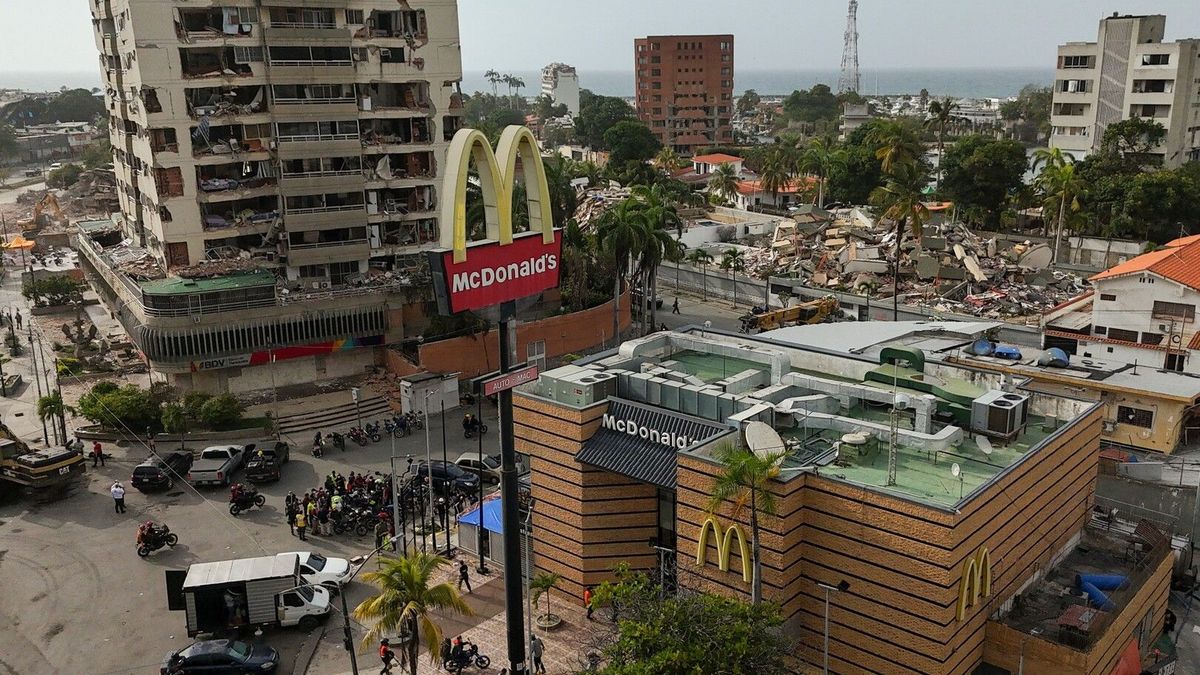
In a stark illustration of the challenges facing Venezuela's public services, doctors and volunteers in the coastal city of La Guaira have taken extraordinary measures to provide medical care following recent earthquakes. With formal healthcare facilities either damaged or completely destroyed, a fast-food restaurant has been repurposed into an emergency clinic, serving as a critical lifeline for affected communities. This improvised medical center, established since July 11, 2026, reflects a profound humanitarian response driven by local initiative in the face of systemic strain.
The immediate what of the situation is the transformation of a commercial establishment into a functional medical facility. Who is involved are dedicated Venezuelan doctors and a network of volunteers, demonstrating remarkable resilience and commitment to public health. Where this is occurring is La Guaira, a vital port city, making the disruption to infrastructure particularly impactful. The why is clear: widespread damage to existing hospitals and clinics rendered them inoperable, necessitating alternative solutions. How this was achieved speaks to the ingenuity and determination of the local population, mobilizing resources and expertise to fill a critical void left by the disaster.
The reliance on volunteer-led, improvised medical facilities carries significant geopolitical implications, particularly concerning state capacity and governance. In many nations, a natural disaster of this magnitude would trigger a robust, centralized emergency response, leveraging national resources and potentially international aid. The necessity for local communities to convert a restaurant into a clinic suggests that the state's ability to provide immediate, comprehensive disaster relief and maintain essential services has been severely challenged or overwhelmed. This situation is not merely a localized humanitarian crisis but an indicator of broader systemic vulnerabilities within Venezuela's infrastructure and public administration.
Venezuela has grappled with a protracted socio-economic and political crisis for years, characterized by hyperinflation, shortages of essential goods, and significant emigration. This pre-existing fragility likely exacerbates the impact of natural disasters, making recovery efforts more arduous and increasing the burden on civil society. The events in La Guaira underscore how a nation's underlying stability and economic health directly influence its resilience in the face of unforeseen catastrophes. A state with diminished resources and strained public services will inevitably struggle to mount an effective, large-scale response, pushing the responsibility onto local communities and non-governmental actors.
The unfolding situation in La Guaira also brings into focus the complex dynamics of international humanitarian aid. Natural disasters often serve as catalysts for global assistance, yet Venezuela's intricate political landscape, including international sanctions and strained diplomatic relations with several Western powers, could complicate the delivery and coordination of external support. While humanitarian principles dictate aid should be apolitical, the practicalities of logistics, access, and trust can be heavily influenced by geopolitical considerations. The extent to which international organizations and foreign governments can effectively channel aid to affected areas, and the Venezuelan government's willingness and capacity to facilitate such efforts, will be closely watched.
Furthermore, a deepening humanitarian crisis could have regional implications. Should the situation in La Guaira and other affected areas deteriorate further, it could potentially lead to increased internal displacement or even cross-border migration, adding pressure on neighboring countries already hosting significant numbers of Venezuelan migrants. This highlights the interconnectedness of national crises with broader regional stability and security concerns.
The immediate success of converting a restaurant into a clinic is a testament to human resilience and local solidarity. However, it also casts a long shadow over the long-term recovery prospects for La Guaira and Venezuela as a whole. Rebuilding damaged infrastructure, particularly hospitals, requires substantial investment, technical expertise, and sustained political will. In a country facing economic constraints, this will be a formidable challenge.
The events in La Guaira serve as a critical case study in how natural disasters intersect with existing geopolitical and socio-economic vulnerabilities. They underscore the importance of robust state institutions, effective disaster preparedness, and unhindered humanitarian access. While the immediate focus remains on providing care to those affected, the broader implications for Venezuela's future stability and its capacity to protect its citizens from both natural and man-made crises remain a significant concern for the international community.
Source referenced: ALJAZEERA
This brief was synthesized by our Editorial Engine and reviewed by The Ground Narrative team.