TRENDING

Wednesday, 14 October 2026
----------------------
3 Jumada Al-Awwal 1448 AH
Algeria is embarking on an ambitious strategy to localize its automotive industry, aiming to mitigate vehicle shortages and reduce import dependency. This initiative seeks to transform the sector into a key driver for economic diversification and job creation.
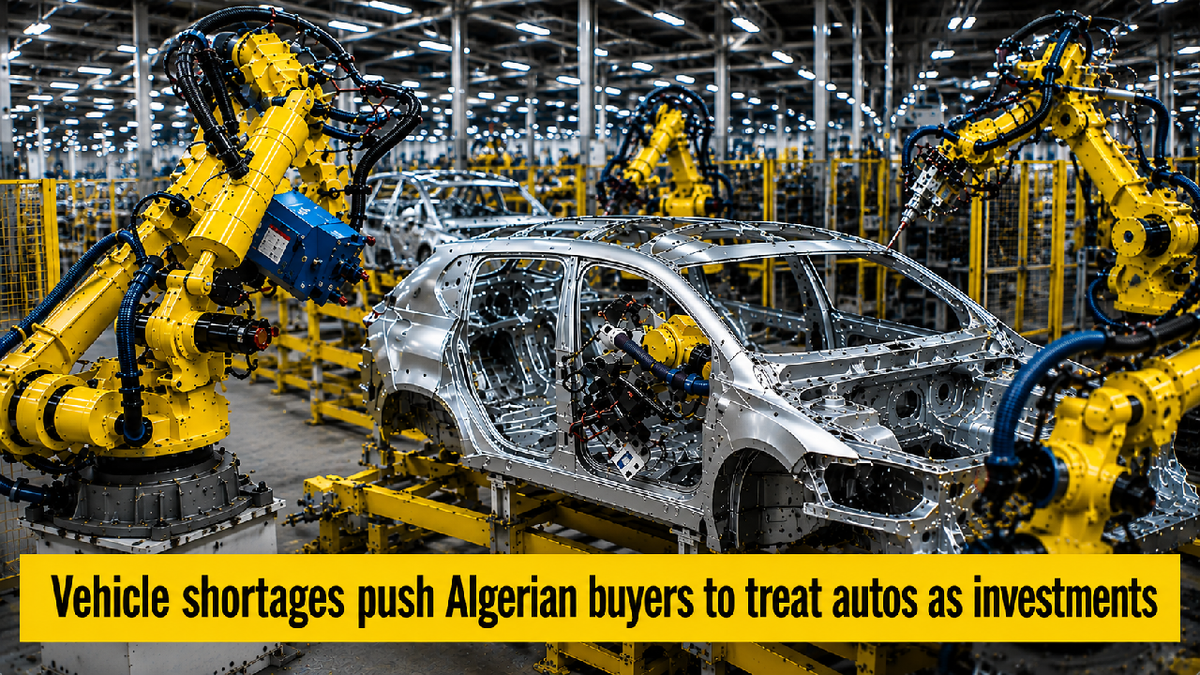
Algeria is implementing a significant new strategy to bolster its domestic automotive industry, a move prompted by persistent vehicle shortages and a surge in used car prices that has led consumers to view automobiles as investment assets rather than mere transportation. Announced in July 2026, this policy pivot aims to transition the nation from basic vehicle assembly to a more integrated and self-sufficient manufacturing ecosystem.
The core of this initiative involves establishing new production facilities in the provinces of Batna and Tissemsilt. These sites are slated to manufacture essential vehicle components, including car bodies, plastic interior parts, and various spare parts. Prime Minister Sifi Ghrieb emphasized that these projects represent a foundational step towards developing a comprehensive automotive industry, moving beyond what he described as "superficial manufacturing or simple assembly." This strategic direction signals a clear intent to build a robust local supply chain, thereby reducing Algeria's reliance on imported components.
The motivations behind Algeria's industrial push are multi-faceted, reflecting both immediate economic pressures and long-term strategic objectives. Economically, the country has historically been heavily reliant on its vast hydrocarbon reserves. This new automotive strategy is a crucial component of a broader national agenda to achieve economic diversification, lessening vulnerability to volatile global oil and gas prices. By fostering a robust manufacturing sector, Algeria aims to create new avenues for growth and stability.
Furthermore, the policy aligns with principles of import substitution industrialization (ISI), a development strategy focused on replacing foreign imports with domestic production. This approach is designed to conserve foreign exchange reserves, stimulate local industries, and enhance national economic sovereignty. The current vehicle shortages underscore the fragility of relying heavily on imports, making localization a matter of national economic security and supply chain resilience. Global events, such as the COVID-19 pandemic and subsequent supply chain disruptions, have highlighted the strategic importance of domestic manufacturing capabilities across various sectors.
Automotive expert Fares Bouchaala noted that the initiative seeks to revive existing industrial assets while simultaneously cultivating a stronger ecosystem of manufacturers, suppliers, and skilled labor. This holistic approach is vital for sustainable industrial development, promising not only to meet domestic market needs but also to generate substantial job creation. For a nation with a significant youth demographic, industrial growth and employment opportunities are critical for social stability and economic progress.
Algeria's strategic location in North Africa positions it advantageously to potentially become a regional manufacturing hub. Bouchaala highlighted the country's potential to create an attractive investment environment, capable of supporting a genuine automotive manufacturing industry. This ambition extends beyond merely satisfying domestic demand; a successful localization strategy could enable Algeria to become an exporter of vehicles and components, enhancing its economic influence within the Maghreb and wider African continent.
Attracting foreign direct investment (FDI) will be crucial for the success of this strategy. The government's clear articulation of its commitment to a deeper industrial integration, rather than just assembly, is intended to signal to international manufacturers that Algeria offers a serious and long-term investment opportunity. This could lead to technology transfer, skill development, and the integration of Algerian industries into global value chains.
While the strategic vision is clear, the implementation of such an ambitious industrial transformation will undoubtedly face challenges. Building a complex automotive supply chain requires significant capital investment, access to advanced technology, and the development of a highly skilled workforce. Ensuring competitive production costs and quality standards will be paramount for the long-term viability of the industry, especially in a globally competitive market.
Despite these hurdles, Algeria's commitment to localizing its automotive sector represents a pivotal moment in its economic development trajectory. By moving beyond resource dependency and embracing industrial diversification, the nation is betting on manufacturing as a key driver for sustainable growth, job creation, and enhanced economic resilience. The success of these projects in Batna and Tissemsilt will be a critical indicator of Algeria's capacity to transform its economic landscape and solidify its position as a significant industrial player in the region.
Source referenced: CGTN
This brief was synthesized by our Editorial Engine and reviewed by The Ground Narrative team.