TRENDING

Saturday, 17 October 2026
----------------------
6 Jumada Al-Awwal 1448 AH
The United States has officially designated Brazil's two most powerful criminal organizations, PCC and CV, as Foreign Terrorist Organizations (FTOs). This move, rejected by Brazil, triggers severe sanctions and heightened business risks, aiming to disrupt vast money laundering operations but threatening to significantly increase compliance costs and deter foreign investment.
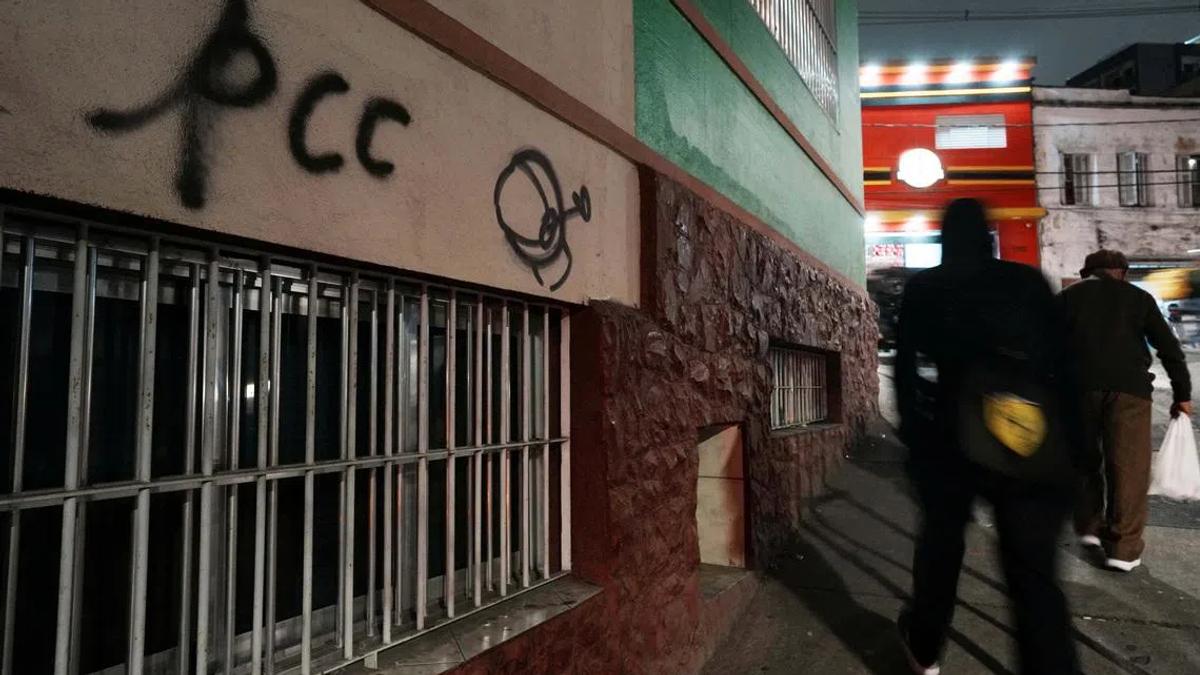
The United States has officially designated Brazil's two most powerful criminal organizations, the Primeiro Comando da Capital (PCC) and Comando Vermelho (CV), as Foreign Terrorist Organizations (FTOs). This significant policy shift, announced in Washington and effective starting June 5, 2026, marks an escalation in Washington's approach to combating transnational organized crime and is poised to introduce substantial new risks and compliance costs for businesses operating within Brazil.
The PCC and CV, originating as prison gangs in the late 1970s and early 1990s respectively, have evolved far beyond their initial scope. They now exert considerable control over the illicit drug trade across South America and have systematically infiltrated Brazil's formal economy through sophisticated money laundering operations. Investigations have revealed their deep entrenchment in sectors such as fuel distribution, real estate, and finance, leveraging these avenues to legitimize billions in drug profits. For instance, a major police operation in August 2025 uncovered a scheme involving some 52 billion reais ($10.3 billion) moved through PCC-controlled gas stations and fuel distributors between 2020 and 2024. Another phase of investigations in late May 2026 identified approximately $5 billion of money laundering over four years via fintechs and investment funds headquartered along São Paulo's prestigious Avenida Faria Lima, the heart of Brazilian finance. The lower barriers to entry and looser oversight within Brazil's burgeoning fintech sector have made it a particularly tempting channel for illicit funds in recent years.
The US decision to classify these groups as FTOs provides the American government with a powerful suite of legal tools. This designation opens the door for stringent US sanctions, aggressive criminal probes, and civil liability actions, even against firms that may have indirect dealings with the PCC or CV. Asset freezes, banking restrictions, and heightened regulatory scrutiny are now potential consequences. From Washington's perspective, this move aims to internationalize the financial risks associated with these groups, compelling global financial institutions and businesses to adopt more rigorous due diligence processes. The underlying motivation is to cripple the financial infrastructure of these organizations, thereby disrupting their ability to fund drug trafficking and other illicit activities that pose a threat to regional stability and US interests.
The immediate and most tangible impact of this designation will be a significant increase in the cost of doing business in Brazil. Brazilian law firms, such as Pinheiro Neto Advogados, have highlighted the impending asset freezes and banking restrictions. Rodrigo Caldas de Carvalho Borges, a partner at CBA Advogados, noted that the policy "internationalizes a risk that the Brazilian financial sector was already obligated to manage," predicting a deepening of due diligence requirements and higher demands from international partners. The compliance burden will extend across a wide array of sectors, including logistics, infrastructure, mining, agribusiness, gambling, and cash-intensive consumer franchises, all of which have been identified as vulnerable to the gangs' money laundering schemes. While larger lenders with robust governance controls might be better positioned to navigate these new regulations, the fintech sector's susceptibility to money laundering could mean it faces particularly intense scrutiny and potential disruption.
Brazil's government has explicitly rejected the US FTO designation, signaling a potential diplomatic friction point. While the article does not detail Brazil's specific reasons for rejection, such a stance often stems from concerns over national sovereignty, the appropriateness of applying a "terrorist" label to what Brazil might primarily view as organized crime, or fears of adverse economic repercussions. The US, by unilaterally imposing this designation, is asserting its extraterritorial legal authority to combat transnational crime, a move that could be perceived by some as an overreach into Brazil's internal affairs. This situation underscores the complex dynamics of international cooperation in combating global illicit networks, where differing national legal frameworks and strategic priorities can lead to diplomatic tensions.
The US has previously employed similar designations against drug traffickers in Mexico, which led to increased scrutiny of money laundering operations. In that instance, the closure of a few smaller financial institutions and a swift regulatory response helped mitigate wider market disruption, as noted by Fitch Ratings. This precedent suggests that while the immediate impact on Brazil's economy could be substantial, the long-term consequences might depend on the responsiveness of Brazilian regulators and the adaptability of its financial sector. However, given the deep penetration of PCC and CV into Brazil's economy, the challenge for Brazil may be significantly greater than that faced by Mexico. The US designation represents a critical juncture, forcing Brazil to confront the pervasive influence of organized crime with renewed urgency, potentially reshaping its economic landscape and its approach to international financial transparency.
Source referenced: STRAITSTIMES
This brief was synthesized by our Editorial Engine and reviewed by The Ground Narrative team.


