TRENDING

Sunday, 25 October 2026
----------------------
14 Jumada Al-Awwal 1448 AH
A precarious ceasefire between Iran and Israel is under severe strain, exacerbated by continued tit-for-tat attacks and growing public disagreements between the United States and Israel. US President Trump has warned Israeli Prime Minister Netanyahu against further strikes, highlighting the complex and volatile regional dynamics.
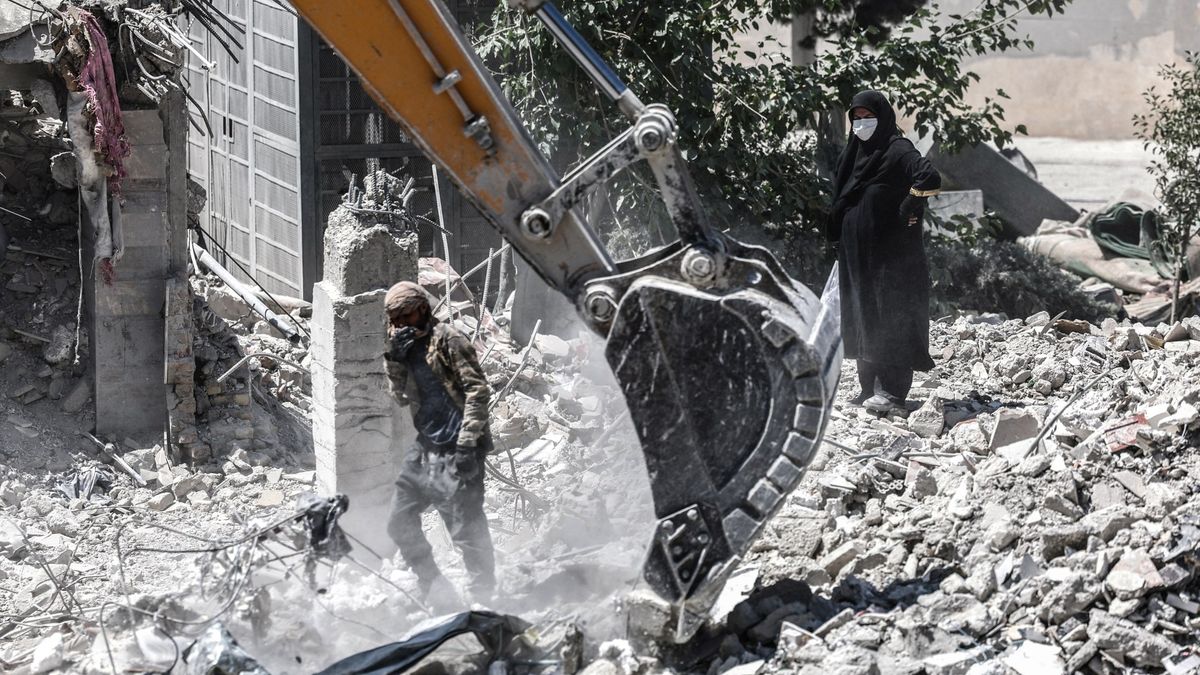
The fragile ceasefire between Iran and Israel, in effect since April 8, is facing significant pressure, marked by renewed military actions and a deepening diplomatic rift between the United States and Israel. The current situation, described as "Iran war day 102," underscores the persistent volatility in the Middle East, where strategic interests and security concerns continue to clash.
Recent developments indicate a precarious balance. Israel reportedly targeted the Mahshahr petrochemical complex in southwest Iran, a critical industrial center. While Iranian media reported no casualties, authorities are assessing the extent of the damage and potential economic repercussions. This strike follows a pattern of tit-for-tat exchanges that threaten to unravel the existing truce. Concurrently, Hezbollah, an Iranian-backed group in Lebanon, claimed responsibility for 16 operations against Israeli forces in southern Lebanon, utilizing drones, guided missiles, artillery, and loitering munitions. These actions near Beaufort Castle, Odaisseh, and Yohmor al-Shaqif highlight the multi-front nature of the conflict and the role of proxies in regional power projection.
Iran's parliamentary speaker, Mohammad Bagher Ghalibaf, warned that the ceasefire remains brittle and could break, citing repeated Israeli violations as evidence of a lack of "genuine will to build trust." Tehran has explicitly stated that fighting could resume if Israel continues its attacks, particularly those extending into Lebanon.
Adding another layer of complexity are the growing public disagreements between the United States and Israel. US President Donald Trump reportedly issued a stern warning to Israeli Prime Minister Benjamin Netanyahu, urging him to be "careful" and cautioning that he could find himself "on your own very soon" if further strikes on Iran were carried out. This warning, conveyed after Iran signaled a halt to its attacks, underscores Washington's concern over potential escalation and its efforts to preserve the ceasefire.
However, analysts suggest that Israel's decision to launch new strikes on Iran, despite Trump's calls for restraint, was a deliberate signal to the US. Military historian Danny Orbach noted that these strikes were intended to convey to Washington that no lasting agreement with Tehran could ignore Israeli security interests. This suggests a strategic maneuver by Israel to assert its autonomy and influence over any potential US-Iran negotiations, particularly those that might be perceived as sidelining Israeli concerns.
The issue of Lebanon further complicates the diplomatic landscape. Israel's ambassador to the US, Yechiel Leiter, asserted that negotiations between Washington and Tehran have "nothing to do with Lebanon," accusing Iran of attempting to link the two issues. Leiter emphasized that Israeli operations against Hezbollah are separate from US-Iran talks, warning that "Lebanon will not have a future if it remains linked to Iran." This highlights Israel's determination to counter Hezbollah's influence, which it views as an extension of Iranian power, irrespective of broader US diplomatic overtures to Tehran.
Despite President Trump's warnings, critics like Phyllis Bennis of the Institute for Policy Studies argue that such admonitions carry limited weight without concrete actions. Continued US military aid, diplomatic support, and weapons transfers to Israel, Bennis contends, undermine the message of restraint, giving Netanyahu little reason to perceive Trump's comments as a fundamental shift in US policy. This perceived inconsistency in US policy risks emboldening Israel to pursue its security agenda unilaterally, potentially jeopardizing the fragile regional stability Washington seeks to maintain.
The current situation presents a critical juncture for Middle Eastern geopolitics. The ongoing tit-for-tat exchanges, coupled with the public divergence between the US and Israel, underscore the immense challenges in de-escalating the conflict. The potential for the ceasefire to collapse and for a wider regional conflagration remains high, with Lebanon serving as a critical flashpoint. The interplay between Iran's regional ambitions, Israel's security imperatives, and the United States' complex role as both an ally and a mediator will dictate the trajectory of this volatile conflict. The effectiveness of US diplomacy in balancing its alliance with Israel against its broader strategic interests in regional stability will be a defining factor in preventing further escalation.
Source referenced: ALJAZEERA
This brief was synthesized by our Editorial Engine and reviewed by The Ground Narrative team.


