TRENDING

Tuesday, 13 October 2026
----------------------
2 Jumada Al-Awwal 1448 AH
The US reimposition of a naval blockade on Iran's ports has shattered a recent truce, escalating tensions in the Strait of Hormuz. Iran has responded by threatening Gulf states and expanding the conflict's geography, raising fears of a wider regional war and potential strikes on nuclear facilities.
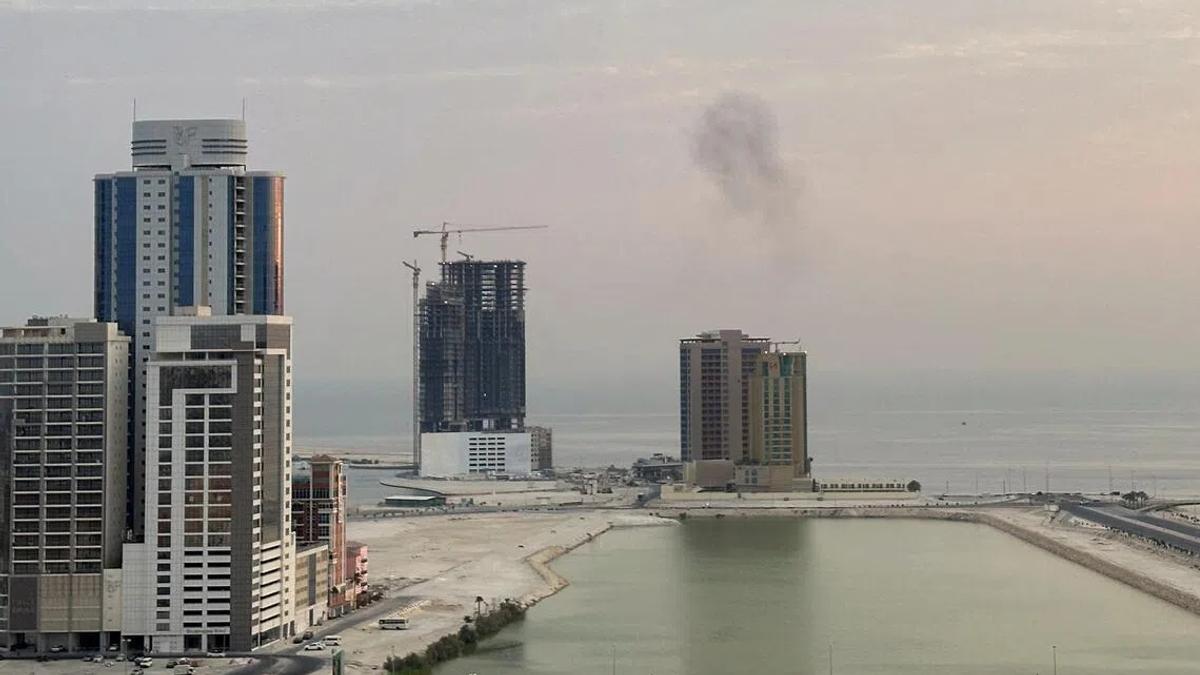
The fragile Memorandum of Understanding (MoU) between the United States and Iran, signed less than a month ago, has collapsed, plunging the Persian Gulf into a new and potentially more dangerous phase of confrontation. On July 14, 2026, the United States Navy reimposed a naval blockade on Iran's ports in the Strait of Hormuz, effectively nullifying the last remaining provision of the agreement. This move, announced by the US Central Command, warns that any vessel suspected of entering or leaving Iranian waters without US authorization is now subject to interception, diversion, and capture, by force if necessary. While Iranian Oil Minister Mohsen Paknejad asserted that oil exports would continue, the reality on the ground suggests a significant escalation of economic pressure.
The immediate trigger for this renewed tension was Iran's alleged attacks on ships that reportedly ignored Iranian-mandated navigation routes through Hormuz. The US condemned these actions as violations of both the defunct MoU and established international law, which upholds the principle of freedom of navigation through international waterways, especially one critical for a fifth of the world's seaborne oil. However, the situation was further complicated by an unexpected declaration from US President Donald Trump on July 13. Via Truth Social, Trump asserted that the US would henceforth act as the “guardian” of the Strait and, as a matter of “fairness,” was entitled to a 20 percent “reimbursement” on all cargo shipped through it, ostensibly to cover security costs. This demand, which blindsided US officials and drew strong condemnation from the International Maritime Organisation (IMO) for opposing fees on international navigation, introduced a layer of confusion regarding US objectives. Iranian Foreign Minister Abbas Araghchi, in a seemingly sarcastic response on X, agreed that service providers should be compensated but deemed Trump's proposed fee “too much,” promising Iran would be “fair.” This exchange underscores the deep mistrust and the potential for miscalculation stemming from ambiguous or contradictory messaging.
The current escalation is marked by three critical shifts that differentiate it from previous confrontations. Firstly, Iran has demonstrably widened the geographical scope of the conflict. Its recent strikes on Gulf states and a stark warning on July 13 that any cooperation with the US blockade would be considered “an act of war” have directly implicated Saudi Arabia, the United Arab Emirates, Qatar, and Bahrain. These nations, which largely avoided direct targeting earlier in the year, now find themselves in the line of fire. Particularly concerning is Iran's decision to target Oman and Qatar, two states that have historically played crucial mediating roles between Washington and Tehran. Oman's subsequent condemnation of “irresponsible acts” and the summoning of Iran's ambassador signal a dramatic deterioration in regional diplomatic channels. Should critical infrastructure such as Gulf ports, desalination plants, or oil loading terminals be hit, the conflict would cease to be a bilateral US-Iran duel and transform into a broader regional war with no clear path to de-escalation.
Secondly, the internal state of the Iranian regime appears to have shifted significantly. The article suggests that the hardliners who assumed power after the deaths of Supreme Leader Ali Khamenei and his senior associates in US and Israeli air attacks on February 28 are now more entrenched. This new leadership is likely to conclude that agreements with the US administration are unreliable, potentially leading to a more determined and less compromising stance in the face of external pressure. This internal hardening could reduce the regime's flexibility and increase its willingness to engage in risky actions.
Finally, the US blockade itself acts as an “escalation machine,” carrying the inherent risk of triggering a far more severe conflict. President Trump has openly hinted at the possibility of broader US strikes against Iran's deep underground nuclear facility known as Pickaxe Mountain. Located near Natanz, where the US bombed two other Iranian nuclear sites in June 2025, Pickaxe Mountain has been under construction since 2020 and has never been accessible to international inspectors. While there are few indications of resumed nuclear work at the site, any US decision to strike it would necessitate the use of specialized ordnance, such as the GBU-57 Massive Ordnance Penetrator (MOP) bomb, due to its heavily fortified and deeply buried nature. Such an attack would represent a major escalation, potentially pushing the conflict beyond the current cycle of low-level violence.
Despite the heightened tensions, both Washington and Tehran still appear to have reasons to prevent a return to full-scale war. Iran, for instance, has notably refrained from targeting Israel, likely aware that such a move would provide an immediate pretext for a much larger conflict. However, the current environment is characterized by a prolonged cycle of tit-for-tat actions, where each side probes the limits of the other's tolerance without intending to trigger a major war. The inherent danger in this strategy lies in the extremely high risk of miscalculation, where an unintended consequence or an overreaction could rapidly spiral out of control, leading to devastating regional and global ramifications. The coming weeks will be a critical test of restraint and strategic communication in a region already fraught with instability.
Source referenced: STRAITSTIMES
This brief was synthesized by our Editorial Engine and reviewed by The Ground Narrative team.


