TRENDING

Tuesday, 27 October 2026
----------------------
16 Jumada Al-Awwal 1448 AH
The US has added several prominent Chinese solar and battery manufacturers to a list of companies believed to be aiding China's military, escalating tensions between the two nations.
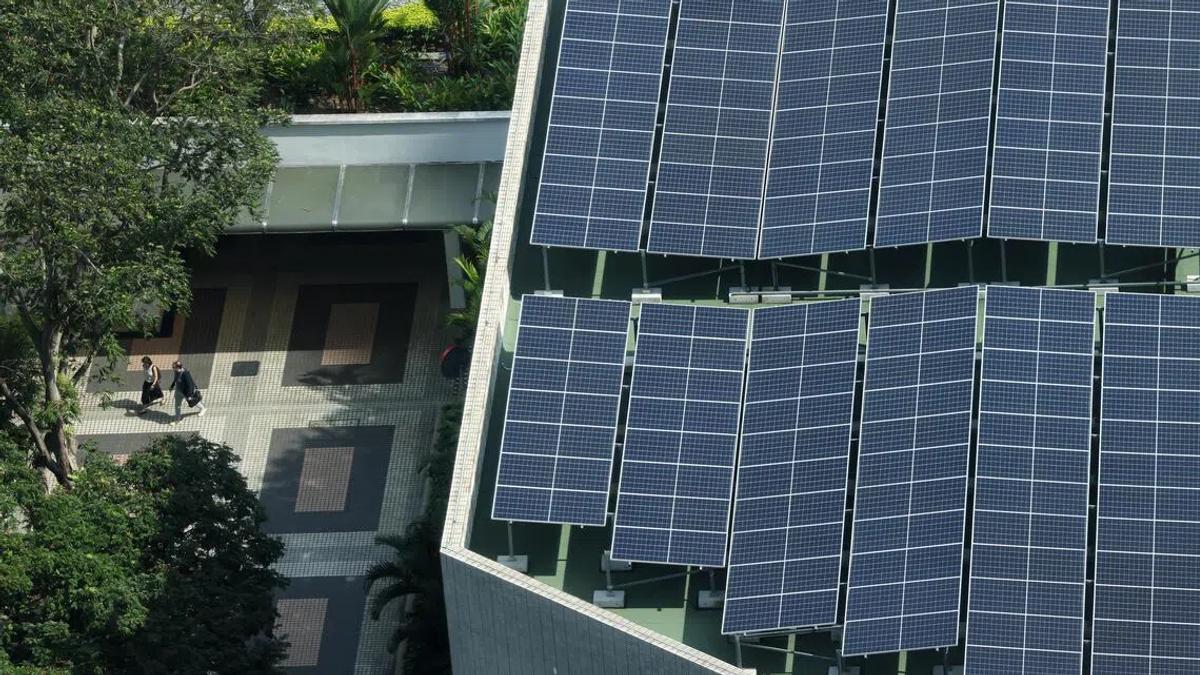
The United States has taken a significant step in its ongoing efforts to counter China's military-civilian fusion strategy by adding several prominent Chinese solar and battery manufacturers to a list of companies believed to be aiding China's military. This move, announced on June 5, 2026, has significant implications for the global solar and battery industries, as well as the broader US-China relationship.
The US has added Trinasolar and JA Solar Technology, two of the world's largest solar panel makers, to the list of companies it believes are aiding China's military. Additionally, EVE Energy and CALB Group, two of the largest battery makers for energy storage and electric vehicles, have also been included. These companies are critical to China's efforts to develop its renewable energy sector and reduce its dependence on fossil fuels.
The inclusion of these companies on the list is a significant escalation of tensions between the US and China. Under US law, the Defence Department will be prohibited from contracting directly with companies on the list and restricted from buying their products or services through third parties from 2027. This move is likely to have a significant impact on the global solar and battery industries, as US companies may be forced to seek alternative suppliers.
The US has been increasingly concerned about China's military-civilian fusion strategy, which seeks to leverage civilian technologies and industries to support military modernization. The US has been working to counter this strategy through a range of measures, including export controls and investment restrictions.
The inclusion of these companies on the list is likely to have significant implications for the broader US-China relationship. The US has been seeking to counter China's growing influence in the Asia-Pacific region, and this move is likely to be seen as a further escalation of tensions.
The consequences of this move are likely to be far-reaching. The US may face significant pushback from China, which could lead to a deterioration in relations between the two nations. Additionally, the global solar and battery industries may be impacted, as US companies may be forced to seek alternative suppliers.
The US Department of Defence has added Trinasolar, JA Solar Technology, EVE Energy, and CALB Group to the list of companies it believes are aiding China's military. Alibaba, Baidu, and biotech company WuXi AppTec have also been included, although they have disputed their inclusion.
The US announced the addition of these companies to the list on June 5, 2026. The companies are based in China, with operations in several countries around the world.
Editor's Note: The long-term consequences of this move are uncertain, and the US may face significant pushback from China.
Source referenced: STRAITSTIMES
This brief was synthesized by our Editorial Engine and reviewed by The Ground Narrative team.