TRENDING

Sunday, 18 October 2026
----------------------
7 Jumada Al-Awwal 1448 AH
Ukrainian President Volodymyr Zelensky has committed to a clear timetable for EU accession talks, signaling Kyiv's unwavering strategic orientation towards European integration. This pledge underscores the profound geopolitical stakes for Ukraine, the European Union, and regional stability.
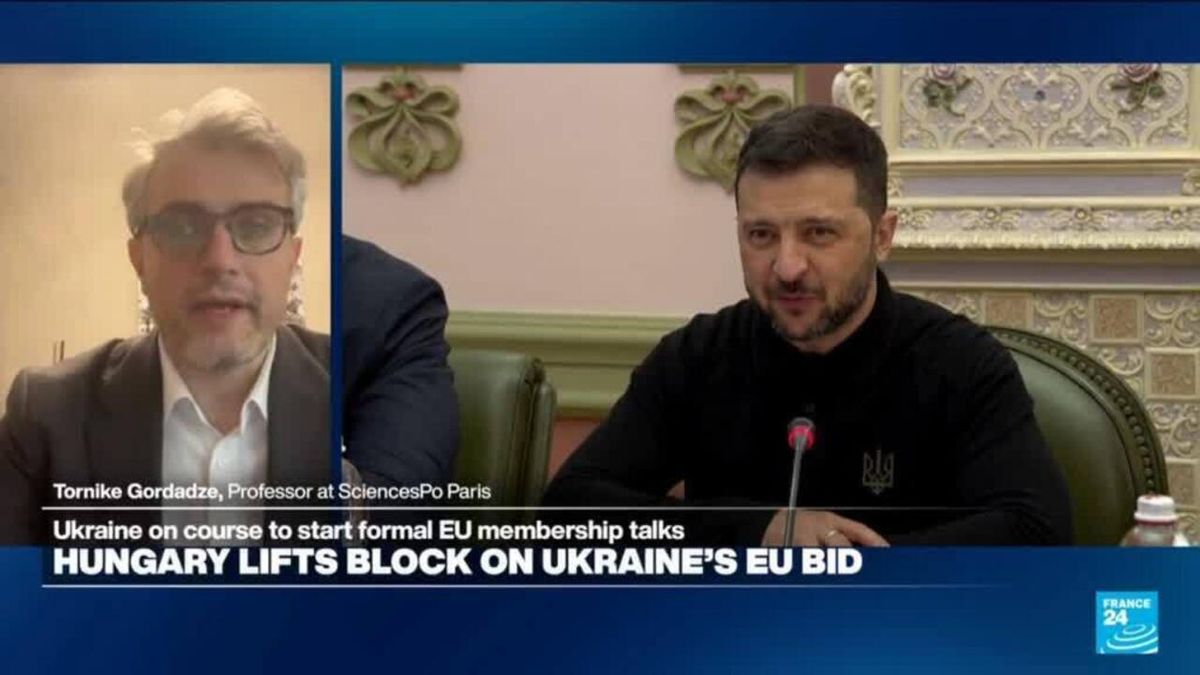
On Thursday, June 4, 2026, Ukrainian President Volodymyr Zelensky affirmed Ukraine's commitment to a clear timetable for European Union membership talks and adherence to the bloc's obligations. This declaration, made amidst ongoing conflict, highlights Kyiv's steadfast resolve to anchor its future within the European political and economic sphere, a move with significant geopolitical implications for Eastern Europe and the broader international order.
Ukraine's pursuit of EU membership is not merely an economic or political aspiration; it is a fundamental pillar of its national security strategy and a direct counter to Russian influence. For Kyiv, joining the 27-nation bloc represents a pathway to long-term stability, economic recovery, and democratic consolidation. The promise of EU integration offers a powerful incentive for internal reforms, particularly in areas such as anti-corruption, judicial independence, and market liberalization, which are crucial for post-conflict reconstruction and attracting foreign investment. Furthermore, it provides a robust institutional framework that can help safeguard Ukraine's sovereignty and territorial integrity against external aggression, reinforcing its Western orientation.
Historically, Ukraine's desire for closer ties with Europe has been a flashpoint, notably contributing to the Euromaidan Revolution in 2014 and subsequently Russia's annexation of Crimea and support for separatists in eastern Ukraine. The current full-scale invasion by Russia has only intensified Ukraine's determination to secure its European future, viewing EU membership as an existential choice that defines its identity and geopolitical alignment.
For the European Union, Ukraine's accession presents both immense challenges and strategic opportunities. Integrating a country of Ukraine's size, with its significant agricultural sector and a war-torn economy, will necessitate substantial institutional reforms within the EU itself, particularly concerning budget allocations, decision-making processes, and agricultural policies. Concerns about 'enlargement fatigue' and the potential for internal divisions over the pace and terms of accession are palpable among some member states.
However, the geopolitical imperative for the EU to embrace Ukraine is equally compelling. Denying Ukraine a clear path to membership could be perceived as abandoning a nation fighting for European values, potentially destabilizing the region further and emboldening revisionist powers. Granting candidate status in 2022 was a powerful symbolic gesture, signaling the EU's long-term commitment. Zelensky's pledge for a clear timetable aims to maintain this momentum, pushing the EU to translate symbolic support into concrete steps towards integration. A stable, prosperous, and democratic Ukraine integrated into the EU would serve as a vital bulwark on the bloc's eastern flank, enhancing European security and projecting its influence eastward.
This renewed commitment to EU accession directly impacts the broader geopolitical landscape. For Russia, Ukraine's integration into the EU is viewed as a direct challenge to its perceived sphere of influence and a further encroachment of Western institutions towards its borders. Moscow has consistently opposed Ukraine's Western alignment, seeing it as a threat to its national security interests. Therefore, Ukraine's progress towards EU membership will likely exacerbate existing tensions and could influence Russia's strategic calculations regarding the ongoing conflict and its future relations with Europe.
Beyond Russia, Ukraine's EU path has implications for other aspiring members in the Western Balkans, Moldova, and Georgia. A successful, albeit challenging, accession process for Ukraine could reinvigorate the enlargement policy, offering a renewed sense of purpose and a clear roadmap for other nations seeking to join the bloc. Conversely, significant delays or obstacles could dampen enthusiasm and raise questions about the EU's capacity for further expansion.
While President Zelensky's pledge underscores Ukraine's unwavering resolve, the path to full EU membership remains arduous. The country faces monumental challenges, including the ongoing war, extensive reconstruction needs, and the deep-seated reforms required to meet the stringent Copenhagen criteria. Addressing issues such as corruption, strengthening the rule of law, and aligning its economy with EU standards will demand sustained political will and significant international support.
Nevertheless, the commitment to a clear timetable provides a crucial framework for both Ukraine and the EU. It sets expectations, encourages accountability, and offers a strategic anchor for Ukraine's post-war development. The journey will be long and complex, but the geopolitical significance of Ukraine's European future cannot be overstated, shaping the security architecture and power dynamics of the continent for decades to come.
Source referenced: FRANCE24
This brief was synthesized by our Editorial Engine and reviewed by The Ground Narrative team.


