TRENDING

Sunday, 25 October 2026
----------------------
14 Jumada Al-Awwal 1448 AH
Ukraine launched a massive drone attack across multiple Russian regions, including St. Petersburg, coinciding with Russia's key economic forum. This offensive, a 'just response' to Russian aggression, underscores Kyiv's intent to impose costs and challenge Moscow's domestic security amidst stalled peace talks.
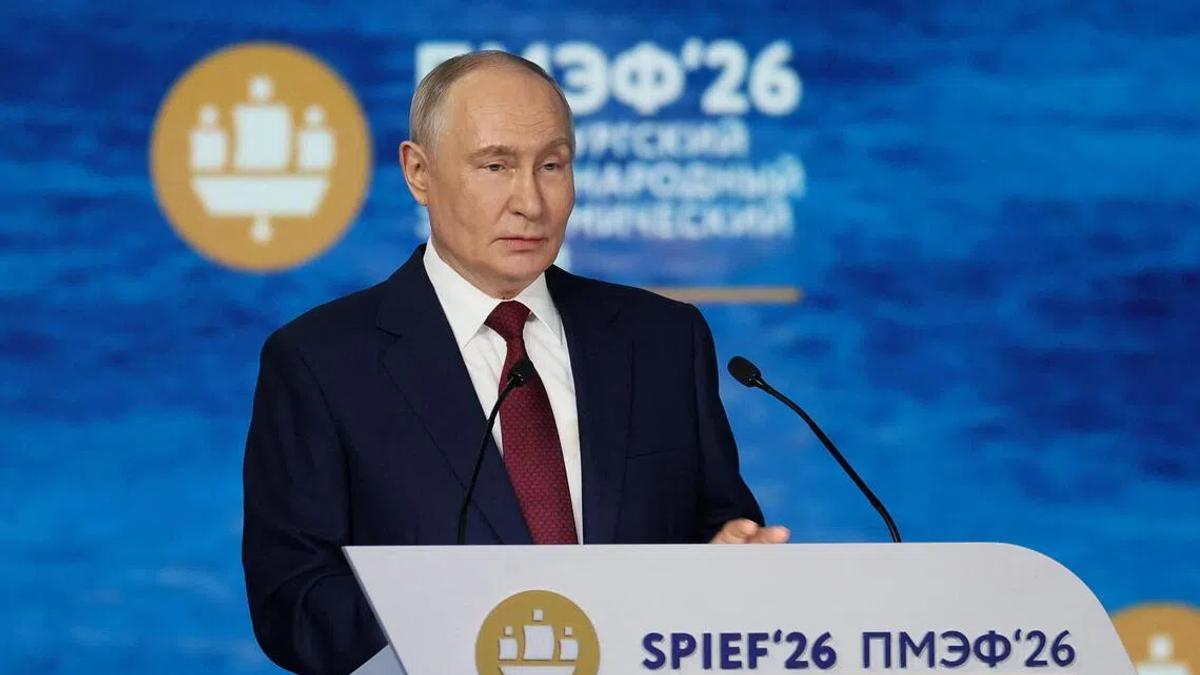
On June 6, 2026, Ukraine launched an unprecedented wave of drone attacks deep into Russian territory, targeting numerous regions, including the strategically and symbolically significant city of St. Petersburg. This extensive operation, which involved hundreds of unmanned aerial vehicles (UAVs), resulted in one fatality and an oil depot fire in Ust-Labinsk, while also prompting a rare public safety alert in St. Petersburg. The timing of these strikes, occurring on the final day of the St. Petersburg International Economic Forum (SPIEF), Russia's flagship economic event, underscores a deliberate strategic intent by Kyiv to impose costs and send a clear message amidst a deepening diplomatic impasse.
The Russian Ministry of Defence reported intercepting a total of 376 drones across a vast geographical area, spanning Belgorod, Bryansk, Kaluga, Kursk, Leningrad, Novgorod, Oryol, Pskov, Rostov, Ryazan, Smolensk, Tver, and Tula regions, as well as the Moscow region, Crimea, Abkhazia, and over the Azov and Black Seas. Notably, over 140 drones were reportedly shot down over the Leningrad region, which encompasses St. Petersburg, indicating a concentrated effort to target the city. While Russian authorities claimed no major damage in St. Petersburg itself, the attacks caused a fire at an oil depot in Ust-Labinsk and led to the death of one individual in the Tver region due to drone debris. The scale and breadth of these strikes represent a significant escalation in Ukraine's capability to project power deep within Russia, challenging Moscow's air defense systems and its narrative of domestic security.
These large-scale drone attacks did not occur in isolation. They followed directly on the heels of Russian President Vladimir Putin's rejection of a meeting proposal from Ukrainian counterpart Volodymyr Zelensky on June 5. Speaking at the SPIEF, Putin stated he saw “no point” in such a meeting until a potential peace deal had been agreed upon, a stance that Zelensky criticized as “choosing war again.” Ukraine's Foreign Minister Andriy Sybiga further condemned Putin's position, asserting that Russia had “lost its chance to get out of his failed war” and would eventually face “far worse” diplomatic terms.
From Kyiv's perspective, the drone offensive serves multiple strategic objectives. Firstly, it acts as a “just response” to ongoing Russian aggression, as articulated by President Zelensky. By striking Russian territory, Ukraine aims to demonstrate its resolve and capacity to retaliate against the continuous bombardment of its own cities and infrastructure. Secondly, the attacks are designed to impose economic and psychological costs on Russia. Targeting critical infrastructure, such as oil depots, aims to disrupt Russia's war economy, while striking symbolic cities like St. Petersburg seeks to undermine the sense of security among the Russian populace and leadership.
The timing of the attacks during the SPIEF is particularly significant. This forum, often dubbed “Russia's Davos,” is a crucial platform for Moscow to project an image of economic stability and international engagement. By launching a major drone assault during this event, Ukraine likely sought to disrupt the narrative, embarrass the Russian leadership on a global stage, and signal to international attendees that Russia's domestic security is compromised by its ongoing war in Ukraine. It underscores that the conflict is not confined to Ukrainian territory but has direct implications for Russia itself.
The intensification of cross-border drone strikes by both sides signals a deepening of the conflict and a continued reliance on military solutions rather than diplomatic breakthroughs. While US-led diplomatic efforts to end the war remain stalled, partly due to global attention shifting to the Middle East, the actions on the ground suggest a prolonged period of attrition warfare. Russia, for its part, renewed its own strikes on Ukraine on June 6, with reports of casualties in Zaporizhzhia and Dnipropetrovsk regions, indicating a reciprocal escalation.
Putin's rejection of talks with Zelensky, coupled with Ukraine's demonstrative military action, suggests that neither side currently perceives a viable path to a negotiated settlement that aligns with their core objectives. Russia appears committed to its “special military operation,” believing it can achieve its goals through military means, while Ukraine is determined to resist and impose maximum costs on the aggressor to strengthen its hand in any future negotiations. The increasing reach and frequency of Ukrainian drone attacks into Russia could lead to further retaliatory measures from Moscow, potentially escalating the conflict in unpredictable ways and further destabilizing regional security. The current trajectory points towards a protracted conflict with significant geopolitical ramifications, as both sides continue to test each other's resolve and capabilities.
Source referenced: STRAITSTIMES
This brief was synthesized by our Editorial Engine and reviewed by The Ground Narrative team.