TRENDING

Wednesday, 7 October 2026
----------------------
26 Rabi' Al-Thani 1448 AH
Keir Starmer's resignation as UK Prime Minister and Labour leader triggers a leadership contest, with Andy Burnham emerging as the dominant frontrunner. This transition signals potential shifts in domestic policy, emphasizing regional rebalancing, while maintaining key foreign policy stances amid global instability.
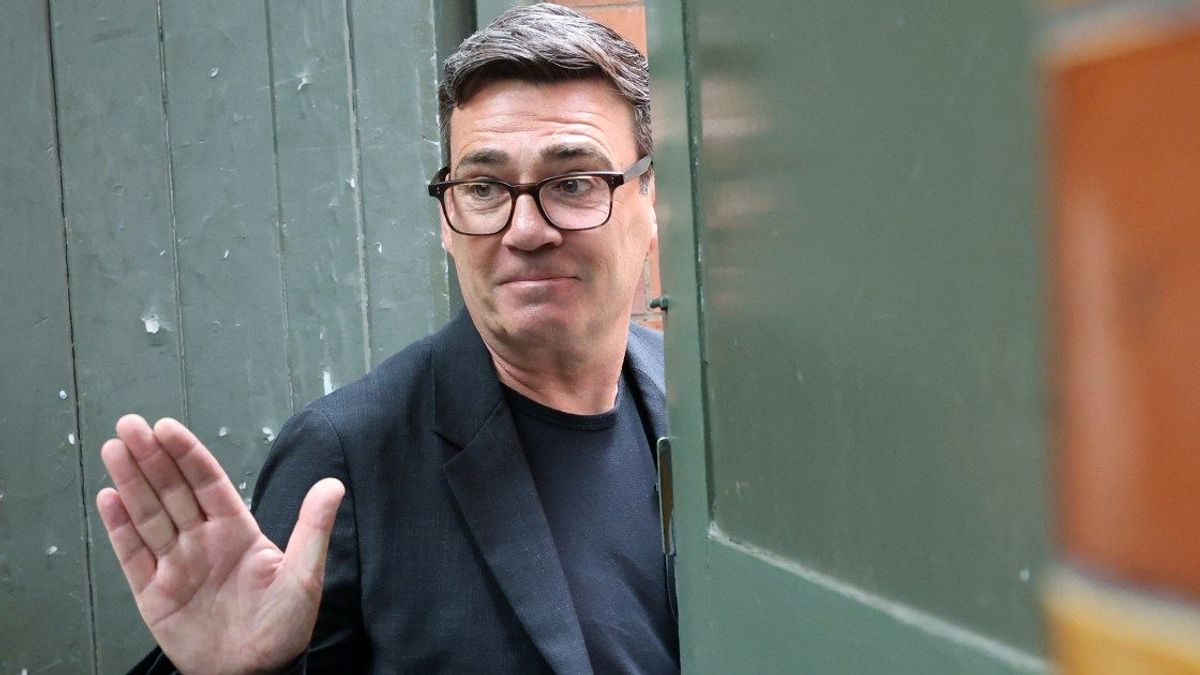
The United Kingdom is once again navigating a significant political transition, as Prime Minister Keir Starmer announced his intention to step down as both the nation's leader and head of the Labour Party. This development, occurring just two years after Labour's landslide victory ended 14 years of Conservative rule, underscores a period of heightened political instability in the UK, which has seen seven prime ministers in a single decade. The ensuing leadership contest within the governing Labour Party is poised to determine the country's next prime minister, with significant implications for both domestic policy and Britain's standing on the global stage.
Starmer's resignation, declared on June 22, 2026, came amid mounting pressure following a series of challenging local election defeats for Labour, shifts in domestic policy, and the controversial appointment of Peter Mandelson as ambassador to the United States—an individual previously dismissed over his association with the late sex offender Jeffrey Epstein. These factors collectively eroded confidence in Starmer's leadership, prompting his decision to initiate a succession process.
The formal nomination period for the Labour Party leadership commenced on July 9, 2026. To qualify, candidates must be serving Labour Members of Parliament and secure the backing of at least 20 percent of their parliamentary colleagues, equating to 81 MPs. Additionally, they require nominations from a minimum of three affiliated organizations, including two trade unions, or from 5 percent of the party's local branches. Should multiple candidates meet these criteria, Labour members and affiliated unions will participate in a vote from August 6 to 27, with results anticipated on August 29.
Currently, Andy Burnham, the former Mayor of Greater Manchester, has emerged as the sole declared nominee and the overwhelming frontrunner. Known colloquially as the “King of the North,” Burnham's eligibility for the leadership was secured after winning a crucial by-election for the Makerfield constituency in the House of Commons on June 18. His momentum has since surged, attracting public endorsements from key Labour figures, including former ministers Wes Streeting and Al Carns, who had themselves been considering bids. This strong backing positions Burnham as the likely next prime minister, potentially even without a contested race, a scenario that could see him sworn in by July 20.
Andy Burnham's political platform positions him within Labour's “soft left” faction, advocating for substantial domestic reforms aimed at addressing regional disparities and rebalancing power across the UK. A central tenet of his agenda is a comprehensive process of “devolution,” designed to empower regions outside London. He has pledged an “enormous social housing programme” and expanded social care initiatives, signaling a commitment to bolstering public services and welfare provisions.
Perhaps his most symbolic proposal is the plan to divide the Prime Minister’s Office between London and Manchester, a move intended to underscore his commitment to the North and to “bring about the biggest rebalancing of power our country has seen.” This strategy aims to raise living standards for all Britons, challenging the traditional London-centric focus of British governance. Such a shift, if implemented, could have profound economic and social implications, potentially redirecting investment and development towards historically underserved regions and reshaping the national identity.
While Burnham's career has predominantly focused on domestic policy, his stated positions on international affairs indicate a blend of continuity and nuanced perspectives. He has consistently affirmed his support for NATO, aligning with a cornerstone of UK foreign policy, and has been critical of the UK's departure from the European Union, suggesting a potential desire for closer ties with the continent.
On the critical issue of the Russia-Ukraine war, Burnham has expressed “100 percent unwavering support for Ukraine,” a stance reiterated by Foreign Secretary Yvette Cooper after discussions with him. Furthermore, he has emphasized the necessity for Britain to enhance its defense capabilities, citing recent geopolitical developments such as the ongoing Russia-Ukraine conflict and the “US-Israel war on Iran.” This acknowledgment of a broader, more volatile global security environment suggests a pragmatic approach to national defense.
Regarding the Israeli-Palestinian conflict, Burnham's position is complex. In 2015, he was among a minority of British politicians who advocated for recognizing Palestinian statehood, describing it as a “right,” and criticized the expansion of Israeli settlements as “key obstacles” to a two-state solution. However, he has also opposed boycotting Israel, stating such efforts were “the wrong response.” More recently, in the lead-up to the Makerfield by-election, he declined to label Israel's actions in Gaza as “genocide.” The appointment of James Purnell, a former chair of Labour Friends of Israel, as his chief of staff further indicates a balanced, albeit potentially cautious, approach to this highly sensitive issue.
The prospect of Andy Burnham becoming prime minister without a contested leadership race has raised questions regarding his democratic legitimacy. A recent survey indicated that only 27 percent of Britons and 45 percent of Labour voters believe he should assume the premiership without a formal contest. This concern is amplified by the fact that if he takes office midterm, he would be the fifth prime minister in a decade to do so without winning a general election as party leader, following Theresa May, Boris Johnson, Liz Truss, and Rishi Sunak.
Public sentiment, as reflected in the Lord Ashcroft Polls survey, suggests a majority of Britons desire an early general election within the next year. However, experts like Paul Whiteley, emeritus professor of government at the University of Essex, contend that an immediate general election is “very unlikely to happen” due to the associated disruption and costs. Whiteley also suggests that an uncontested victory would likely have minimal impact on public perception of Burnham's legitimacy, citing historical precedents. The next general election is not constitutionally mandated until August 2029, providing the new leader a significant period to consolidate power and implement their agenda before facing the electorate.
The transition of leadership within the Labour Party, and by extension the UK government, marks a pivotal moment for the nation. Andy Burnham's potential premiership promises a distinct domestic agenda focused on regional rebalancing and social welfare, while maintaining a largely consistent, yet strategically aware, foreign policy stance. The challenges of uniting a diverse party, addressing public concerns about legitimacy, and navigating a complex geopolitical landscape will define his early tenure, shaping the UK's trajectory in the coming years.
Source referenced: ALJAZEERA
This brief was synthesized by our Editorial Engine and reviewed by The Ground Narrative team.