TRENDING

Thursday, 8 October 2026
----------------------
27 Rabi' Al-Thani 1448 AH
The death of Supreme Leader Ayatollah Ali Khamenei amidst an active US-Israeli war against Iran has plunged the nation into a critical leadership transition. The non-appearance of his appointed successor, Mojtaba Khamenei, during the funeral rites signals potential internal instability and raises profound questions about Iran's future trajectory.
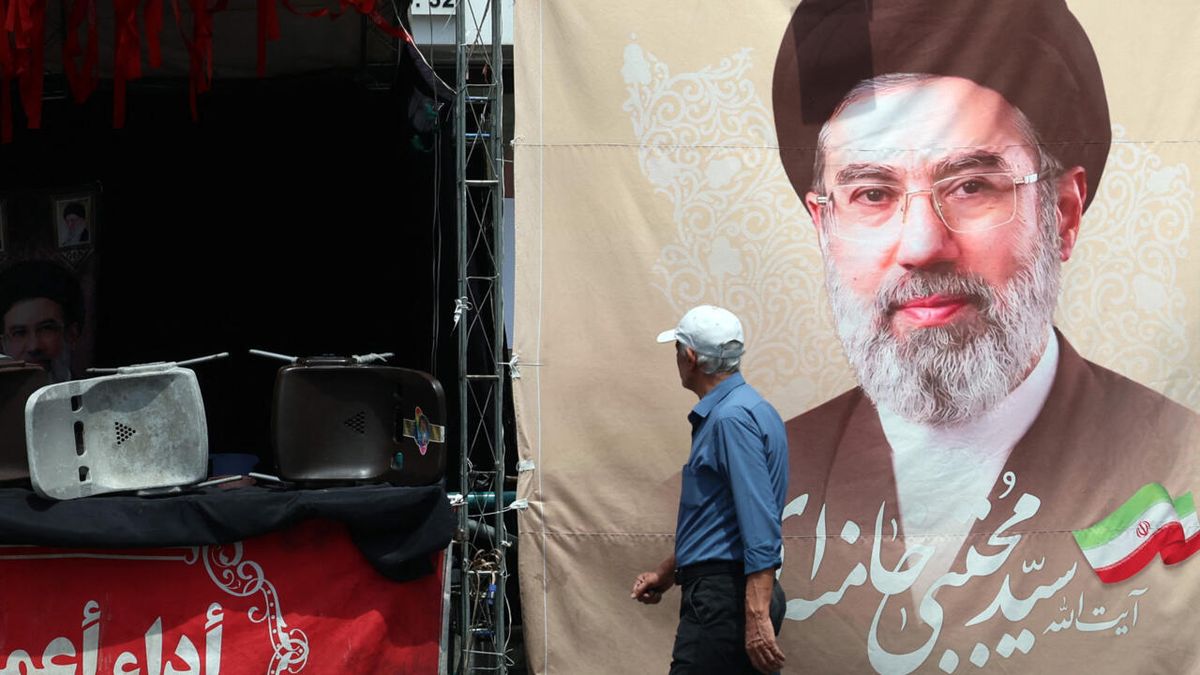
Iran is navigating an unprecedented period of geopolitical uncertainty following the death of its Supreme Leader, Ayatollah Ali Khamenei. The passing of the nation's ultimate authority, confirmed on February 28, occurred on the inaugural day of what the article describes as a direct US-Israeli war against the Islamic Republic. This confluence of a leadership vacuum and active conflict presents a formidable challenge to regional stability and global security.
The six-day funeral ceremonies, which concluded on July 9, 2026, were closely observed for indications of the new leadership. However, the most striking development was the conspicuous absence of Mojtaba Khamenei, the late leader's son, who had reportedly been appointed as his successor. His failure to appear publicly during such a pivotal national moment has fueled speculation regarding the stability of the succession process and the potential for internal power struggles within Iran's complex political and religious establishment.
The Supreme Leader holds immense power in Iran, overseeing all major state policies, military affairs, and the judiciary. The process of succession, typically managed by the Assembly of Experts, is inherently sensitive. The reported appointment of Mojtaba Khamenei, a figure with significant influence within the security apparatus but lacking the public religious profile of his father, suggests a potential shift in the nature of Iran's top leadership. His non-appearance could indicate several possibilities: a deliberate strategy to manage public perception and consolidate power behind the scenes, significant internal opposition to his appointment, or acute security concerns given the ongoing conflict.
This leadership transition is occurring at a moment of extreme regional tension. The article highlights that the United States and Iran have resumed strikes, threatening a return to full-scale warfare. The death of Ayatollah Khamenei, a figure who had steered Iran's foreign and domestic policy for decades, removes a known quantity from the geopolitical chessboard. A new leader, particularly one whose legitimacy or authority is not immediately and publicly affirmed, could face immense pressure to demonstrate strength and resolve, potentially leading to an escalation of the conflict with the US and Israel.
The implications of this succession crisis extend far beyond Iran's borders. A period of internal instability in Iran could embolden regional adversaries or create opportunities for external actors to exert influence. Iran's network of proxy forces across the Middle East, including in Lebanon, Syria, Iraq, and Yemen, will be closely watching the transition. The new leadership's stance on these regional alliances and its approach to the nuclear program will be critical determinants of future regional dynamics.
For the United States and Israel, the uncertainty surrounding Iran's leadership presents both challenges and potential opportunities. A weakened or internally divided Iran might be less capable of projecting power, but it could also become more unpredictable. The ongoing military engagements suggest a heightened state of alert and a potential for miscalculation, especially as a new Iranian leader seeks to assert control and legitimacy.
The coming weeks will be crucial in determining the trajectory of Iran's leadership and its impact on the broader Middle East. The eventual public unveiling and consolidation of power by Mojtaba Khamenei, or an alternative figure, will be a defining moment. The manner in which this transition unfolds will signal whether Iran is heading towards a period of relative stability under new leadership or into deeper internal fragmentation and external confrontation.
Given the explicit mention of a US-Israeli war against Iran, the stakes are extraordinarily high. Any perceived weakness or internal division during the succession could be exploited, while a strong, unified new leadership might choose to double down on existing policies or pursue new, potentially more aggressive, strategies to assert its authority. The world watches as Iran grapples with a leadership void in the shadow of active conflict, a situation fraught with peril for regional and global security.
Editor's Note: The article explicitly states 'US-Israeli war against the Islamic republic' and 'resumed strikes,' which forms the core context for the analysis. The non-appearance of the successor is the central mystery.
Source referenced: FRANCE24
This brief was synthesized by our Editorial Engine and reviewed by The Ground Narrative team.