TRENDING

Monday, 26 October 2026
----------------------
15 Jumada Al-Awwal 1448 AH
U.S. President Donald Trump abruptly canceled planned strikes on Iran, citing progress on a comprehensive deal, a claim immediately disputed by Tehran. This rapid shift from military threat to diplomatic overture underscores high-stakes brinkmanship in the Persian Gulf, with significant implications for regional stability and global energy markets.
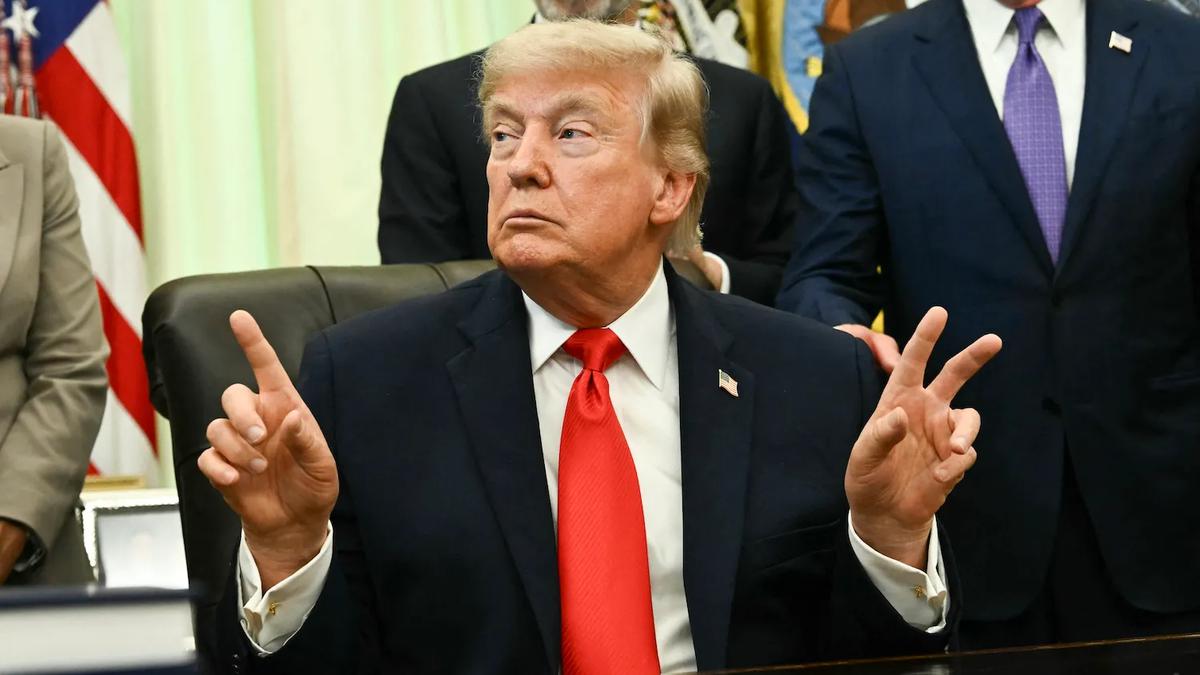
On June 11, 2026, U.S. President Donald Trump engaged in a dramatic display of geopolitical brinkmanship, first threatening severe military action against Iran and then abruptly canceling the planned strikes hours later, citing significant progress on a comprehensive deal. This rapid escalation and de-escalation unfolded against a backdrop of heightened tensions in the Persian Gulf, leaving regional and international observers grappling with the true state of U.S.-Iran relations and the prospects for a lasting resolution.
Earlier on Thursday, President Trump had issued a stark warning via Truth Social, declaring an intent to take control of Kharg Island and other Iranian oil infrastructure. Kharg Island, a small but strategically vital location in the Persian Gulf, serves as the primary terminal for approximately 90 percent of Iran's crude oil exports. The threat to seize such a critical economic lifeline represented a significant escalation, with Trump comparing the potential action to U.S. military operations in Venezuela and vowing to launch "VERY HARD" strikes later that night. This aggressive posture followed earlier U.S. "self-defense" strikes against Iranian air defense and surveillance sites, which Trump ordered after accusing Iranian forces of attacking a U.S. Army Apache helicopter near the Strait of Hormuz.
Just five hours after his initial threat, President Trump reversed course, announcing the cancellation of the scheduled strikes. He stated that "discussions with the Islamic Republic of Iran have been brought to the highest level of Iranian leadership and approved." Trump further claimed that final points of a comprehensive transaction, "in both concept and great detail," had been approved by all parties, including the United States, Israel, Saudi Arabia, the United Arab Emirates, Kuwait, Bahrain, Jordan, Qatar, Egypt, Pakistan, and Turkey. He indicated that the timing and location for the deal's signing would be announced shortly, though he did not disclose the specific terms. Crucially, Trump affirmed that the U.S. naval blockade on Iran would remain "in full force and effect until this Transaction is finalized."
However, the narrative of a breakthrough deal was immediately challenged by Tehran. Iranian Foreign Ministry spokesperson Esmail Baghaei reported that while a large part of the negotiating text had been finalized, the "Americans have changed their positions." Baghaei also asserted that U.S. actions were contributing to increased insecurity in the Strait of Hormuz, a critical global shipping lane. Adding to the skepticism, a commander of Iran's military headquarters warned that any new U.S. attack would trigger a "response harsher than before," leading to a "broader and more widespread" conflict. Mohsen Rezaei, an Iranian military advisor, publicly criticized Trump, stating that Washington must choose between "accepting Iran's terms and losing the last shred of its credibility."
This episode highlights the complex and volatile nature of U.S.-Iran relations, characterized by a blend of military pressure and diplomatic overtures. President Trump's strategy appears to be one of extreme coercion, using the threat of devastating economic and military action to force concessions from Tehran. His repeated demands for Iran to curb its nuclear capabilities and cease developing nuclear weapons, alongside Israel's stated appreciation for Trump's commitment to specific terms—including the removal of enriched material, dismantling of enrichment infrastructure, limitation of missile production, and cessation of support for regional proxies—underscore the core security concerns driving the negotiations.
The involvement of multiple regional actors, as claimed by Trump, suggests an attempt to forge a broad coalition against Iran's regional influence and nuclear ambitions. While Israel's Prime Minister Benjamin Netanyahu's office clarified that Israel was not a party to the agreement, its public endorsement of the proposed terms indicates a shared strategic objective with the U.S. and its Gulf allies. The Strait of Hormuz remains a central flashpoint, with any disruption having profound implications for global energy markets and international trade.
The ongoing tensions, which Trump referred to as the "Iran war," reflect a prolonged period of confrontation following the U.S. withdrawal from the Joint Comprehensive Plan of Action (JCPOA) and the subsequent re-imposition of sanctions. The current situation demonstrates a continuation of this high-stakes dynamic, where both sides employ strong rhetoric and demonstrate military capabilities while ostensibly pursuing a diplomatic resolution.
The significant discrepancy between the U.S. and Iranian accounts of the alleged deal introduces considerable uncertainty. Whether Trump's announcement was a premature declaration, a strategic maneuver to pressure Iran, or a genuine but fragile breakthrough remains unclear. The coming days will be critical in determining if a verifiable agreement materializes, or if the region will revert to an even higher state of alert. The implications of any resolution, or lack thereof, will profoundly shape the geopolitical landscape of the Middle East, impacting global energy security, nuclear non-proliferation efforts, and the broader balance of power.
Source referenced: FOREIGNPOLICY
This brief was synthesized by our Editorial Engine and reviewed by The Ground Narrative team.


