TRENDING

Monday, 21 September 2026
----------------------
10 Rabi' Al-Thani 1448 AH
President Donald Trump claimed the Houthi movement has promised not to attack American forces, even as missile strikes on Saudi Arabia intensify and the Yemeni war expands.
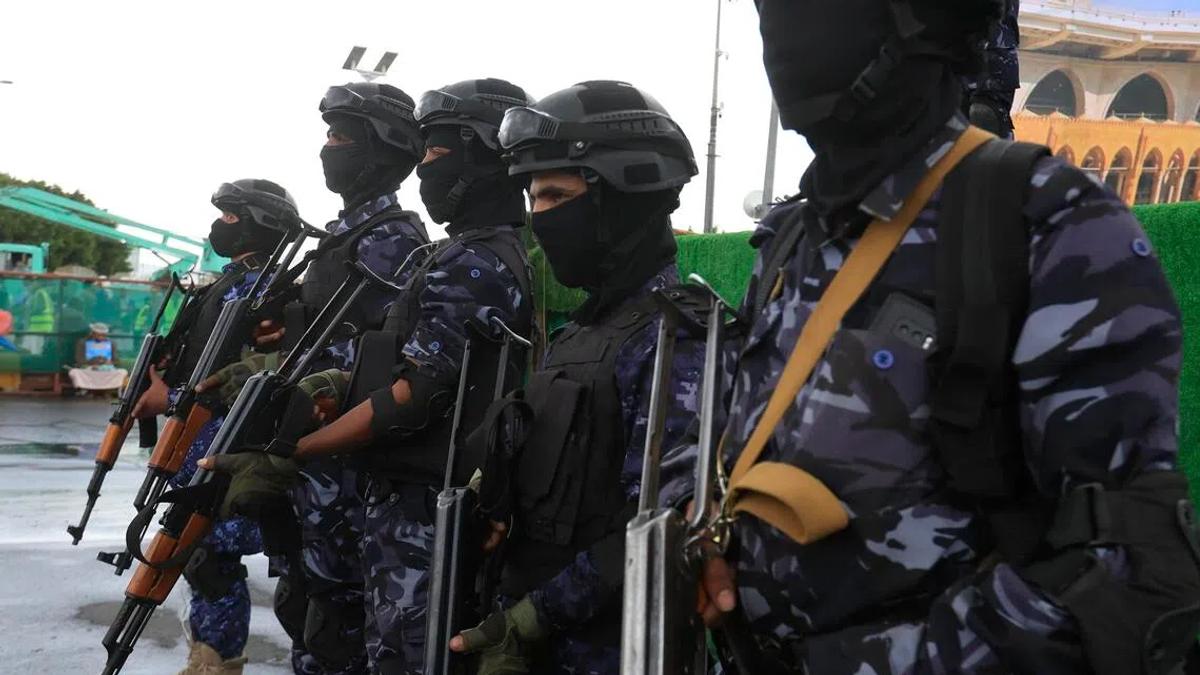
President Donald Trump told Fox News that the Yemen‑based Houthi rebels have agreed not to target U.S. forces, even as they step up missile attacks on Saudi Arabia and seize more territory from the Saudi‑backed government. The claim was made during a visit to Ireland on Sept 12 and reiterated on Sept 20, while a Houthi missile struck Riyadh on Sept 19.
U.S. calculations – Washington seeks to avoid a direct military clash with the Houthis while keeping the Saudi‑U.S. security pact intact. By framing the Houthis as “holding back” on the United States, the administration can signal restraint to domestic audiences and preserve the option of a calibrated response against Iran, the group’s patron. Saudi Arabia’s leverage – Riyadh relies on U.S. air‑defense guarantees and arms sales; every successful Houthi strike erodes that credibility and forces the kingdom to press Washington for a stronger posture. Iran’s stake – Tehran supplies the Houthis with missiles and drones, using the Yemeni front as a proxy theater to pressure Saudi Arabia without exposing Iranian forces directly. A U.S. threat to “blow up” Iran serves both as a warning to Tehran and a domestic political cue for Trump, who has long positioned himself as the “tough on Iran” candidate.
The surge in Houthi attacks has deepened civilian suffering across Yemen and Saudi Arabia. In Yemen, displaced families are forced deeper into already strained camps as Houthi advances push the internationally recognised government into retreat, cutting off humanitarian aid routes. In Saudi Arabia, missile strikes on Riyadh and other urban centers have triggered air‑raid alerts, disrupted commerce, and heightened anxiety among ordinary citizens who now face the prospect of war on their streets. The broader regional economy feels the ripple: oil markets jitter with each new threat, raising fuel prices that disproportionately affect low‑income households across the Gulf and beyond.
Official statements downplay the strategic communication behind Trump’s remarks. By emphasizing a Houthi “no‑attack” pledge, the administration sidesteps the reality that the Houthis have never renounced targeting U.S. interests; they simply lack the capability to strike the U.S. mainland. The narrative also obscures the cost of U.S. arms flows to Saudi Arabia, which sustain a coalition that has been responsible for thousands of civilian deaths in Yemen. Moreover, the looming “big thing” against Iran is presented as a unilateral decision, while in fact any large‑scale strike would require coordination with allies, congressional approval, and would risk igniting a wider regional conflagration.
Watch for three developments: 1) Diplomatic signals from Tehran – any change in Iranian missile shipments or public statements could indicate whether the Houthi restraint is genuine or a tactical pause. 2) U.S. congressional response – as the administration hints at a possible “blow up” of Iran, lawmakers may push back, shaping the scope and timing of any action. 3) Saudi defensive posture – Riyadh’s deployment of Patriot systems and potential escalation of its own air strikes will reveal whether the kingdom is preparing for a broader conflict or seeking a negotiated de‑escalation. The interplay of these moves will determine whether the current “no‑attack” claim remains a diplomatic footnote or becomes a prelude to a larger showdown.
Source referenced: STRAITSTIMES
This brief was synthesized by our Editorial Engine and reviewed by The Ground Narrative team.


