TRENDING

Monday, 21 September 2026
----------------------
10 Rabi' Al-Thani 1448 AH
President Trump has repurposed his proposed triumphal arch in Washington, D.C., into a military drone hub, sparking legal battles, protests, and questions about the militarization of public space.
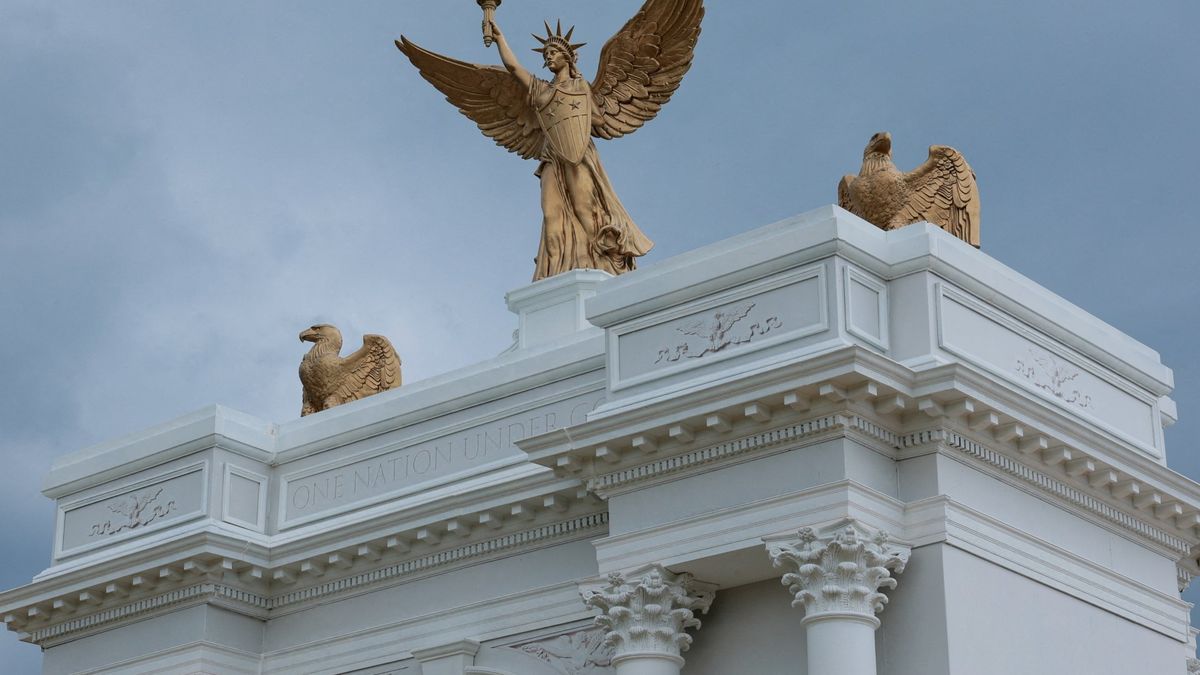
President Donald Trump announced on his social platform that the monumental triumphal arch he has long championed for the nation's 250th anniversary will also serve as a military facility to store drones, sniper ammunition, and related equipment. The design, originally a 76‑metre‑high baroque structure meant to dominate the capital’s skyline, now includes rooftop launch pads and a plaza for rapid drone deployment. The move follows a series of Trump‑backed construction projects in Washington that have faced lawsuits, court orders, and street protests.
Trump’s arch project operates at the intersection of political branding, defense‑industry patronage, and regulatory maneuvering. By tying the monument to “national security,” the administration sidesteps typical height restrictions and accelerates approvals from agencies like the FAA. The promised drone hub aligns with the defense sector’s push for urban proximity to command centers, reducing response times and showcasing cutting‑edge capabilities to both allies and rivals. Politically, the arch functions as a visual rallying point for Trump’s base—a symbol of American greatness that doubles as a tangible demonstration of his claim to be the nation’s security guarantor. The project also taps into a network of contractors who stand to profit from construction contracts, equipment procurement, and long‑term maintenance of the drone infrastructure. Congressional oversight is muted by the administration’s framing of the arch as a “military facility,” a designation that traditionally carries broader leeway under the National Defense Authorization Act.
The human cost spreads across several groups. Veterans who sued to protect the sightline between Arlington National Cemetery and the Lincoln Memorial argue that the arch erodes a symbolic space of reconciliation and remembrance. Local residents face potential noise, increased surveillance, and the psychological impact of a militarized skyline in a city built on democratic protest. Taxpayers are asked to shoulder an estimated $400 million price tag, a figure that competes with underfunded public services and infrastructure upgrades elsewhere. Small‑business owners in the tourism corridor worry about reduced foot traffic if the monument’s visual dominance deters visitors. Finally, the broader public bears the risk of normalizing the presence of lethal autonomous systems in everyday civic spaces, blurring the line between civilian and combat zones.
Official statements emphasize “national security” while downplaying the financial and constitutional dimensions of the project. What receives little attention is the role of defense contractors lobbying for urban deployment sites, a strategy that could set a precedent for future civilian‑military hybrids. The administration’s reliance on executive orders to bypass standard environmental and historic‑preservation reviews sidesteps the checks that Congress and the judiciary traditionally provide. Moreover, the rhetoric of “no facility like this anywhere in the world” masks the fact that similar drone hubs already exist in remote bases, raising questions about why a high‑visibility urban location is deemed necessary. The potential for the arch to become a target—whether for espionage, sabotage, or protest—receives scant discussion, despite the heightened security implications for the capital’s core.
Watch for the pending court ruling on the veterans’ lawsuit, which could force a redesign or halt construction altogether. Congressional committees are expected to summon the Department of Defense and the Commission of Fine Arts for hearings on the legal basis for classifying a public monument as a military installation. Grassroots mobilization is likely to intensify, especially as the arch’s construction coincides with other contested projects like the Kennedy Center name change and the White House ballroom bunker. Internationally, allies and adversaries will monitor how the United States blends symbolic architecture with kinetic capabilities, potentially influencing their own urban defense strategies. Finally, the upcoming fiscal year’s defense budget will reveal whether the drone depot is a one‑off showcase or the first node of a broader network of city‑based military facilities.
Editor's Note: Analysis based on publicly reported statements and legal filings; details of the final design remain unconfirmed.
Source referenced: ALJAZEERA
This brief was synthesized by our Editorial Engine and reviewed by The Ground Narrative team.


