TRENDING

Thursday, 5 November 2026
----------------------
25 Jumada Al-Awwal 1448 AH
The 140th Canton Fair pivoted from cheap goods to AI‑driven robots and green tech, signaling a new Chinese export strategy. While exporters chase higher margins, factories and low‑skill workers face an uncertain future.
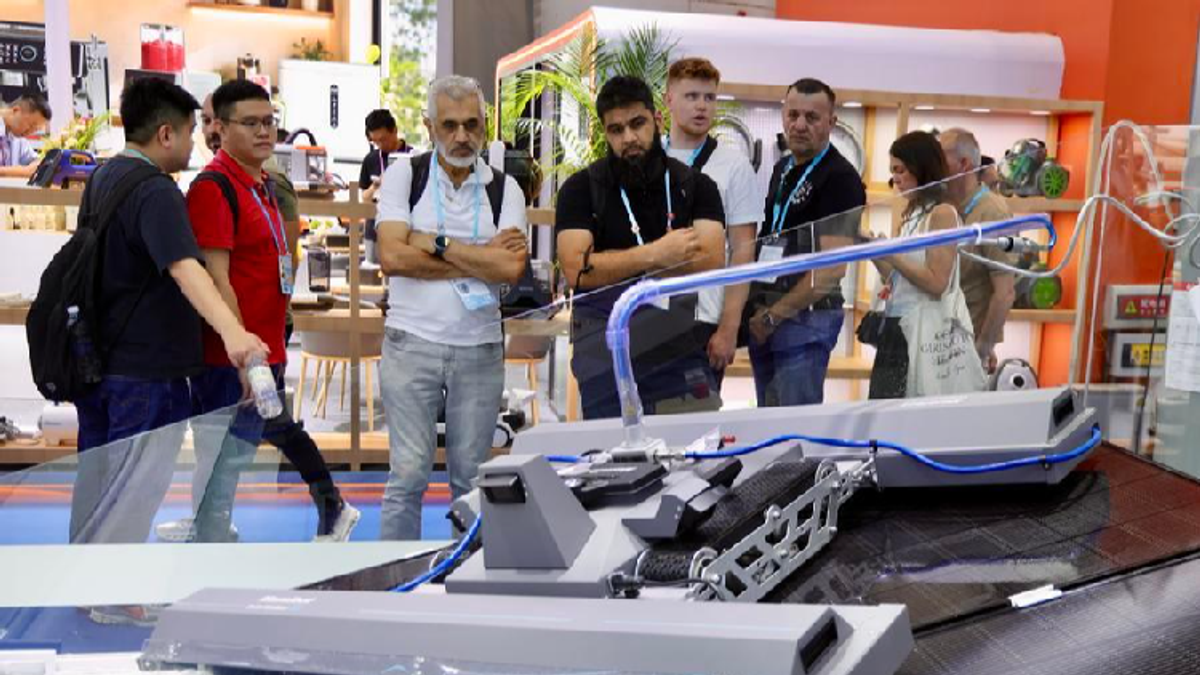
The 140th Canton Fair in Guangzhou wrapped up on November 4, showcasing more than 32,000 exhibitors and a record 23.2% of displays dedicated to brand‑new products. Visitors from dozens of countries tested wearable exoskeletons, toured robotics demos, and examined long‑duration energy storage units. Official data highlighted that 64% of participants now embed the industrial internet and AI into their R&D, while 36.5% have added services such as logistics and cross‑border financing to their portfolios.
For decades China built its export engine on low‑cost manufacturing, a model that relied on massive labor pools in coastal factories. The current fair signals a deliberate shift toward higher‑value, technology‑intensive goods that command better margins and are less vulnerable to price wars. By integrating AI and the industrial internet, firms can automate production, reduce reliance on cheap labor, and meet the quality expectations of sophisticated overseas buyers.
The transition aligns with the Made in China 2025 roadmap and the newer “dual circulation” strategy, which encourages domestic innovation while still courting foreign markets. Subsidies for robotics, tax breaks for green‑energy firms, and preferential loan terms for AI startups create a financial ecosystem that nudges companies toward the showcased sectors. The fair’s expanded services zone also reflects a policy push to move Chinese firms up the value chain by offering design, financing, and logistics as bundled solutions.
Western sanctions and supply‑chain disruptions after the pandemic have forced many import‑dependent economies to diversify sources. By positioning itself as a one‑stop shop for advanced hardware and accompanying services, China aims to lock in long‑term contracts that embed its standards into foreign production lines. The presence of buyers from Australia, Brazil, and Saudi Arabia at prefabricated construction booths illustrates a strategic outreach to emerging markets hungry for cost‑effective infrastructure solutions.
The push toward automation threatens the millions of low‑skill workers who have historically powered China’s export boom. As robots replace assembly‑line tasks, many laborers face layoffs or are forced into precarious gig‑economy roles, such as operating exoskeletons for short‑term contracts. In Guangdong’s industrial districts, unemployment offices report a modest rise in jobless claims, a trend that could accelerate if the high‑tech model scales rapidly.
Mid‑tier component makers that once thrived on supplying cheap parts to large OEMs now confront a market that demands integrated, AI‑enabled solutions. Those unable to invest in new technology risk being edged out, leading to a consolidation of the supply chain around a handful of state‑backed giants. The resulting loss of business for smaller firms ripples through local economies, reducing tax revenues and limiting community services.
While the fair flaunts green tech, the production of batteries and rare‑earth components for energy‑storage systems carries its own ecological burden. Mining towns in Inner Mongolia and Sichuan, already grappling with water scarcity, see increased extraction activity to meet global demand for clean‑energy hardware. Communities near these sites report higher incidences of respiratory illness and water contamination, a cost rarely highlighted in promotional materials.
State media celebrate the fair as a triumph of innovation, emphasizing export growth and climate leadership. Rarely mentioned is the systematic retraining program that the government has rolled out, which many analysts argue is insufficient to absorb displaced workers. The narrative sidesteps the social safety‑net gaps that leave former factory employees vulnerable to poverty.
Several showcased firms, such as Xiamen HiTHIUM and Chongqing SUNDON, have close ties to state‑owned banks that provide low‑interest loans contingent on meeting export targets. This relationship creates a hidden incentive structure: companies are pressured to secure foreign contracts quickly, sometimes at the expense of product safety or labor standards, to keep financing flowing.
Foreign buyers are drawn to the fair’s promise of affordable, high‑tech solutions, yet many remain unaware of the intellectual‑property risks inherent in sourcing from a market where forced technology transfer remains a tacit expectation. The fair’s glossy brochures omit discussion of how Chinese standards may become de‑facto global benchmarks, potentially limiting the strategic autonomy of importing nations.
The next phase will reveal whether the China model can sustain growth without triggering a social backlash. Key indicators include: the rate of job creation in AI‑related services versus layoffs in traditional manufacturing; the volume of cross‑border financing deals tied to green‑tech exports; and policy shifts in major importing countries that may tighten standards on technology sourcing. Observers should also monitor how the industrial‑internet ecosystem evolves, especially any moves to export proprietary software platforms alongside hardware. The balance between profit, power, and people will determine if the Canton Fair’s new model becomes a lasting engine of influence or a fleeting showcase.
The fair highlights a shift from low‑cost mass production to AI‑driven robotics, green energy hardware, and integrated services, aiming for higher margins and greater control over global supply chains.
Automation and the move toward high‑tech products threaten millions of low‑skill jobs, leading to layoffs, reduced income, and increased reliance on limited retraining programs.
Source referenced: CGTN
This brief was synthesized by our Editorial Engine and reviewed by The Ground Narrative team.


