TRENDING

Tuesday, 27 October 2026
----------------------
16 Jumada Al-Awwal 1448 AH
High-profile defections from the Rapid Support Forces (RSF) to the Sudanese Armed Forces (SAF) signal internal strains amidst Sudan's civil war. The conflict is increasingly characterized by alleged external support, including the UAE's purported provision of arms and facilitation of Colombian mercenaries for the RSF, transforming the internal struggle into a complex proxy conflict with severe humanitarian consequences.
The ongoing civil war in Sudan, which erupted in April 2023, has evolved into a complex geopolitical struggle marked by internal defections, extensive external support, and the alleged deployment of foreign mercenaries. This conflict pits the Sudanese Armed Forces (SAF), led by General Abdel Fattah al-Burhan, against the Rapid Support Forces (RSF), commanded by General Mohamed Hamdan Daglo, widely known as Hemedti. The war has not only devastated Sudan but has also drawn in numerous regional and international actors, transforming it into a proxy battle with far-reaching implications for the Horn of Africa and beyond.
Recent high-profile defections from the RSF to the SAF indicate potential cracks within the paramilitary group's command structure. Earlier this year, Al-Nour Ahmed Adam, also known as Al-Nour Al-Qubba, a former senior RSF commander, joined the SAF, followed by another high-ranking defector, Ali Rizq Allah (Al-Savannah). These defections align with al-Burhan's strategy, initiated early in the conflict, to offer general amnesty to RSF members who lay down their arms and integrate into the military. While the SAF controls the capital Khartoum, Port Sudan, and significant parts of the east and center, the RSF maintains control over vast areas in the west, particularly Darfur, including the strategically vital city of El Fasher.
Conflict monitors like the Armed Conflict Location & Event Data Project (ACLED) suggest these defections could signify increasing tension and "cracks in the RSF's core alliances," where "local loyalties are superseding central command." However, Human Rights Watch (HRW) emphasizes that accountability for serious international crimes and human rights violations must not be overlooked, regardless of a commander's change of allegiance. HRW has documented war crimes committed by the RSF during the siege of El Fasher, underscoring the need for justice for Sudanese civilians who have endured horrific abuses.
The protracted nature of the Sudanese conflict is largely attributed to the significant external support received by both warring factions. The RSF is reportedly backed by the United Arab Emirates (UAE), Ethiopia, Libya, Chad, and Kenya. Conversely, the SAF is supported by Egypt, Saudi Arabia, Turkey, and Eritrea, with Iran also suspected of providing military aid. This web of alliances highlights the regional geopolitical competition playing out on Sudanese soil.
Allegations against the UAE are particularly prominent. US intelligence sources reported in 2023 that the UAE had supplied the RSF with advanced Chinese-made drones, small arms, heavy machine guns, vehicles, artillery, mortars, and ammunition. Cameron Hudson, a former chief of staff to US special envoys for Sudan, asserted that the "overwhelming amount of military support" from the UAE is the sole factor sustaining the RSF in the war. Amnesty International also reported in 2025 that it found evidence suggesting the UAE had "almost certainly" re-exported Chinese-made weapons to the RSF. The UAE has consistently rejected these accusations, with Assistant Minister for Security and Military Affairs Salem Aljaberi calling them "baseless."
Further deepening the complexity, HRW published a report in late May 2024, titled "From Bogota to El Fasher," detailing the recruitment of hundreds of Colombian mercenaries to fight alongside the RSF since 2024. The report alleges that a Colombia-based recruitment agency collaborated with the Abu Dhabi-based Global Security Services Group (GSSG) to hire these contractors. HRW's investigation, which included analysis of social media, company records, and interviews, documented training sessions at UAE military facilities and the deployment of Spanish-speaking private military contractors alongside RSF fighters in Sudan. Experts believe former Colombian soldiers are sought for their extensive combat experience and familiarity with US weapons systems. The Conflict Insights Group, in an April 2024 report, further argued that the UAE enabled the fall of El Fasher by tracking the cell phones of Colombian fighters to a military training facility in Ghayathi, UAE, where they operated as part of the "Desert Wolves" brigade. The US and UK have sanctioned retired Colombian Army Colonel Alvaro Quijano, who led this brigade, for fueling the war. Despite these detailed allegations, the international community, including the US, UK, and EU member states, has largely remained silent on the UAE's alleged role.
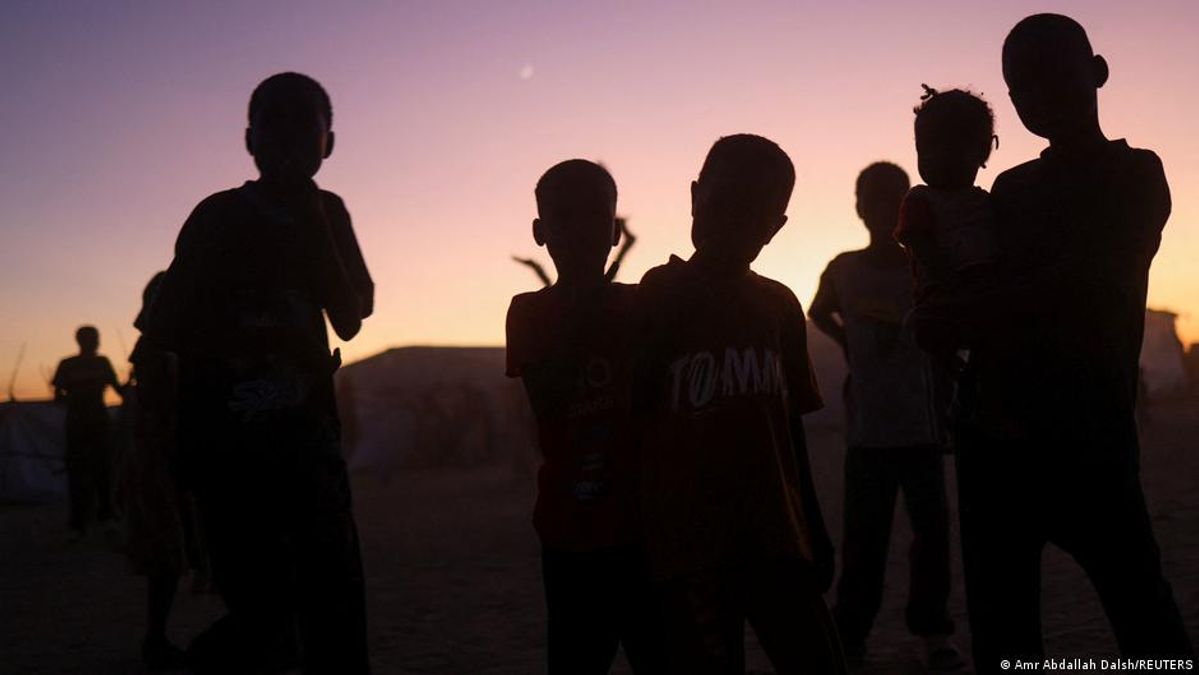
While the geopolitical maneuvering continues, the civilian population of Sudan bears the brunt of the conflict. Human rights organizations have documented mass killings and other crimes against civilians, with a UN fact-finding mission concluding that the siege of El Fasher bore the "hallmarks of genocide." The RSF is implicated in the deaths of an estimated 70,000 people in El Fasher alone. Sudan is currently experiencing the world's largest and fastest-growing displacement and humanitarian crisis, with approximately 12 million people forced from their homes and nearly 20 million facing acute hunger. Aid organizations warn of one of the world's largest hunger crises unfolding.
The Sudanese civil war represents a critical test for regional stability and international accountability. The involvement of multiple external actors, both directly and through proxies, risks further regionalizing the conflict and prolonging the suffering. The alleged use of mercenaries and the flow of advanced weaponry underscore the challenges to international norms and arms control. The international community's perceived inaction regarding the alleged role of the UAE raises questions about the efficacy of diplomatic pressure and sanctions regimes. As the conflict continues, the prospects for a civilian transition in Sudan, as advocated by some international actors, remain dim, overshadowed by the ongoing military struggle and the complex web of external interests. Achieving lasting peace will require not only an immediate ceasefire but also robust international efforts to address the root causes of the conflict, hold perpetrators accountable, and ensure that external interference ceases.
Editor's Note: The source article contains several future-dated references (e.g., 'October 2025' for El Fasher capture, '2025' for Amnesty International report, 'late 2025' for UAE advisor quote) that appear to be editorial errors given the context of current events. The analysis has interpreted these as past or current reports/statements where logical, and omitted the specific year for El Fasher's capture to avoid anachronism.
Source referenced: DW
This brief was synthesized by our Editorial Engine and reviewed by The Ground Narrative team.