TRENDING

Wednesday, 7 October 2026
----------------------
26 Rabi' Al-Thani 1448 AH
South Korea's Supreme Court has upheld a 7-year prison sentence for former President Yoon Suk Yeol on charges related to his botched 2024 martial law declaration. The ruling marks a significant blow to Yoon's attempts to justify his actions as motivated by the public interest.
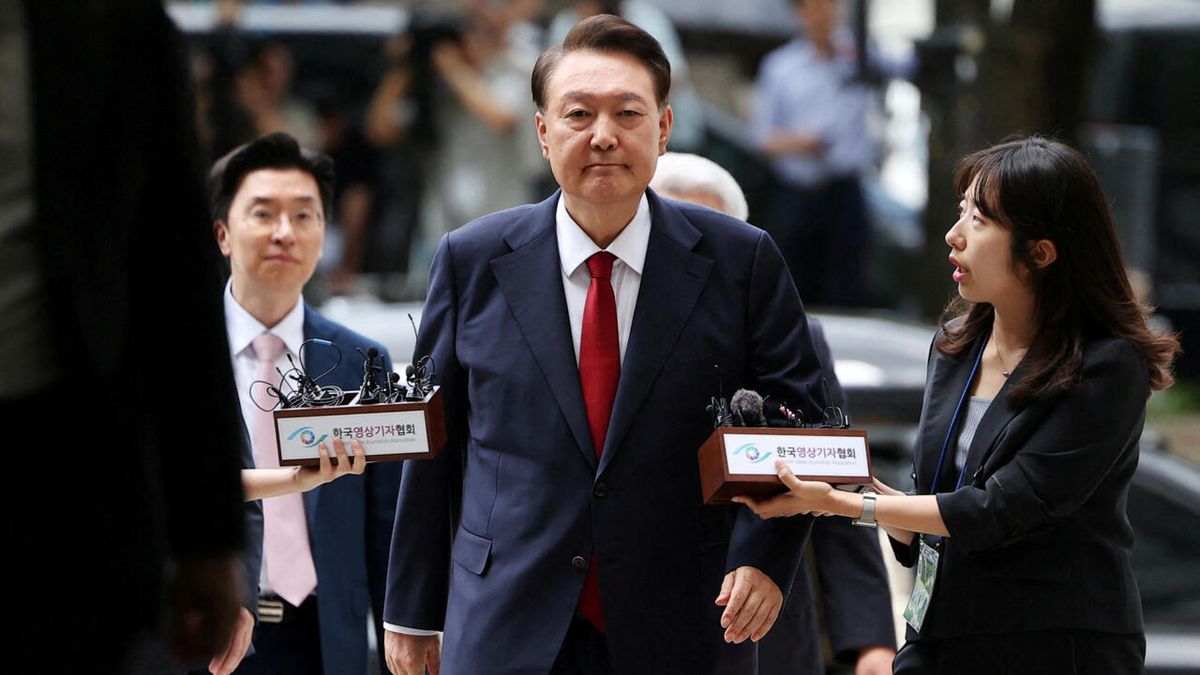
South Korea's Supreme Court has delivered a decisive verdict in the case of former President Yoon Suk Yeol, upholding a 7-year prison sentence on charges related to his botched 2024 martial law declaration. This ruling marks a significant blow to Yoon's attempts to justify his actions as motivated by the public interest.
In December 2024, Yoon declared martial law, citing the need to root out 'anti-state forces' and quash threats from North Korea. However, the move was met with widespread protests, sent the stock market plummeting, and caught key allies like the United States off-guard. The declaration was eventually nullified by lawmakers in an emergency session, and Yoon was ousted as president in April 2025.
Yoon was accused of obstructing cabinet deliberations, using forged signatures of the prime minister, and directing an army commander to delete records from secure military phones. Prosecutors had sought a 10-year prison sentence for Yoon, while his legal team argued that the charges were baseless and motivated by a desire to discredit the former president.
The Supreme Court's ruling has significant implications for South Korea's political landscape. Yoon's attempts to justify his actions as motivated by the public interest have been widely criticized, and the ruling marks a significant blow to his legacy. The case also highlights the need for greater transparency and accountability in South Korea's government, particularly in the wake of high-profile scandals.
The Supreme Court's ruling is likely to have far-reaching consequences for Yoon's future. His legal team has announced plans to challenge the ruling on constitutional grounds, but the prospects of success appear slim. The ruling also raises questions about the future of Yoon's party, which has been embroiled in controversy since his ouster as president.
The Supreme Court's ruling marks a significant victory for South Korea's justice system, which has been criticized for its handling of high-profile cases in the past. The ruling also highlights the need for greater accountability and transparency in South Korea's government, particularly in the wake of high-profile scandals. As the country looks to the future, it is clear that the legacy of Yoon's presidency will continue to be a subject of debate and controversy.
Editor's Note: The Supreme Court's ruling is likely to have far-reaching consequences for Yoon's future, but the exact nature of these consequences remains uncertain.
Source referenced: FRANCE24
This brief was synthesized by our Editorial Engine and reviewed by The Ground Narrative team.


