TRENDING

Sunday, 18 October 2026
----------------------
7 Jumada Al-Awwal 1448 AH
Fighting between opposition and government forces in Mogadishu has escalated tensions ahead of the country's presidential election, threatening to derail the fragile peace process.
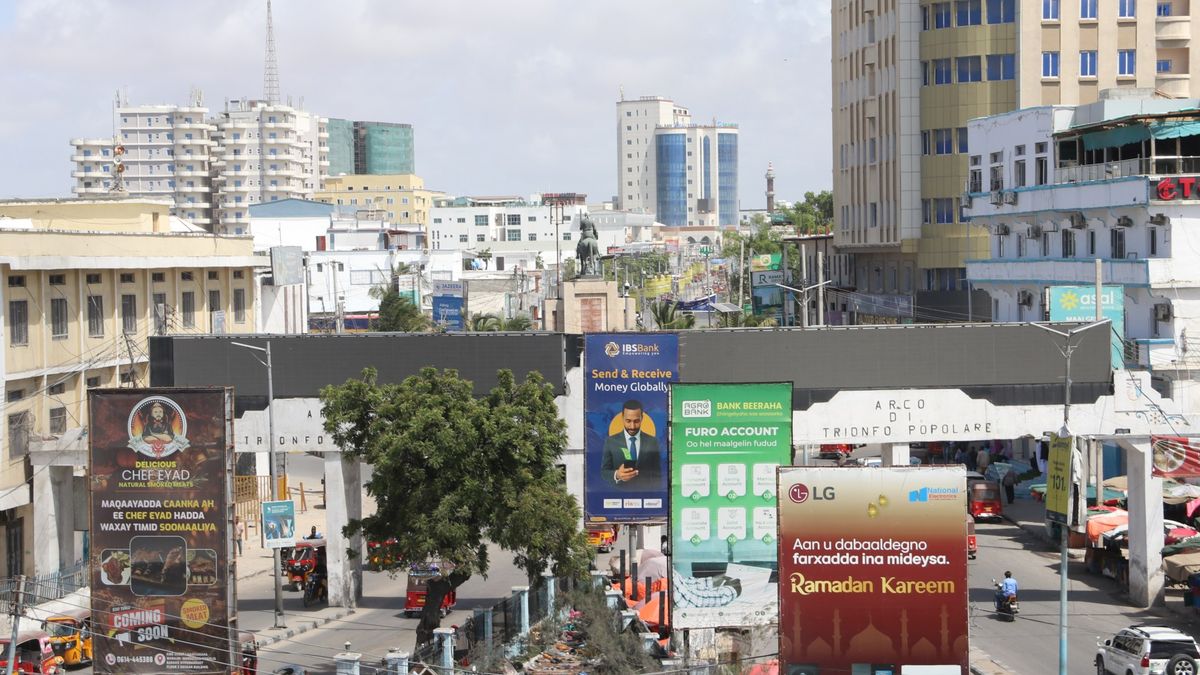
Somalia's capital, Mogadishu, has been gripped by violence as fighting between opposition and government forces has intensified ahead of the country's presidential election. The clashes, which began on Wednesday, have left hundreds of families displaced and have raised concerns about the stability of the country.
The current crisis is rooted in the 2012 provisional constitution, which established a federal, parliamentary system based on broad consensus and clan-based power-sharing. However, the government's push for a direct vote in the upcoming election has been met with resistance from the opposition, who argue that the country is not ready for such a system.
The stakes are high in this election, with President Hassan Sheikh Mohamud's term extension by an additional year through constitutional amendments approved by parliament. The opposition rejects this move, and the country is divided over the constitutional framework governing the next election.
A regional official described the elite as divided strategically over what type of country they want, whether a strong centralised state or a weak decentralised one, and tactically over who the right candidate is to take them there. Mohamud's early, promising relationships with federal-state leaders have since soured, and fractures have opened on several fronts at once.
The crisis in Somalia has broader regional implications, with Somaliland's declaration of independence in 1991 and its recognition by Israel last year adding to the tensions. Puntland and Jubaland, two of Somalia's six federal states, have withdrawn from the federal system over the new constitution, while more than 100 MPs and senators from both boycotted the final vote.
The peace process in Somalia is fragile, and the current crisis threatens to derail it. The country is grappling with a deepening humanitarian crisis and aid cuts, prompting famine monitors to warn of a heightened risk of hunger in parts of Somalia. The international community must engage with Somalia's leaders to build consensus and find a peaceful solution to the crisis.
The way forward for Somalia is uncertain, but one thing is clear: the country needs a peaceful and inclusive solution to its current crisis. The international community must support Somalia's leaders in building consensus and finding a way forward that prioritises the needs of the Somali people.
The crisis in Somalia is a complex and multifaceted issue, with deep historical and regional roots. The current violence in Mogadishu is a symptom of a larger problem, and the international community must engage with Somalia's leaders to find a peaceful solution. The stakes are high, and the consequences of failure are dire. It is imperative that the international community supports Somalia's leaders in building consensus and finding a way forward that prioritises the needs of the Somali people.
Editor's Note: The analysis is based on available information and may be subject to change as new information becomes available.
Source referenced: ALJAZEERA
This brief was synthesized by our Editorial Engine and reviewed by The Ground Narrative team.