TRENDING

Friday, 23 October 2026
----------------------
12 Jumada Al-Awwal 1448 AH
The upcoming 2026 FIFA World Cup in North America highlights a deep-seated contradiction in U.S. identity, where the global sport of soccer has historically served as a proxy for debates on immigration, national belonging, and international engagement. This analysis explores how soccer's fluctuating acceptance in the United States over 150 years mirrors the nation's evolving relationship with its own diverse population and the wider world.
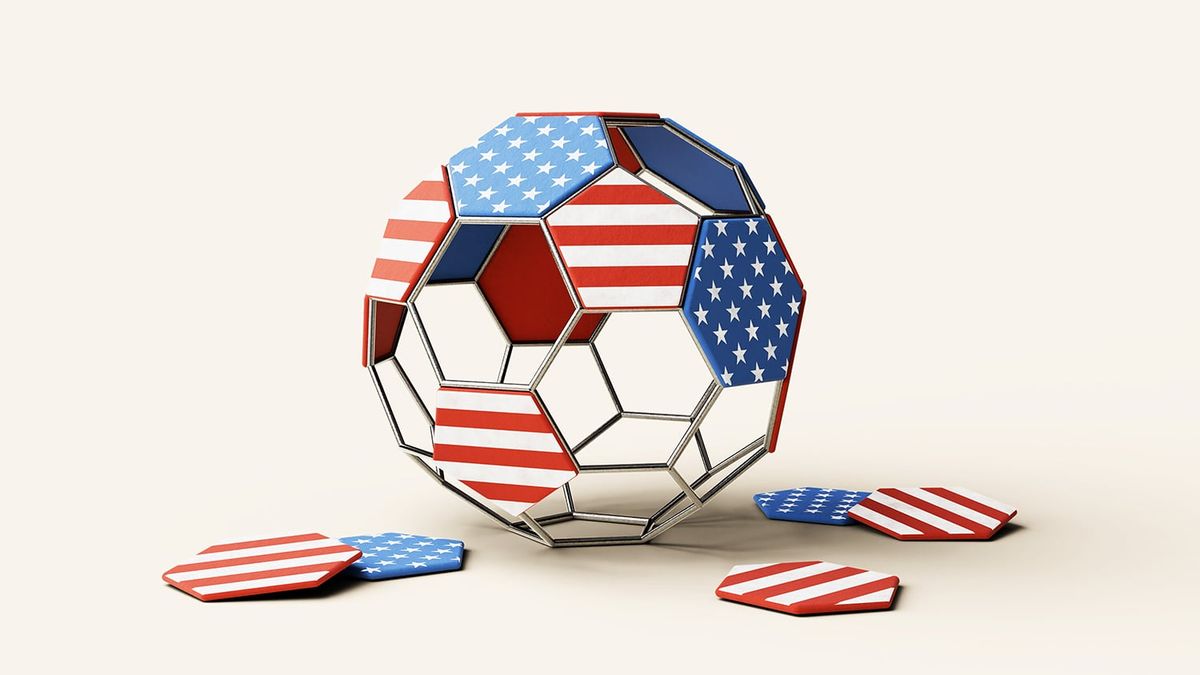
As the United States prepares to co-host the FIFA World Cup in 2026 alongside Canada and Mexico, the event coincides with the 250th anniversary of U.S. independence. This convergence presents a striking geopolitical paradox: a nation celebrating its founding and global engagement through a major international sporting event, while simultaneously implementing immigration policies that create significant barriers for fans from many qualifying nations. This apparent contradiction is not new but rather the latest chapter in a long-standing American debate, spanning over 150 years, about national identity, immigration, and the country's place in the global order, with soccer often serving as its unlikely battleground.
In the century following its independence, the United States actively constructed a distinct national identity, often in contrast to its European origins. This drive extended to sports, with figures like Walter Camp transforming English rugby into American football and the 1905 Mills Commission fabricating an indigenous origin for baseball. As historians Andrei Markovits and Steven Hellerman argue, U.S. sports culture was deliberately cultivated to be 'from U.S. soil,' a reflection of American exceptionalism and a desire to shed perceived British parentage. Into this landscape, 'association football'—soccer—arrived not as an indigenous creation but through the waves of immigrants from Britain, Ireland, Germany, and Hungary who settled in the industrial Northeast. For decades, the sport thrived within these immigrant communities, with the American Soccer League briefly rivaling the NFL in attendance during the 1920s. This early embrace of soccer by the immigrant industrial working class, however, coincided with a period of intense nativism, epitomized by the Johnson-Reed Act of 1924 and the peak of the second Ku Klux Klan. The sport's association with these 'un-American' populations led to its marginalization, retreating into ethnic enclaves for half a century after the Great Depression.
Mid-20th century saw a critical divergence in global soft power strategies. While decolonization made football a universal language of national legitimacy, the Soviet Union actively leveraged 'football diplomacy' to engage newly independent nations, joining FIFA in 1952 and achieving Olympic gold in 1956. The U.S., by contrast, largely overlooked soccer as a tool for international influence, preferring to export baseball. This strategic oversight meant the U.S. missed a significant opportunity to connect with the postcolonial world through a globally unifying medium. Despite attempts to revive professional soccer with the North American Soccer League (NASL) in the liberal internationalist era of the late 1960s, the league struggled with the same identity crisis. Efforts to 'Americanize' the game through rule changes and quotas for U.S. players ultimately failed, and the NASL collapsed in 1985 as Cold War tensions resurged, diverting investment into sports perceived as more 'authentically American' and where U.S. dominance was unquestioned.
The late 20th century marked a significant shift. The U.S. returned to the World Cup in 1990 and hosted it in 1994, a decision by FIFA contingent on the establishment of a new professional league, leading to Major League Soccer (MLS) in 1996. The advent of satellite television and the internet brought European club football directly into American homes, fostering a new generation of fans. Soccer's resurgence was also tied to demographic shifts and globalization; the 'soccer mom' became a recognized political demographic, and the sport increasingly thrived in affluent suburbs. As journalist Franklin Foer observed in 2004, supporting international clubs like Arsenal or Milan became a marker of a 'globalized, cosmopolitan identity,' often linked to international experiences like studying abroad. This period saw soccer transition from an 'immigrant' sport to one embraced by a more globally connected, often affluent, segment of American society, reflecting a growing comfort with international cultural flows.
The 2026 World Cup, therefore, serves as a potent symbol of the enduring tension within the United States regarding its identity. The act of hosting a global spectacle, which inherently celebrates international connection and cultural exchange, stands in stark contrast to contemporary immigration policies that restrict the very international participation the event embodies. This contradiction underscores the persistent debate about who belongs in the country and who the country belongs to—a question that soccer, throughout its American history, has consistently brought to the forefront. The sport's journey in the U.S. is a microcosm of the nation's struggle to reconcile its self-perception as an exceptional, insular entity with the realities of a diverse, interconnected world. The geopolitical implications extend beyond sport, touching upon the U.S.'s soft power projection, its internal social cohesion, and its evolving role on the global stage as it navigates the complexities of national identity in an increasingly globalized era.
Source referenced: FOREIGNPOLICY
This brief was synthesized by our Editorial Engine and reviewed by The Ground Narrative team.


