TRENDING

Monday, 26 October 2026
----------------------
15 Jumada Al-Awwal 1448 AH
Pope Leo XIV's seven-day visit to Spain, marked by a massive mass in Madrid, underscored the Vatican's enduring soft power amidst European secularization and addressed critical geopolitical themes of unity, peace, and migration.
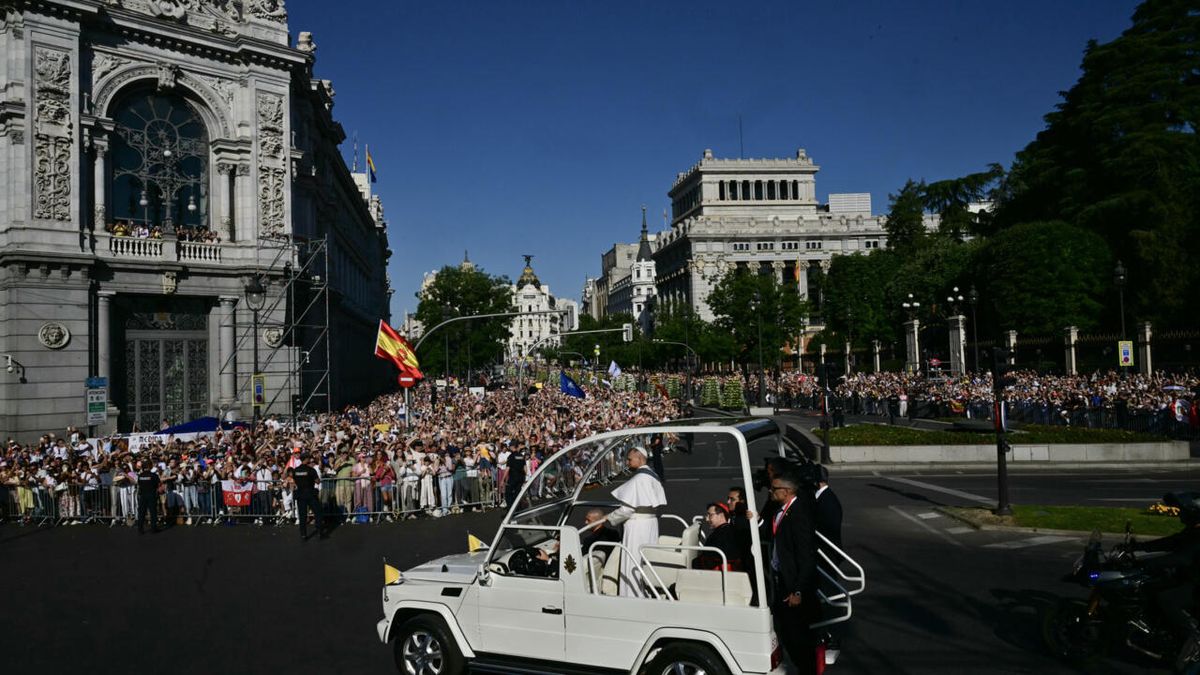
Pope Leo XIV's recent seven-day apostolic visit to Spain, culminating in a mass attended by over 1.2 million people in Madrid on June 7, 2026, represents a significant moment for the Catholic Church and a nuanced diplomatic engagement with a key European nation. The visit, which also included a prayer vigil outside Real Madrid's Bernabeu stadium and future stops in Barcelona and the Canary Islands, served multiple strategic objectives for the Holy See, addressing both internal challenges to faith and broader geopolitical concerns.
The primary internal motivation for the Pope's visit was to confront the accelerating trend of secularization in traditionally Catholic Spain and, by extension, Western Europe. With only 56 percent of Spaniards identifying as Catholic today, a stark decline from 90 percent in the 1970s, the Church faces a critical juncture. Pope Leo XIV directly addressed this challenge, urging Spaniards not to view religion as "a museum of the past to be visited, but a school of faith from which to draw even today." This message aims to reframe Catholicism as a dynamic, relevant force in contemporary society, rather than a relic of history. The immense turnout for the Madrid mass, alongside 500,000 young attendees at the prayer vigil, suggests a persistent, albeit perhaps evolving, spiritual or cultural connection to the Church, providing a potential foundation for its revitalization efforts.
Beyond spiritual renewal, the Pope's visit carried significant diplomatic weight. Kicking off his trip at Madrid's royal palace, Pope Leo XIV called for an end to "polarizing narratives" and "sterile simplifications." This appeal for unity resonates deeply in a global landscape increasingly marked by political and social fragmentation, a sentiment echoed by attendees who described the Pope as a "unifying force." His praise for Spain's "active commitment to peace and solidarity among peoples" was particularly noteworthy. This commendation comes as Spain's left-wing government has reportedly diverged from the United States and Israel on Middle East conflicts, suggesting a subtle, yet significant, endorsement of Spain's independent diplomatic stance and its efforts to foster international cooperation. Such papal affirmations can lend moral authority and international legitimacy to a nation's foreign policy positions, influencing global perceptions and diplomatic discourse.
A critical geopolitical dimension of the Pope's itinerary is his planned focus on migration in the Canary Islands. This archipelago serves as a primary, and often perilous, entry point for irregular arrivals into Europe, with thousands having perished attempting the Atlantic crossing. By dedicating a segment of his visit to this issue, Pope Leo XIV elevates the humanitarian crisis to a global platform, drawing international attention to the plight of migrants and refugees. This focus aligns with the Vatican's consistent advocacy for humane migration policies and international solidarity, positioning the Church as a moral voice in a complex and often politicized debate. The Pope's engagement in the Canary Islands underscores the interconnectedness of faith, human rights, and geopolitical challenges, particularly at Europe's southern borders.
Overall, Pope Leo XIV's visit to Spain demonstrates the enduring soft power of the Holy See. Through large-scale public events, carefully crafted messages, and strategic engagements with political and societal leaders, the Vatican continues to exert influence on both spiritual and temporal affairs. The visit served as a powerful reminder of the Catholic Church's capacity to mobilize vast numbers of people, shape public discourse, and engage in high-level diplomacy, even in an era of declining religious observance. It highlights the Church's role not just as a religious institution, but as a significant non-state actor in international relations, capable of influencing social cohesion, ethical debates, and diplomatic alignments across continents.
The long-term impact of this visit will depend on whether the Pope's calls for faith renewal and unity translate into tangible shifts in religious practice and political discourse. However, the immediate effect is a reinforcement of the Vatican's global standing and its commitment to addressing pressing contemporary issues, from secularization to international conflict and migration, through a blend of spiritual leadership and diplomatic engagement. The visit underscores the complex interplay between religious authority, national identity, and global geopolitics in the 21st century.
Source referenced: FRANCE24
This brief was synthesized by our Editorial Engine and reviewed by The Ground Narrative team.


