TRENDING

Monday, 26 October 2026
----------------------
15 Jumada Al-Awwal 1448 AH
Pope Leo XIV's seven-day visit to Spain highlights the pressing issue of migration and social justice, set against a backdrop of significant political tensions for Prime Minister Pedro Sanchez's government. The trip underscores the Vatican's diplomatic engagement with a polarized Europe grappling with humanitarian challenges and evolving church-state relations.
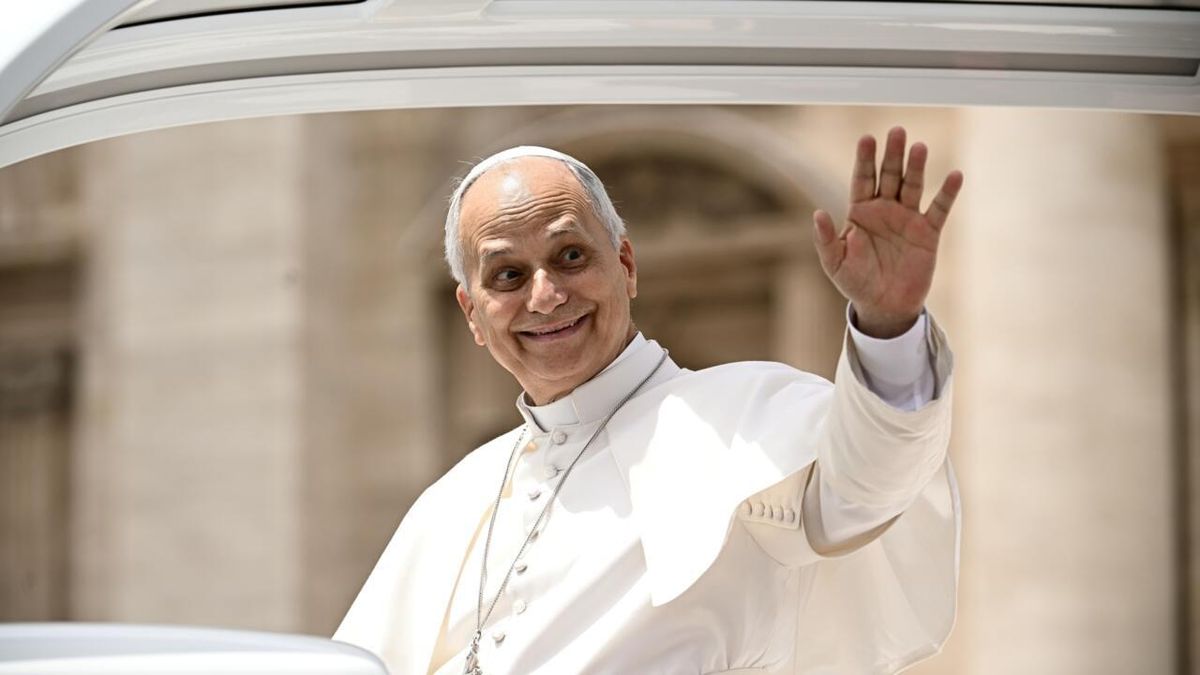
Pope Leo XIV's seven-day apostolic visit to Spain, commencing on Saturday, June 6, 2026, marks a significant moment for both the Vatican and the host nation. The pontiff's itinerary is strategically focused on critical contemporary issues, primarily migration and social justice, while also addressing the historical trauma of sexual abuse by clergy. This visit unfolds amidst a period of considerable political turbulence for Spanish Prime Minister Pedro Sanchez, adding layers of complexity and geopolitical significance to the papal engagement.
The central pillar of Pope Leo XIV's visit is the humanitarian crisis unfolding along the migratory routes to Europe. His planned trip to the Canary Islands, a Spanish archipelago off the coast of West Africa, is particularly poignant. These islands have become a primary, and perilous, entry point for irregular migrants seeking to reach Europe, often after long and dangerous journeys from the African continent. The International Organization for Migration (IOM) reported 1,172 migrant deaths or disappearances along this route in 2025, a stark reminder of the human cost. By honoring the thousands who have perished and meeting with migrants and aid organizations, the Pope is leveraging the Vatican's moral authority to draw global attention to this crisis, framing it as a fundamental issue of human dignity and international responsibility.
Spain, under Prime Minister Sanchez, has maintained a comparatively liberal immigration policy relative to many of its European counterparts. However, this stance faces increasing domestic pressure from opposition parties, notably the conservative Popular Party and the far-right Vox, which advocates for stricter border controls and a more nationalistic agenda. The Pope's emphasis on compassion and solidarity with migrants could be interpreted as both a reinforcement of Sanchez's humanitarian approach and a subtle challenge to the rising anti-immigrant sentiment within Spain and across Europe. This dynamic highlights the broader European struggle to balance humanitarian obligations with national sovereignty and security concerns.
The papal visit is intricately woven into Spain's domestic political fabric, which is currently characterized by deep polarization. Prime Minister Pedro Sanchez's government is under intense scrutiny due to several corruption scandals involving his inner circle, including his wife, brother, and former top Socialist officials. These allegations have significantly weakened his minority coalition, which is striving to complete its term until 2027. The Pope's presence, including a speech to the Spanish parliament, offers a unique platform that could either inadvertently bolster or further complicate Sanchez's political standing, depending on the public's reception and the political interpretations of the pontiff's messages.
Another critical aspect of the visit is the Pope's meeting with victims of sexual abuse by Catholic clergy. This comes after a 2023 report from Spain's national ombudsman estimated some 200,000 minors suffered such abuse since 1940. Significantly, Sanchez's government and the Spanish Catholic Church signed an agreement in March to compensate victims, marking a pivotal shift after years of institutional reticence. The Pope's direct engagement with victims underscores the Church's ongoing efforts to confront its past and rebuild trust, a process vital for its moral legitimacy and its relationship with civil society and the state.
Pope Leo XIV's trip to Spain holds broader significance for Vatican diplomacy. It marks his first visit to an EU country outside of Italy and the first state visit by a pope to Spain since Benedict XVI in 2010. This contrasts with his predecessor, Pope Francis, who often bypassed many of Europe's traditional Catholic strongholds where religious observance has been declining. Pope Leo XIV's decision to engage directly with Spain, a nation grappling with secularization, political fragmentation, and a major humanitarian crisis, signals a strategic re-engagement with a key European nation. It demonstrates the Vatican's commitment to asserting its moral voice on global challenges and its willingness to confront difficult internal issues, such as clergy abuse, head-on. The visit serves as a powerful exercise in soft power, aiming to influence public discourse and policy on issues ranging from human rights to social cohesion, not just within Spain but across the wider European continent.
In conclusion, Pope Leo XIV's visit to Spain is more than a religious pilgrimage; it is a carefully orchestrated diplomatic mission with profound geopolitical implications. By focusing on migration, social justice, and accountability for past abuses, the pontiff seeks to address some of the most pressing challenges facing Spain and Europe. His presence in a politically charged environment underscores the enduring, albeit evolving, role of the Catholic Church as a significant actor in international affairs and a moral compass in a complex world.
Source referenced: FRANCE24
This brief was synthesized by our Editorial Engine and reviewed by The Ground Narrative team.