TRENDING

Sunday, 25 October 2026
----------------------
14 Jumada Al-Awwal 1448 AH
Armenian Prime Minister Nikol Pashinyan's recent parliamentary election victory, with his 'Civil Contract' party securing 54% of the vote, marks a significant moment for the South Caucasus nation. The outcome reinforces Pashinyan's mandate and signals a potential strategic pivot towards the European Union, challenging Armenia's traditional alignment with Russia.
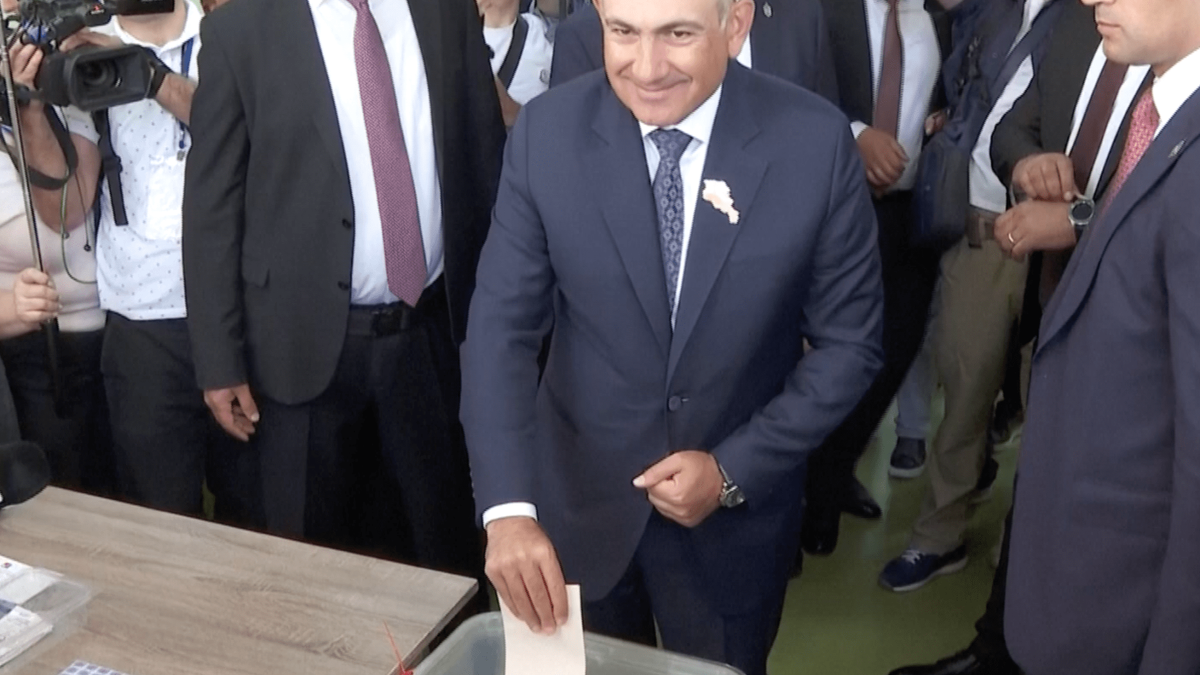
Armenian Prime Minister Nikol Pashinyan has declared a decisive victory in the parliamentary elections held on June 8, 2026. His 'Civil Contract' party secured approximately 54% of the vote, granting him a strong mandate to continue his leadership. This electoral outcome is not merely a domestic political event but carries profound geopolitical implications, particularly concerning Armenia's strategic alignment in the volatile South Caucasus region. Pashinyan's administration has increasingly signaled a 'pro-EU' orientation, suggesting a potential rebalancing of Armenia's foreign policy away from its historical reliance on Russia.
Armenia, a landlocked nation situated at the crossroads of Europe and Asia, has historically maintained deep political, economic, and security ties with Russia. This relationship has been a cornerstone of Armenian foreign policy, particularly in the context of its long-standing conflict with Azerbaijan over Nagorno-Karabakh. Russia has traditionally acted as Armenia's primary security guarantor and a key mediator in regional disputes. However, recent years have seen growing disillusionment within Armenia regarding the efficacy of this alliance, particularly following the 2020 Nagorno-Karabakh war and subsequent events where Russian intervention was perceived by many Armenians as insufficient or ineffective.
Pashinyan's 'Civil Contract' party, described as 'pro-EU,' reflects a growing sentiment within Armenia to diversify its international partnerships and seek closer integration with Western institutions. This shift is driven by a complex interplay of factors, including a desire for greater economic prosperity, democratic reforms, and enhanced security guarantees that may not be fully met by the traditional Russian framework. The electoral victory provides Pashinyan with the political capital to pursue this reorientation more assertively.
The implications of Armenia's potential pivot are far-reaching for the South Caucasus and beyond:
* For Russia: A significant move towards the EU by Armenia would represent a considerable blow to Russia's influence in its traditional sphere of interest. As Russia remains preoccupied with its ongoing conflict in Ukraine, a weakening of its position in the South Caucasus could be seen as a further erosion of its regional hegemony. Moscow will likely view this development with concern and may seek to exert diplomatic or economic pressure to maintain its leverage.
* For the European Union: Increased engagement with Armenia aligns with the EU's broader Eastern Partnership policy, aiming to foster stability and democratic development in its eastern neighborhood. A more pro-EU Armenia could open avenues for greater economic cooperation, investment, and political dialogue, potentially expanding the EU's geopolitical footprint in a strategically important region.
* For Azerbaijan and Turkey: The shift in Armenia's foreign policy orientation could introduce new dynamics into its complex relationships with neighboring Azerbaijan and Turkey. A Western-leaning Armenia might seek stronger international backing in ongoing peace negotiations with Azerbaijan, particularly concerning border demarcation and the status of enclaves. Turkey, a NATO member, and a close ally of Azerbaijan, will closely monitor these developments, as a stronger Western presence in Armenia could alter the regional balance of power.
* For Iran: Iran shares a border with Armenia and has an interest in maintaining regional stability and preventing the dominance of any single external power. A more balanced Armenian foreign policy, less reliant on Russia and more engaged with Europe, could be viewed by Tehran as a way to prevent an overwhelming Turkish-Azerbaijani axis, though Iran will also be wary of any increased Western military presence near its borders.
Pashinyan's renewed mandate provides an opportunity for Armenia to pursue a more diversified foreign policy. However, this path is fraught with challenges. Balancing relations with Russia, which still holds significant sway through economic ties, military bases, and energy supplies, while simultaneously forging deeper connections with the EU, will require astute diplomacy. Armenia will need to navigate potential Russian displeasure and ensure that its pivot does not inadvertently destabilize its security arrangements.
Domestically, Pashinyan's government will face the task of delivering on promises of economic reform and democratic consolidation, which are often prerequisites for closer EU integration. The electoral victory, despite past criticisms regarding the handling of the Nagorno-Karabakh conflict, indicates a public desire for a new strategic direction and a willingness to embrace change. The coming years will reveal whether Armenia can successfully recalibrate its geopolitical compass and secure a more stable and prosperous future within a complex regional landscape.
Source referenced: ALJAZEERA
This brief was synthesized by our Editorial Engine and reviewed by The Ground Narrative team.