TRENDING

Saturday, 24 October 2026
----------------------
13 Jumada Al-Awwal 1448 AH
At least 11 people were killed in clashes between police and protesters in Pakistan-administered Kashmir, highlighting the deep-seated tensions in the region. The protests are centered around the reservation of 12 seats in the legislature for refugees from Indian-administered Kashmir, but experts say the issue is part of a broader debate about governance, political representation, and regional autonomy.
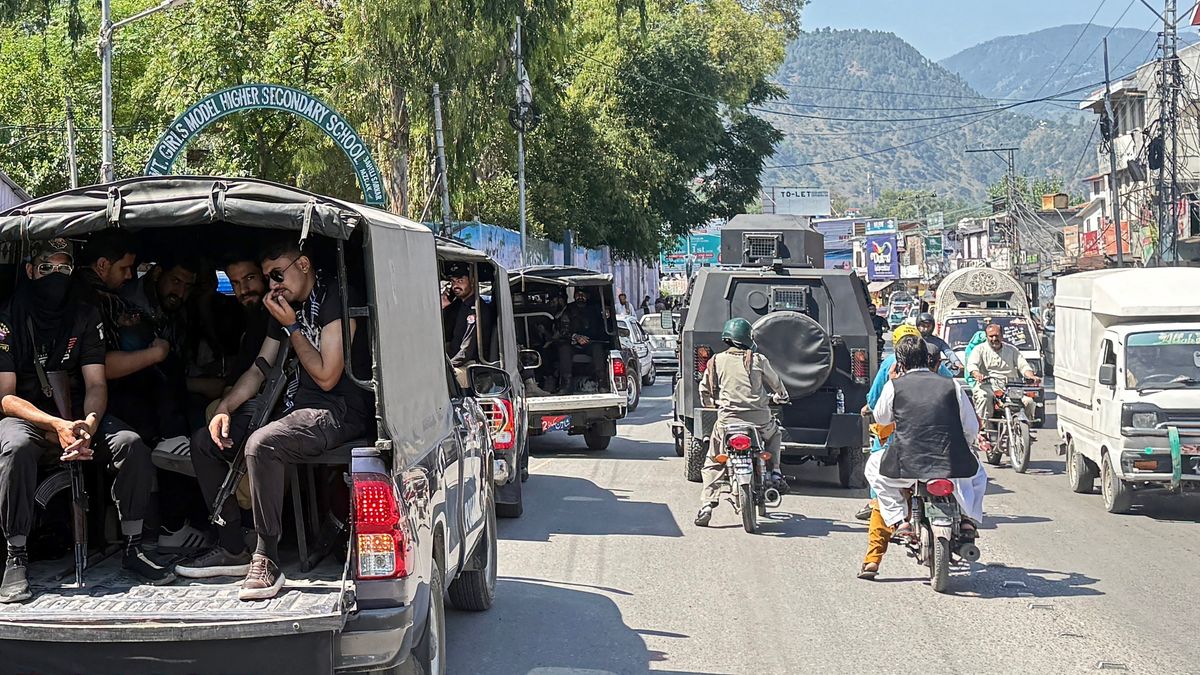
Pakistan-administered Kashmir, also known as Azad Jammu and Kashmir (AJK), is a disputed Himalayan region claimed in full by both India and Pakistan. The region is governed under a semi-autonomous system, with its own prime minister and legislative assembly, but ultimate authority rests with Islamabad. The population exceeds four million people, according to the 2017 census.
The protests in Pakistan-administered Kashmir are centered around the reservation of 12 seats in the legislature for refugees from Indian-administered Kashmir who now live in other parts of Pakistan. The Jammu Kashmir Joint Awami Action Committee (JAAC), a grassroots umbrella organization, is leading the protests. The JAAC argues that all seats in the legislature should go to those who actually reside in Pakistan-administered Kashmir, and not those living in other constituencies scattered across Pakistan.
The reserved seats have existed in various forms since the late 1940s and were formalized in Pakistan-administered Kashmir's 1974 interim constitution. The seats are reserved for those who migrated from Indian-administered Kashmir to Karachi or any other part of Pakistan in 1947. Experts say that the abolition of the reserved seats would weaken Pakistan's case for Kashmiri statehood in the United Nations and strengthen India's case.
Experts say that the current crisis is part of a deeper, long-running debate about governance, political representation, resource allocation, and regional autonomy in Pakistan-administered Kashmir. The protest on Tuesday is the fourth such protest led by the JAAC. The 38-point charter of demands released by the JAAC in September and October 2025 remains the focal point of current tensions. The demands include economic subsidies, investigation of corrupt officials, social welfare, and infrastructure, as well as the abolition of the 12 reserved seats.
The protests in Pakistan-administered Kashmir have regional implications. The region is a sensitive area, with a history of violence and conflict. The protests could escalate into further violence, which would have implications for regional stability. The Indian government has been watching the situation closely, and any escalation could lead to a response from India.
The future consequences of the protests in Pakistan-administered Kashmir are uncertain. The situation could escalate into further violence, which would have implications for regional stability. The Indian government could respond to any escalation, which would lead to further tensions in the region. The protests could also lead to a re-evaluation of the reserved seats and the governance of Pakistan-administered Kashmir.
The protests in Pakistan-administered Kashmir are a complex issue with deep-seated tensions. The protests are centered around the reservation of 12 seats in the legislature for refugees from Indian-administered Kashmir, but experts say the issue is part of a broader debate about governance, political representation, and regional autonomy. The situation has regional implications and could escalate into further violence, which would have implications for regional stability.
Editor's Note: The analysis is based on available information and may not reflect the full complexity of the situation.
Source referenced: ALJAZEERA
This brief was synthesized by our Editorial Engine and reviewed by The Ground Narrative team.