TRENDING

Sunday, 25 October 2026
----------------------
14 Jumada Al-Awwal 1448 AH
Clashes between protesters and police outside Mexico City's Azteca Stadium during the FIFA World Cup opening match underscore Mexico's persistent domestic challenges, leveraging a global event to amplify calls for education reform and accountability for disappearances.
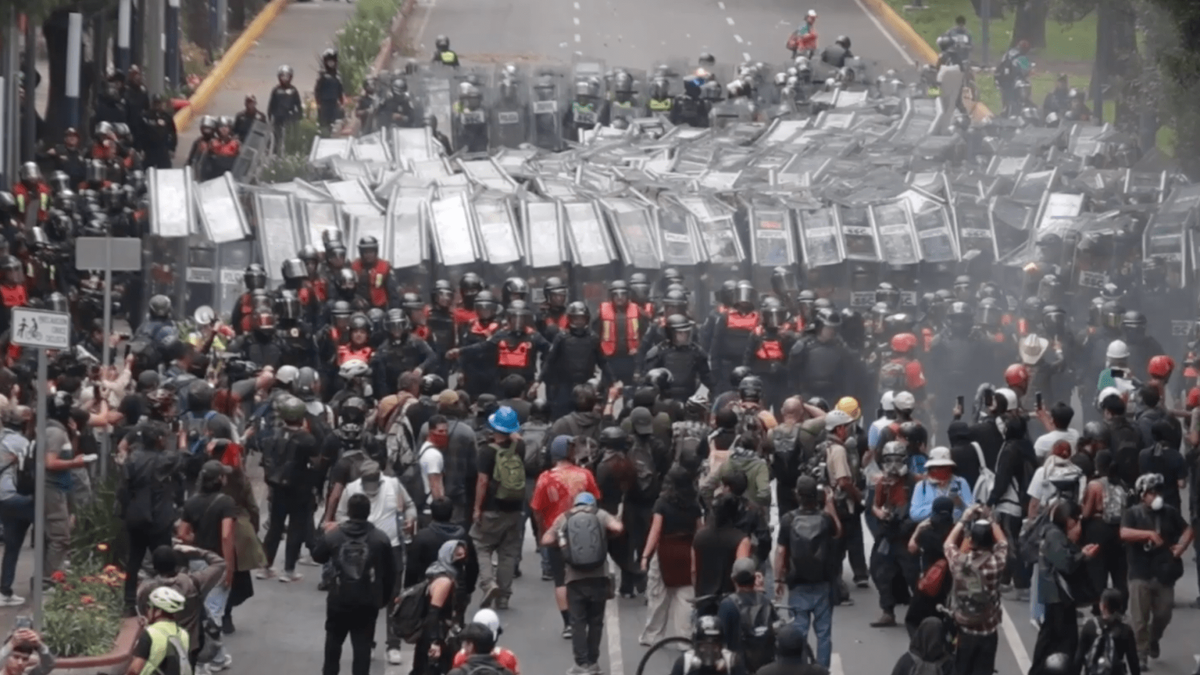
On June 12, 2026, the highly anticipated opening of the FIFA World Cup in Mexico City was marred by significant clashes between protesters and police outside the iconic Azteca Stadium. The confrontation occurred just prior to the tournament's inaugural match, drawing immediate international attention to Mexico's internal socio-political landscape at a moment of global focus. This incident is not merely a localized disturbance but a calculated strategic move by protest groups to leverage the immense global spotlight of the World Cup to press their long-standing demands.
The core motivation behind these protests, as articulated by the groups themselves, centers on critical domestic issues, primarily education reforms and the pervasive problem of disappearances. Mexico has grappled for years with a complex web of challenges, including systemic issues within its education system and an alarming number of forced disappearances, often linked to organized crime, corruption, and, in some cases, alleged state complicity or inaction. By staging demonstrations during an event watched by billions worldwide, activists aim to bypass traditional domestic media filters and directly appeal to an international audience, thereby increasing pressure on the Mexican government to address these grievances with greater urgency and transparency.
Historically, major international events, such as the Olympic Games or the World Cup, have frequently served as platforms for domestic dissent. Host nations, eager to project an image of stability and modernity, often become vulnerable to such disruptions, as the global media presence offers an unparalleled opportunity for marginalized voices to be heard. For the Mexican government, the timing of these protests presents a significant diplomatic and public relations challenge, potentially overshadowing the celebratory atmosphere of the World Cup and drawing scrutiny to its human rights record and governance capabilities.
The decision by protest groups to warn of further disruptions throughout the tournament signals a sustained campaign designed to maintain international visibility. This strategy carries several geopolitical implications:
* International Scrutiny: The protests will inevitably lead to increased international scrutiny of Mexico's human rights situation, particularly concerning the issue of disappearances, which has long been a point of concern for international bodies and human rights organizations. This could impact Mexico's standing in global forums and its relationships with key international partners.
* Economic Impact: While the immediate economic impact of localized clashes might be limited, sustained disruption or negative international perception could deter future tourism and foreign investment, particularly in a country that relies heavily on its international image for economic growth.
* Regional Stability: Mexico's ability to manage internal dissent while hosting a major international event is a test of its institutional strength and democratic resilience. How the government responds—whether through dialogue, repression, or a combination—will be closely watched by neighboring countries and could set precedents for managing similar situations in the region.
* Precedent for Future Events: The success or failure of these protests in achieving their aims could influence future activist strategies in other countries slated to host major international events, reinforcing the idea that such platforms can be effectively leveraged for political advocacy.
The Mexican government faces a delicate balancing act. On one hand, it must ensure the security and smooth operation of the World Cup, an event of immense national pride and economic significance. On the other, it must address the legitimate concerns of its citizens without resorting to excessive force, which could further inflame tensions and draw international condemnation. The challenge lies in demonstrating effective governance and a commitment to human rights while simultaneously maintaining public order during a high-profile global spectacle.
The coming weeks of the World Cup will likely see continued efforts by protest groups to keep their issues in the global spotlight. The manner in which the Mexican authorities navigate this period will be crucial, not only for the success of the tournament but also for the country's long-term domestic stability and international reputation. The events at Azteca Stadium serve as a stark reminder that even the most unifying global spectacles cannot fully insulate host nations from their internal political and social realities.
Source referenced: ALJAZEERA
This brief was synthesized by our Editorial Engine and reviewed by The Ground Narrative team.