TRENDING

Tuesday, 27 October 2026
----------------------
16 Jumada Al-Awwal 1448 AH
Mexico's opening victory in the 2026 FIFA World Cup ignited widespread national celebration, yet the global spotlight also illuminated concurrent protests, revealing a complex interplay of national pride and domestic challenges. The event underscores the multifaceted nature of hosting international mega-events, where aspirations for soft power and economic gain often intersect with internal socio-political realities.
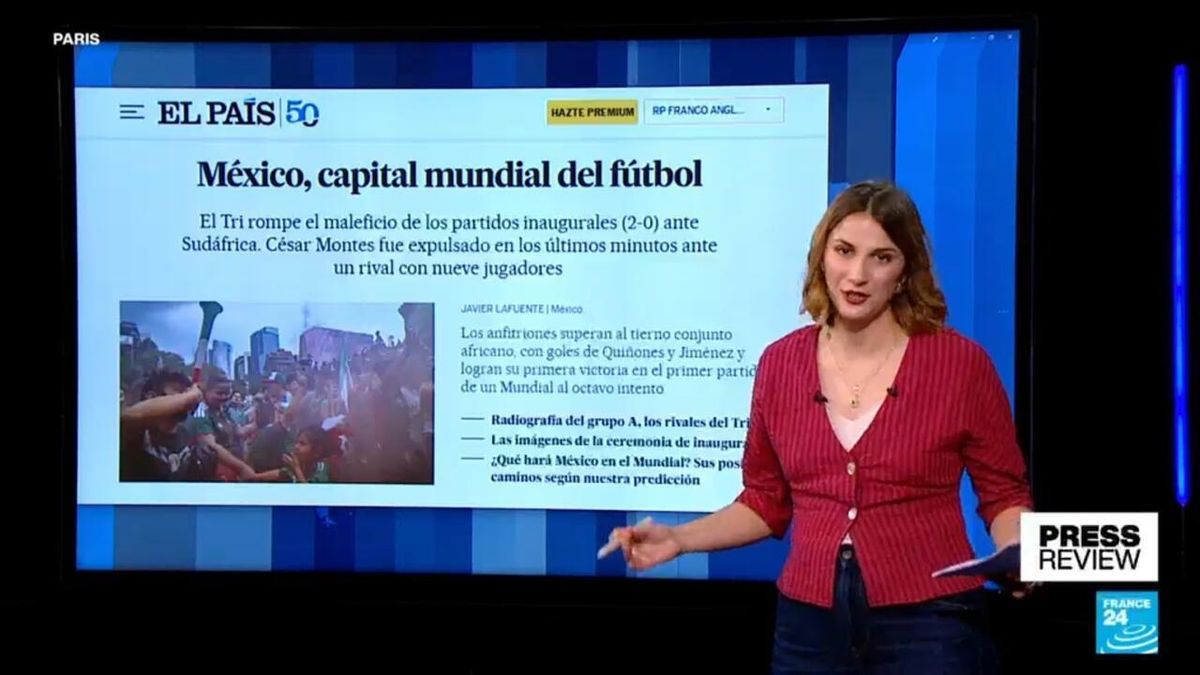
On June 12, 2026, Mexico inaugurated its role as a host nation for the FIFA World Cup with a significant opening match victory against South Africa. The win, celebrated enthusiastically across the country, particularly at Mexico City's iconic Angel of Independence, marked a moment of profound national pride and a symbolic breaking of a long-standing losing streak in World Cup openers. Local media, such as *El País*'s Mexico edition, heralded the nation as the "world capital of football," capturing the collective euphoria and the sense of accomplishment that permeated Mexican society. The triumph of striker Raul Jimenez, overcoming a life-threatening injury to score, further amplified the narrative of resilience and success.
Hosting an event of the World Cup's magnitude carries substantial geopolitical weight. For Mexico, it represents a significant opportunity to project soft power, enhance its international image, and stimulate economic growth through tourism, infrastructure development, and global media attention. Such mega-events are often leveraged by host nations to demonstrate organizational capabilities, cultural vibrancy, and a welcoming environment for international engagement. The initial success on the field, coupled with the widespread public celebrations, undoubtedly contributed to this desired national narrative, aiming to solidify Mexico's standing on the global stage and attract future investment and partnerships.
However, the celebratory atmosphere was not without its complexities. As thousands gathered to cheer, other groups took to the streets in protest. Reports from *El Norte* highlighted clashes between some violent, masked protesters and law enforcement, alongside peaceful demonstrations addressing various unspecified causes. This juxtaposition of national jubilation and public dissent offers a critical lens through which to view Mexico's current socio-political landscape. It underscores that even during moments of unifying national pride, underlying societal grievances, economic disparities, or political dissatisfactions can persist and demand attention.
The simultaneous occurrence of widespread celebration and public protest presents a dual narrative for Mexico on the international stage. While the World Cup win and the enthusiastic public response project an image of a vibrant, unified nation, the protests serve as a reminder of internal challenges that governments must navigate. For international observers, this duality can complicate the perception of stability and governance, raising questions about the depth of national unity and the effectiveness of addressing citizen concerns. The ability of the Mexican government to manage both the logistical demands of a global event and the expressions of domestic discontent will be crucial in shaping its long-term international reputation.
The presence of protests, particularly those involving clashes with law enforcement, during a high-profile international event like the World Cup, poses significant security and governance challenges. Ensuring the safety of participants and spectators, while also respecting the right to peaceful assembly, requires delicate balancing. The global media spotlight on Mexico during the World Cup means that any incidents of unrest or heavy-handed responses could have amplified international repercussions, potentially overshadowing the positive aspects of the event. The incident of three red cards in the opening match, noted as potentially the "dirtiest" World Cup opener, while primarily a sporting matter, also subtly contributes to the overall narrative of an event marked by intense, sometimes contentious, dynamics.
Mexico's World Cup debut in 2026 thus paints a complex picture of a nation at a critical juncture. The opening victory and the ensuing celebrations undeniably bolstered national morale and showcased Mexico's capacity to host a major global event. Yet, the concurrent protests served as a potent reminder that even the most unifying national spectacles cannot entirely eclipse deeply rooted domestic issues. As the World Cup progresses, Mexico will continue to navigate this intricate balance, striving to leverage the global platform for national advancement while simultaneously addressing the internal dynamics that shape its future.
Source referenced: FRANCE24
This brief was synthesized by our Editorial Engine and reviewed by The Ground Narrative team.