TRENDING

Thursday, 15 October 2026
----------------------
4 Jumada Al-Awwal 1448 AH
The sudden passing of Senator Lindsey Graham removes a prominent hawkish voice from US foreign policy debates, with significant implications for support to Ukraine, relations with Israel, and the Republican Party's strategic direction. His death creates a void in key legislative areas and international alliances.
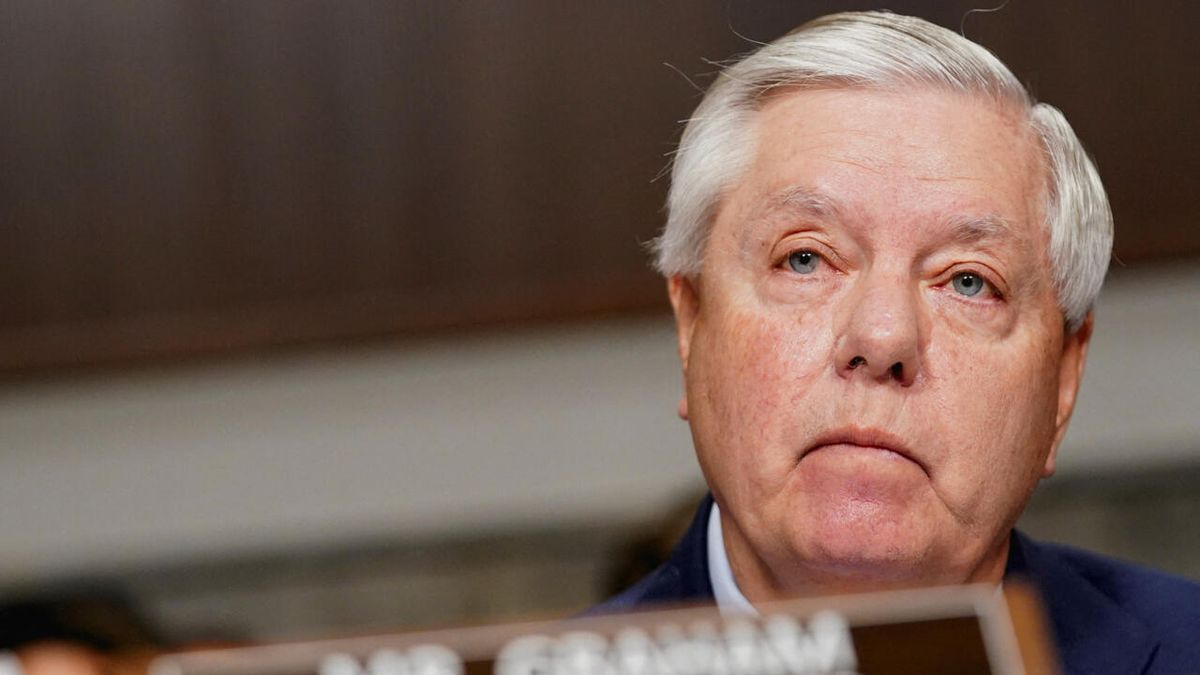
The unexpected death of Senator Lindsey Graham (R-SC) on Saturday, July 11, 2026, at the age of 71, marks a significant moment in American politics and international relations. A leading Republican and a figure known for his assertive foreign policy stances, Graham's passing leaves a notable void in the US Senate, particularly concerning issues of national security, defense, and key international alliances. His death, attributed to a "brief and sudden illness," occurred shortly after a visit to Kyiv, underscoring his active engagement in global affairs until his final days.
Senator Graham's career was defined by a consistent and often hawkish approach to foreign policy, deeply informed by his background as a military lawyer and Air Force colonel. First elected to the House in 1994 and then to the Senate in 2002, he became a vocal proponent of American interventionism and robust military engagement. He notably voted in favor of military action in Iraq following the September 11 attacks and supported a long-term US presence in Afghanistan. His perspective often placed him at odds with administrations he perceived as less assertive, such as his criticism of President Barack Obama's foreign policy and the Iran nuclear deal.
His influence extended across several critical geopolitical theaters. Graham was a staunch advocate for a strong US-Israel alliance, a position frequently reiterated by Israeli leaders. Prime Minister Benjamin Netanyahu and President Isaac Herzog both expressed profound sorrow, highlighting Graham's unwavering support for Israel's security and his role as a "beacon of moral clarity" in the US-Israel partnership. This strong personal and political bond means his absence will be keenly felt in Jerusalem, potentially necessitating new channels for high-level advocacy within the US Congress.
Perhaps most immediately, Graham's death raises questions about the future trajectory of US support for Ukraine. He was a fervent champion of Kyiv's fight against Russia's invasion, consistently urging both the Trump and Biden administrations to provide robust assistance. His visit to Kyiv just the day before his death, his tenth to the country, where he reportedly advocated for tougher sanctions on Russia, underscores his dedication to the cause. Ukrainian President Volodymyr Zelensky's tribute on X acknowledged Graham's invaluable support. While bipartisan support for Ukraine remains strong, the loss of such a prominent and persistent voice, particularly one with significant influence within the Republican Party, could subtly alter the dynamics of future legislative efforts to aid Kyiv, especially amidst evolving domestic political priorities.
Domestically, Graham's passing creates a significant vacancy in the Senate, where he most recently chaired the powerful Senate Budget Committee. This leadership role is critical for shaping federal spending and fiscal policy, and his replacement will have immediate implications for the committee's agenda and the broader legislative landscape. Furthermore, as a close, albeit sometimes complicated, ally of former President Donald Trump, Graham played a unique role within the Republican Party. Despite initial strong opposition to Trump's 2016 presidential bid and criticism following the January 6, 2021, Capitol insurrection, he ultimately became a key supporter, particularly during Trump's second term and re-election efforts. His death removes a significant bridge between different factions of the Republican Party and a prominent voice in foreign policy debates that often aligned with Trump's more assertive, though sometimes isolationist, tendencies.
The departure of Senator Graham from the political stage removes a highly experienced and influential figure whose views consistently shaped discussions on national security, defense spending, and international engagement. His legacy is one of unwavering commitment to a robust American global presence and strong alliances, particularly in the Middle East and Eastern Europe. While the US Senate is a body of 100 members, the loss of a senator with Graham's specific expertise, long tenure, and influential committee assignments will undoubtedly necessitate adjustments in legislative strategy and diplomatic outreach. The process of filling his seat in South Carolina will also draw national attention, potentially leading to a gubernatorial appointment or a special election that could further reflect the evolving political landscape within the Republican Party and the nation at large. His death marks not just the end of a distinguished career, but a moment of recalibration for US foreign policy advocacy in a complex global environment.
Source referenced: FRANCE24
This brief was synthesized by our Editorial Engine and reviewed by The Ground Narrative team.


