TRENDING

Friday, 16 October 2026
----------------------
5 Jumada Al-Awwal 1448 AH
Lebanese President Joseph Aoun visits the White House to urge US President Donald Trump to pressure Israel for troop withdrawal and to facilitate Hezbollah's disarmament, following a new war and a US-brokered agreement. The high-stakes diplomatic effort aims to restore Lebanese sovereignty and stability.
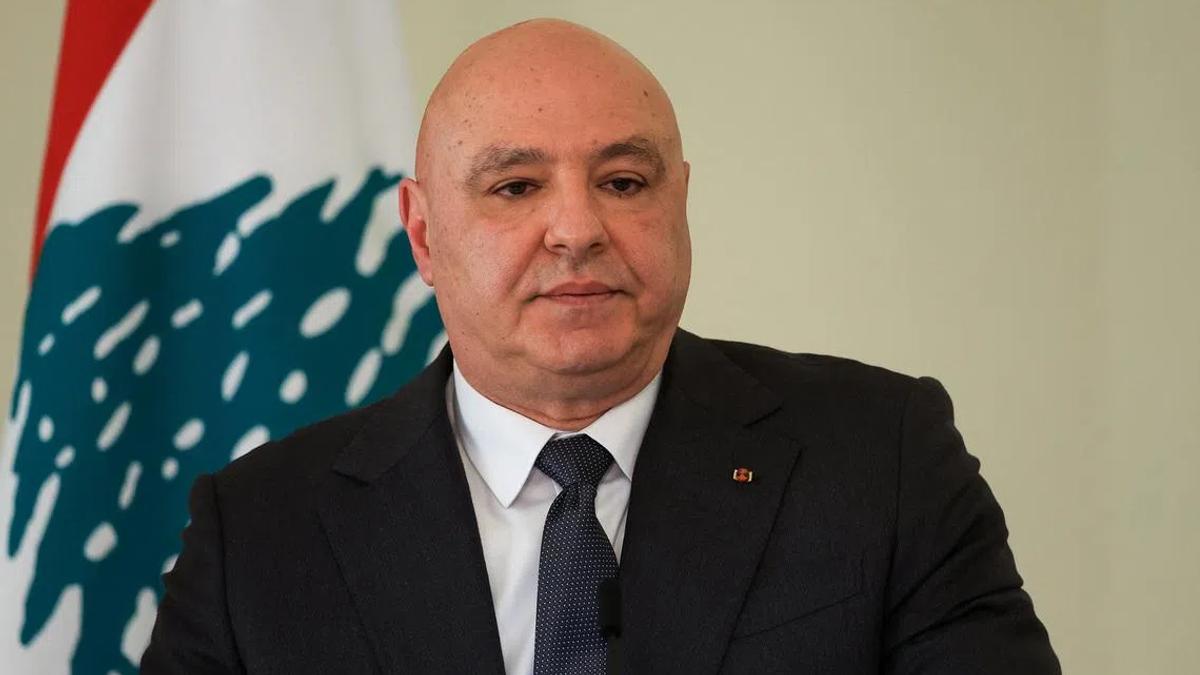
Lebanese President Joseph Aoun's visit to the White House on July 21, 2026, marks a critical juncture for Lebanon and the broader Middle East. The primary objective of his meeting with US President Donald Trump is to secure American diplomatic pressure on Israel to withdraw its forces from southern Lebanon and to facilitate the disarmament of the Iran-backed militant group Hezbollah. This high-stakes diplomatic initiative unfolds against a backdrop of renewed conflict, significant displacement, and a deeply fractured internal political landscape in Lebanon.
President Aoun, a former commander of Lebanon's US-backed army, assumed office in 2025, becoming the first Lebanese head of state in nearly two decades to visit the White House. His election followed a period of profound instability, including a devastating Israeli offensive against Hezbollah in 2024 and the weakening of Hezbollah's Syrian ally, President Bashar al-Assad. These events significantly diminished Hezbollah's previously decisive influence over the Lebanese state. Aoun's presidency was inaugurated with a clear pledge to reassert "the state’s right to a monopoly on arms," signaling a direct challenge to Hezbollah's entrenched military power.
His first year saw initial successes, with Lebanese troops deploying in southern Lebanon to collect Hezbollah weapons caches following a ceasefire, reportedly without significant opposition from a then-weakened Hezbollah. However, this fragile stability was shattered in March 2026 when a new war erupted. Hezbollah launched attacks against Israel in support of Iran, which was reportedly under US and Israeli attack. This triggered a fierce Israeli air and ground campaign, resulting in over 4,300 casualties, including a substantial number of children and women, and displacing hundreds of thousands of Lebanese citizens. Israeli troops currently occupy a swathe of southern Lebanon, further complicating the security and humanitarian situation.
In the wake of this renewed conflict, Aoun has taken the unprecedented step of calling for direct talks with Israel, a historic departure for a state that has been repeatedly invaded by its southern neighbor since 1978. This move, while leading to the highest-level face-to-face contacts in decades, has also drawn fierce criticism from Hezbollah and its allies, with Aoun publicly criticizing Hezbollah for initiating the war and accusing it of sacrificing Lebanon for Iran's interests. He has, however, stopped short of agreeing to meet Israeli Prime Minister Benjamin Netanyahu directly, indicating the delicate balance he must maintain domestically.
A central component of Aoun's White House agenda is to present a written proposal outlining a strategy to decommission Hezbollah's substantial arsenal. He intends to invoke a US-brokered June 26 agreement between Lebanon and Israel, which aims for Hezbollah's disarmament, a progressive Israeli troop withdrawal, and the establishment of peaceful bilateral relations. A Lebanese official indicated that Aoun believes only President Trump possesses the necessary leverage to compel Israel to withdraw its forces and assist Lebanon in fully restoring its sovereignty. This underscores the perceived critical role of US diplomatic pressure in resolving a conflict that has long defied internal and regional solutions.
The success of Aoun's mission carries profound geopolitical implications. For Lebanon, it represents a potential pathway out of a cycle of conflict, occupation, and internal division, allowing the state to reassert its authority over all its territory and security apparatus. Disarming Hezbollah would significantly alter the regional balance of power, diminishing Iran's primary non-state proxy in the Levant and potentially reducing a major source of instability for Israel. It would also be a crucial step towards addressing Lebanon's deep-seated economic crisis, which Aoun, a veteran of the 2019 financial implosion, has pledged to tackle through long-delayed reforms.
However, the challenges are formidable. Hezbollah's steadfast rejection of disarmament and direct talks with Israel highlights the deep ideological and strategic chasm within Lebanon. The group views its arms as essential for "resistance" against Israel and as a core component of its identity and influence. Furthermore, Israel's security concerns, particularly regarding its northern border, mean that any withdrawal would likely be contingent on robust and verifiable disarmament mechanisms for Hezbollah, which remain contentious. The US, while a key mediator, must navigate its complex relationship with both Israel and Lebanon, balancing security interests with diplomatic objectives.
Aoun's visit is a critical test of his presidency and a barometer for the future trajectory of Lebanon. Should he succeed in garnering significant US pressure on Israel and a credible path to Hezbollah's disarmament, it could usher in an era of greater stability and sovereignty for Lebanon. Conversely, a failure could further entrench Israeli occupation, empower Hezbollah, and deepen Lebanon's internal divisions, perpetuating a cycle of conflict and hindering much-needed economic reforms. The outcome will not only shape Lebanon's destiny but also significantly influence the broader geopolitical landscape of the Middle East, impacting regional security, the dynamics of proxy conflicts, and the prospects for long-term peace.
Editor's Note: Analysis is based on the provided article, which is dated July 19, 2026, and treats its content as factual reporting from that future date.
Source referenced: STRAITSTIMES
This brief was synthesized by our Editorial Engine and reviewed by The Ground Narrative team.


