TRENDING

Sunday, 18 October 2026
----------------------
7 Jumada Al-Awwal 1448 AH
Veteran politician Janez Jansa has returned as Slovenia's Prime Minister for a fourth term, forming a controversial right-leaning coalition. His new government's policies on historical revisionism, economic reform, and democratic oversight are sparking domestic division and raising questions about Slovenia's future role within the European Union.
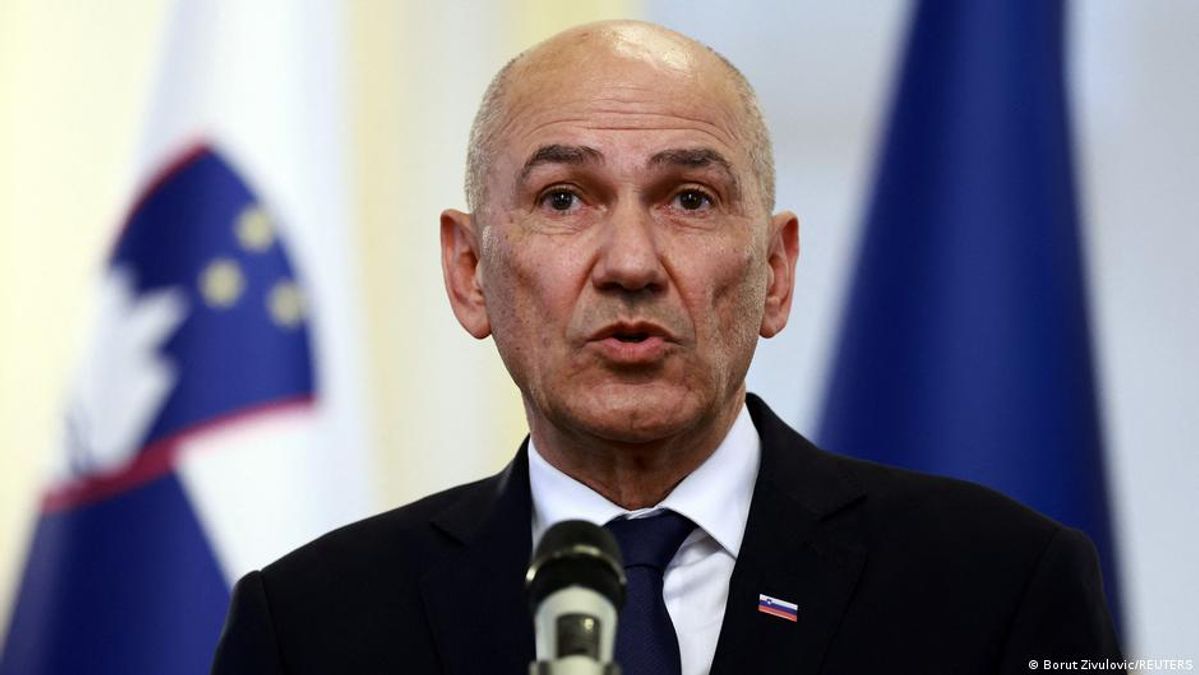
Janez Jansa, a veteran figure in Slovenian politics, has returned to the prime minister's office for an unprecedented fourth term, appointed on May 22 and confirmed by parliament on Thursday. His comeback, despite his Slovenian Democratic Party (SDS) finishing second in March's parliamentary election, underscores his formidable political acumen and coalition-building skills. However, his new right-leaning government has immediately ignited controversy, both domestically and concerning Slovenia's international standing, signaling a potentially turbulent mandate marked by ideological clashes and shifts in policy direction.
Jansa's ability to form a governing coalition, even after the center-left Freedom Movement won the most votes, highlights a critical aspect of Slovenian politics: the enduring power of experience and strategic negotiation. While former Prime Minister Robert Golob reportedly lacked the skills to unite a broad coalition, Jansa, described as knowing "all the tricks," successfully forged an alliance. This coalition includes the conservative New Slovenia, the center-right Democrats, and notably, the far-right populist Resnica party. The inclusion of Resnica, whose leader Zoran Stevanovic had previously pledged not to join a Jansa government but accepted SDS support for the parliamentary speaker role, has raised significant concerns. Resnica's platform, which includes anti-vaccination stances, skepticism towards the European Union, and a call for a referendum on NATO membership, introduces an element of unpredictability and potential radicalization into the government's agenda.
Jansa's administration has swiftly moved to implement a series of contentious policies, indicating a clear ideological agenda. An omnibus bill proposing significant tax cuts, which trade unions argue will disproportionately benefit the wealthy at the expense of public services, has already sparked calls for a referendum. Simultaneously, proposed amendments to the Parliamentary Investigation Act have drawn criticism from human rights activists, who fear they could "open the door to the establishment of a political police," raising alarms about potential infringements on civil liberties and democratic oversight. These legislative efforts suggest a concerted push to reshape Slovenia's economic and legal frameworks, potentially at the cost of social cohesion and established democratic checks and balances.
Perhaps the most divisive initiative is a law calling for the reburial of individuals killed in post-World War II reprisals, including alleged Nazi collaborators, at Ljubljana's most prestigious cemetery, alongside an annual day of commemoration for "victims of communist violence." This move, framed by Foreign Minister Tone Kajzer as a "basic civilizational fundament" to close a "painful and traumatic history," is fiercely opposed by Ljubljana's mayor, Zoran Jankovic, who argues against equating resistance fighters with those "sworn to the Nazis." This legislation is not merely about historical remembrance; it represents a profound ideological battle over national identity and the interpretation of Slovenia's complex past, threatening to deepen societal polarization and reignite historical grievances.
Jansa's return and the composition of his government have prompted questions about Slovenia's future role within the European Union. His long-standing alliance with Hungary's Viktor Orban, coupled with Resnica's EU-skeptic views, has led some observers to speculate whether Slovenia might replace Hungary as a leading member of the "EU's awkward squad." Such a shift could contribute to internal fragmentation within the bloc, particularly on issues of rule of law, migration, and foreign policy. However, the new Foreign Minister, Tone Kajzer, has sought to allay these fears, asserting that "The European Union is the basic concentric circle of the Slovenian political, economic and overall environment" and that Slovenia has "no question" of being a "troublemaker." He emphasized that his first trips would be to European partners, signaling an intent to maintain mainstream EU relations. Despite these assurances, symbolic actions, such as the immediate removal of the Palestinian flag from the main government building, suggest a potential reorientation of Slovenia's foreign policy, aligning more closely with certain right-wing European governments and potentially diverging from broader EU consensus on international issues.
The re-emergence of Janez Jansa as Slovenia's leader is more than a domestic political event; it reflects broader trends of rising populism, historical revisionism, and challenges to liberal democratic norms seen across parts of Central and Eastern Europe. While Slovenia is a relatively small EU member state, its internal political dynamics can have ripple effects on regional stability and EU cohesion. The government's confrontational stance on historical issues, its economic policies, and potential shifts in its foreign policy alignment could exacerbate domestic tensions and create friction with Brussels. Jansa's pre-emptive dismissal of street protests, stating that the future would be decided by elected bodies "not on the street," indicates a potential for increased authoritarian tendencies and a crackdown on civil society, reminiscent of his previous administration. The coming years will test whether Slovenia can navigate these internal divisions while maintaining its commitment to democratic principles and its established role within the European Union, or if it will indeed embark on a more isolationist and ideologically driven path.
Source referenced: DW
This brief was synthesized by our Editorial Engine and reviewed by The Ground Narrative team.