TRENDING

Monday, 26 October 2026
----------------------
15 Jumada Al-Awwal 1448 AH
Italy's Defence Minister Guido Crosetto has called for a new 'continental Europe of defence' alliance, aiming to bolster the continent's security independent of the United States. This proposal reflects growing European anxieties over Russian aggression and the perceived diminishing reliability of US security guarantees.
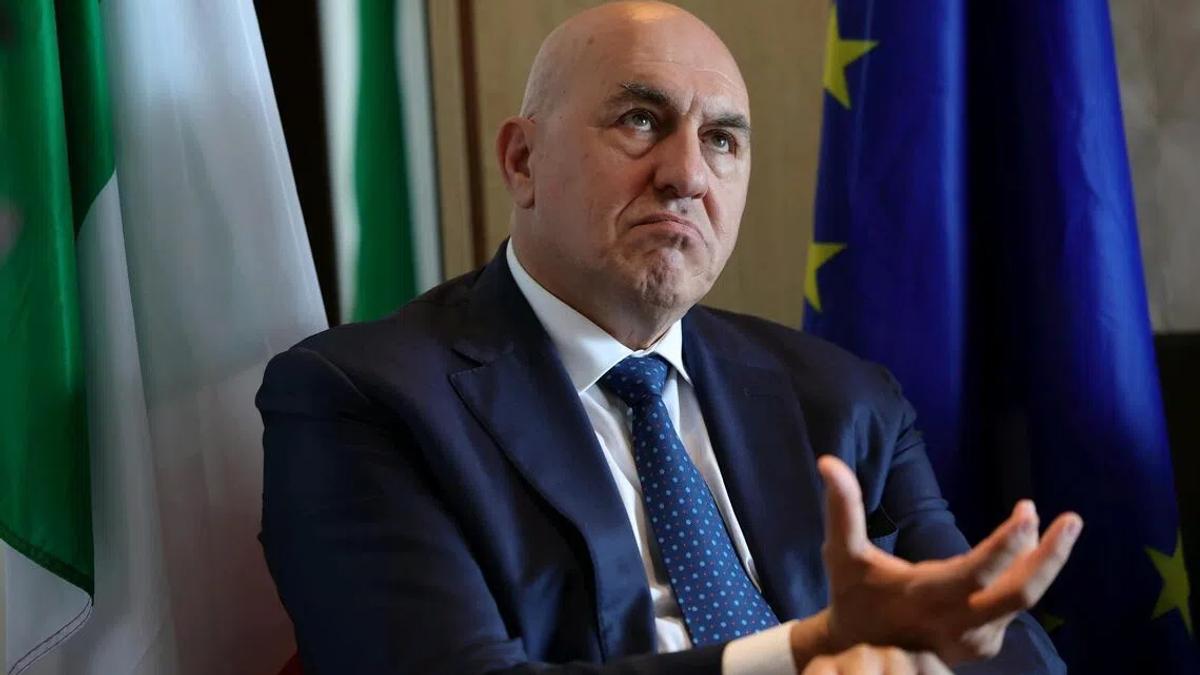
In a significant development for European security architecture, Italy's Defence Minister, Guido Crosetto, has formally proposed the creation of a new, comprehensive European military alliance. The initiative, first outlined in a letter to European counterparts in April and publicly discussed on June 6, 2026, advocates for a 'continental Europe of defence' that would unite the European Union's 27 member states with 13 other like-minded European nations, including key players such as Britain, Norway, Turkey, and critically, Ukraine.
This bold proposal by Rome is driven by a confluence of pressing geopolitical factors. Foremost among these is the escalating threat from Russia, particularly in the wake of its full-scale invasion of Ukraine. The conflict has underscored Europe's vulnerability and the urgent need for robust, collective defence capabilities. Years of underinvestment in national militaries across the continent have left many European nations feeling exposed, prompting a re-evaluation of their security posture.
Equally significant is the growing apprehension regarding the long-term reliability of the United States as Europe's primary security guarantor. Statements from figures like former US President Donald Trump, suggesting a potential reduction of America's military footprint in Europe and questioning the foundational principles of NATO, have fueled concerns about the transatlantic alliance's future. This uncertainty has galvanized a push for greater European strategic autonomy, a concept long championed by leaders such as French President Emmanuel Macron, who has consistently advocated for Europe to develop its own robust military capabilities.
Crosetto's proposal explicitly acknowledges that a credible European defence policy can no longer be confined solely to EU member states. He emphasizes that "the security of the continent extends beyond the confines of the EU and requires the full involvement of all partners who share vital interests and significant responsibilities." This inclusive vision aims to create a truly continental project, recognizing that shared security challenges necessitate a broader, more integrated response.
The inclusion of non-EU nations is a critical aspect of Italy's vision. Britain, a major European military power, remains a crucial partner despite Brexit. Norway, strategically located on NATO's northern flank, and Turkey, a pivotal player in the Black Sea region and a significant NATO contributor, are also identified as essential. Perhaps most notably, Crosetto highlights Ukraine's indispensable role, stating it is "destined to remain a front-line pillar of European security." This underscores a recognition that Ukraine's defence is intrinsically linked to the broader security of the European continent, regardless of its current EU or NATO membership status.
Should such an alliance materialize, it would represent a fundamental reshaping of how Europe organizes its collective defence. Since World War II, the US-led NATO system has been the bedrock of European security. While Crosetto's proposal does not explicitly call for the dissolution of NATO, it envisions a new, European-led structure operating alongside the existing alliance. This could lead to a more balanced distribution of security responsibilities within the transatlantic partnership, potentially strengthening Europe's voice and capacity within global security frameworks.
However, the path to implementation is fraught with challenges. The article notes that the proposal is "unlikely to be implemented" in its current form, reflecting the significant political, logistical, and financial hurdles involved. Creating a unified command structure, harmonizing defence policies, and securing the necessary funding from diverse national budgets would require unprecedented levels of cooperation and political will. Despite these difficulties, the very act of proposing such an alliance signals a profound shift in European strategic thinking, moving towards a more proactive and self-reliant approach to security.
The Italian initiative is not isolated. It aligns with other calls for greater European defence integration, including suggestions for a unified EU army. Italy has already participated in smaller, non-US-inclusive military partnerships with France, Germany, Poland, and Britain, indicating a practical move towards diversified security arrangements. This broader trend suggests that even if Crosetto's specific proposal does not fully materialize, the underlying impetus for a more autonomous and robust European defence capability will continue to gain momentum.
Ultimately, this proposal reflects Europe's evolving geopolitical consciousness. Faced with a resurgent Russia and an increasingly unpredictable global order, European leaders are recognizing the imperative to take greater ownership of their own security. The debate surrounding Italy's proposal will undoubtedly shape future discussions on defence spending, military cooperation, and the very identity of Europe as a geopolitical actor on the world stage.
Source referenced: STRAITSTIMES
This brief was synthesized by our Editorial Engine and reviewed by The Ground Narrative team.