TRENDING

Monday, 26 October 2026
----------------------
15 Jumada Al-Awwal 1448 AH
Israeli forces launched a deadly strike on Tyre, Lebanon, killing at least eight after issuing an unprecedented city-wide evacuation order, marking a significant escalation in the ongoing conflict with Hezbollah. The action has exacerbated a severe humanitarian crisis, displacing a fifth of Lebanon's population and prompting Doctors Without Borders to suspend operations.
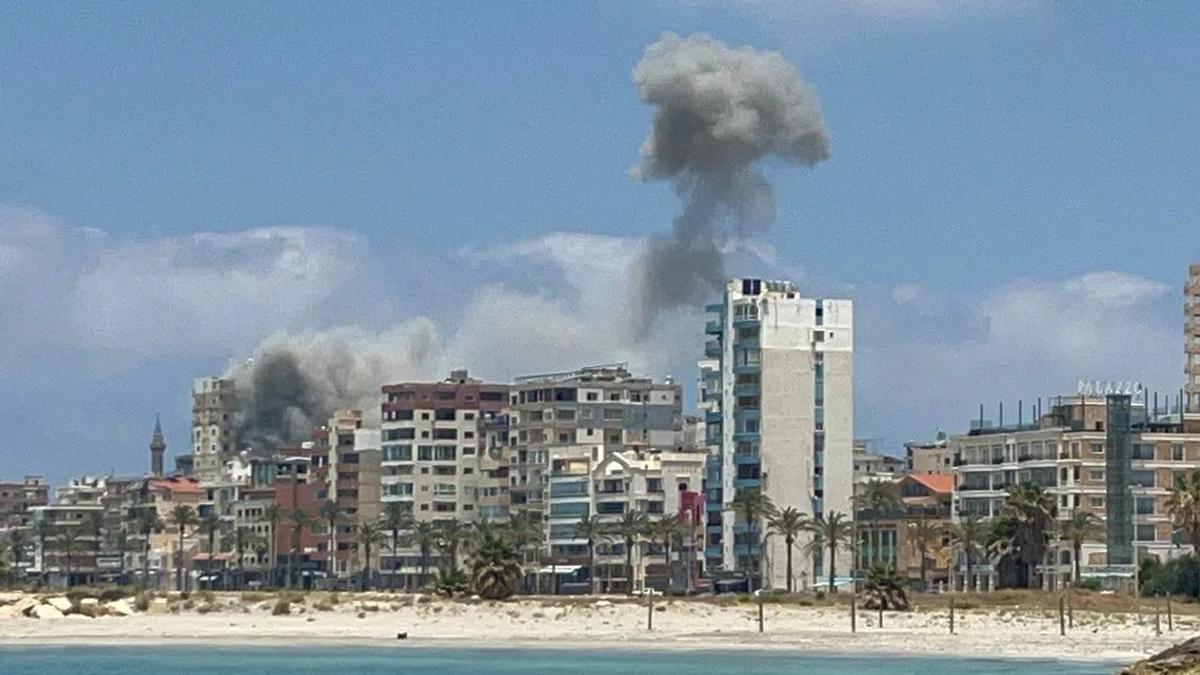
On June 9, 2026, Israel conducted a deadly strike on the historic port city of Tyre in southern Lebanon, resulting in the deaths of at least eight people, as reported by the Lebanese health ministry. This significant event followed an unprecedented online evacuation order issued by the Israeli military for the entire city, including its northwestern Christian quarter, which had previously been excluded from such directives. The strike, described as one of the deadliest on Tyre since the conflict between Israel and the Lebanese armed group Hezbollah erupted on March 2, has intensified concerns over regional stability and the escalating humanitarian crisis.
The strike on Tyre represents a notable escalation in the ongoing hostilities between Israel and Hezbollah. The Israeli military had previously alleged that Iran-backed Hezbollah militants were operating and hiding within Tyre, particularly in the Christian quarter, though specific evidence was not publicly provided. Israel's warning to the city's Christian residents to demand Hezbollah's departure, coupled with the threat of evacuation, suggests a multi-pronged strategic objective. Firstly, it aims to degrade Hezbollah's operational capabilities and infrastructure within a significant urban center. Secondly, it appears to be an attempt to create internal divisions within Lebanese society, potentially isolating Hezbollah by framing its presence as a direct threat to civilian populations and specific communities.
The broader conflict, which commenced when Hezbollah launched rockets at Israel in support of its ally Iran, has seen Israel retaliate with extensive aerial bombardments and a ground invasion that has occupied swathes of southern Lebanon. Despite a U.S.-announced ceasefire on April 16, fighting has persisted, highlighting the deep-seated nature of the conflict and the challenges in achieving de-escalation through diplomatic means alone. Israel's continued issuance of evacuation orders, which have effectively displaced approximately a fifth of Lebanon's population, including residents from areas far beyond the immediate front lines, underscores a strategy of creating buffer zones and exerting pressure on Hezbollah's operational environment.
The human cost of the escalating conflict is profound. The strike on Tyre not only claimed at least eight lives but also forced thousands of residents to flee, with civil defense teams assisting elderly individuals into temporary shelters. The humanitarian organization Doctors Without Borders (MSF) expressed deep concern over what it termed "forced displacement practices," arguing that these actions expose civilians to further harm by compelling them to move under unsafe and chaotic conditions. Consequently, MSF was compelled to suspend its medical activities at several nearby hospitals and mobile clinics for the day, severely impacting healthcare provision in an already vulnerable region.
The displacement of a substantial portion of Lebanon's population, coupled with the disruption of essential services, points to a deepening humanitarian crisis. Such large-scale population movements place immense strain on host communities and aid organizations, exacerbating existing economic and social challenges in Lebanon, a country already grappling with severe financial instability. The actions raise significant questions regarding adherence to international humanitarian law, particularly concerning the protection of civilians and the principles of proportionality and distinction in armed conflict.
The strike on Tyre and the broader escalation carry significant regional implications. The persistent conflict between Israel and Hezbollah, an influential non-state actor with strong ties to Iran, remains a critical flashpoint in the Middle East. The failure of the U.S.-brokered ceasefire to halt hostilities underscores the complexities of achieving lasting peace and the limitations of external diplomatic interventions without robust enforcement mechanisms or a fundamental shift in the strategic calculus of the belligerents.
The ongoing conflict risks drawing in other regional actors, potentially destabilizing an already volatile Middle East. Iran's continued support for Hezbollah ensures that the conflict remains intertwined with broader regional power dynamics and the rivalry between Tehran and its adversaries. For Lebanon, the conflict further undermines its sovereignty and internal stability, as its territory becomes a battleground for regional proxy conflicts. The long-term consequences include not only physical destruction and loss of life but also the erosion of state authority and the exacerbation of sectarian tensions.
The immediate future suggests a continued cycle of strikes and counter-strikes, with the potential for further escalation if either side perceives a strategic advantage or feels sufficiently provoked. The international community faces the daunting task of finding a viable path to de-escalation, ensuring humanitarian access, and addressing the root causes of the conflict to prevent a wider regional conflagration.
Source referenced: STRAITSTIMES
This brief was synthesized by our Editorial Engine and reviewed by The Ground Narrative team.