TRENDING

Sunday, 4 October 2026
----------------------
23 Rabi' Al-Thani 1448 AH
Israel conducted airstrikes on Hezbollah infrastructure in Beirut's southern suburbs, citing cross-border fire, even as a supposed ceasefire in southern Lebanon remains violated. This escalation occurred on the same day former President Trump announced an impending deal to end the 'war on Iran,' highlighting the complex and interconnected geopolitical landscape of the Middle East.
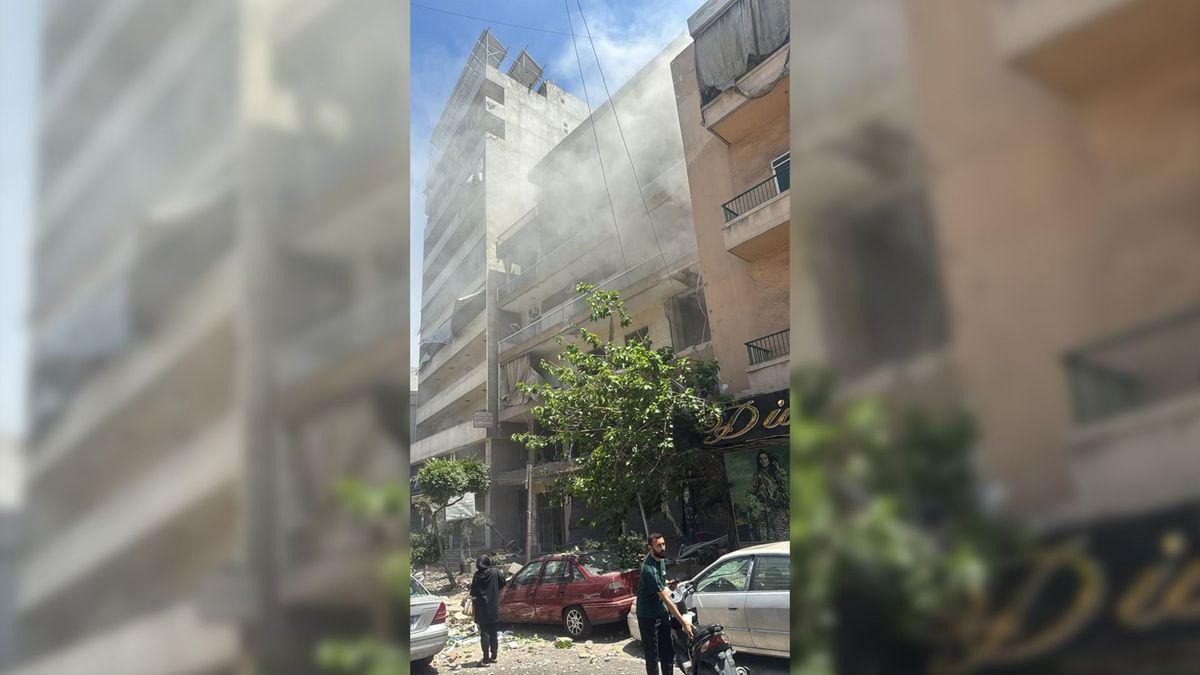
On June 14, 2026, Israel launched airstrikes against targets in the southern suburbs of Beirut, Lebanon, a known stronghold of the Iran-backed Hezbollah movement. The Israeli military stated its actions were a direct response to recent cross-border fire originating from Lebanese territory, asserting that the strikes targeted Hezbollah 'infrastructure.' This incident marks a significant escalation, moving beyond the frequent exchanges in southern Lebanon to directly impact the Lebanese capital's vicinity.
The strikes occurred amidst a backdrop of persistent low-intensity conflict along the Israel-Lebanon border. Reports indicate that Israel has been engaged in daily bombardments and incursions into southern Lebanon, actions that are described as violations of a 'supposed ceasefire.' This continuous friction underscores the fragility of any existing de-escalation agreements and the inherent instability of the border region.
The timing of the Israeli operation carries profound geopolitical implications. The airstrikes in Beirut coincided precisely with an announcement by former U.S. President Donald Trump, who stated that a deal to 'end the war on Iran' would be signed on the upcoming Sunday. This juxtaposition of events immediately draws attention to the intricate web of alliances, rivalries, and strategic calculations that define the Middle East.
Israel's decision to strike deep into Lebanese territory, targeting a key Iranian proxy, on the very day of a major U.S.-Iran diplomatic overture, can be interpreted in several ways. It could be a deliberate signal from Israel, asserting its freedom of action and its unwavering commitment to countering perceived threats from Iran and its proxies, irrespective of broader diplomatic shifts. Such a move might aim to influence the terms or implementation of any potential U.S.-Iran agreement, or to demonstrate that Israel will not be constrained by external diplomatic processes when it perceives its security to be at stake.
Conversely, the cross-border fire that prompted the Israeli response could also be a calculated move by Hezbollah or its Iranian patrons. It might serve as a message of defiance, a test of Israeli resolve, or even an expression of dissatisfaction with the potential terms of a U.S.-Iran deal, should they be perceived as unfavorable to the 'Axis of Resistance.'
For Israel, the primary motivation behind targeting Hezbollah infrastructure is likely rooted in its long-standing policy of preventing the group from acquiring advanced weaponry and degrading its operational capabilities. Hezbollah, a powerful non-state actor, is viewed by Israel as a direct threat, particularly given its extensive missile arsenal and its close ties to Iran. The strikes aim to reinforce Israel's deterrence posture and to disrupt Hezbollah's ability to launch attacks or project power.
The potential 'deal to end the war on Iran,' as articulated by Trump, represents a significant diplomatic development. While the specifics remain undisclosed, such an agreement would likely seek to de-escalate tensions between Washington and Tehran, potentially altering the regional balance of power. For Israel, any U.S. rapprochement with Iran is viewed with caution, given its profound concerns about Iran's nuclear program, its regional hegemonic ambitions, and its support for groups like Hezbollah and Hamas.
The strike on Beirut further destabilizes Lebanon, a nation already grappling with severe economic crises, political paralysis, and the lingering effects of past conflicts. The targeting of Hezbollah in the capital's suburbs risks drawing Lebanon deeper into a regional conflict, potentially leading to widespread civilian casualties and further undermining the country's sovereignty and fragile internal cohesion. The continued violation of the ceasefire in southern Lebanon also highlights the precarious security situation for Lebanese civilians living in border areas.
The confluence of these events underscores the interconnectedness of regional conflicts. Actions taken by Israel against Hezbollah are inextricably linked to the broader U.S.-Iran dynamic. Any shift in the relationship between Washington and Tehran will inevitably reverberate across the Middle East, impacting proxy conflicts, security alliances, and the strategic calculations of all regional actors. The coming days, particularly with the anticipated signing of the U.S.-Iran deal, will be critical in determining the immediate and long-term trajectory of these complex geopolitical tensions.
Source referenced: ALJAZEERA
This brief was synthesized by our Editorial Engine and reviewed by The Ground Narrative team.


