TRENDING

Monday, 26 October 2026
----------------------
15 Jumada Al-Awwal 1448 AH
Israeli Security Minister Itamar Ben-Gvir's call to arrest Lebanese women and children has sparked international concern, raising questions about the motivations behind this move and its potential consequences for regional stability.
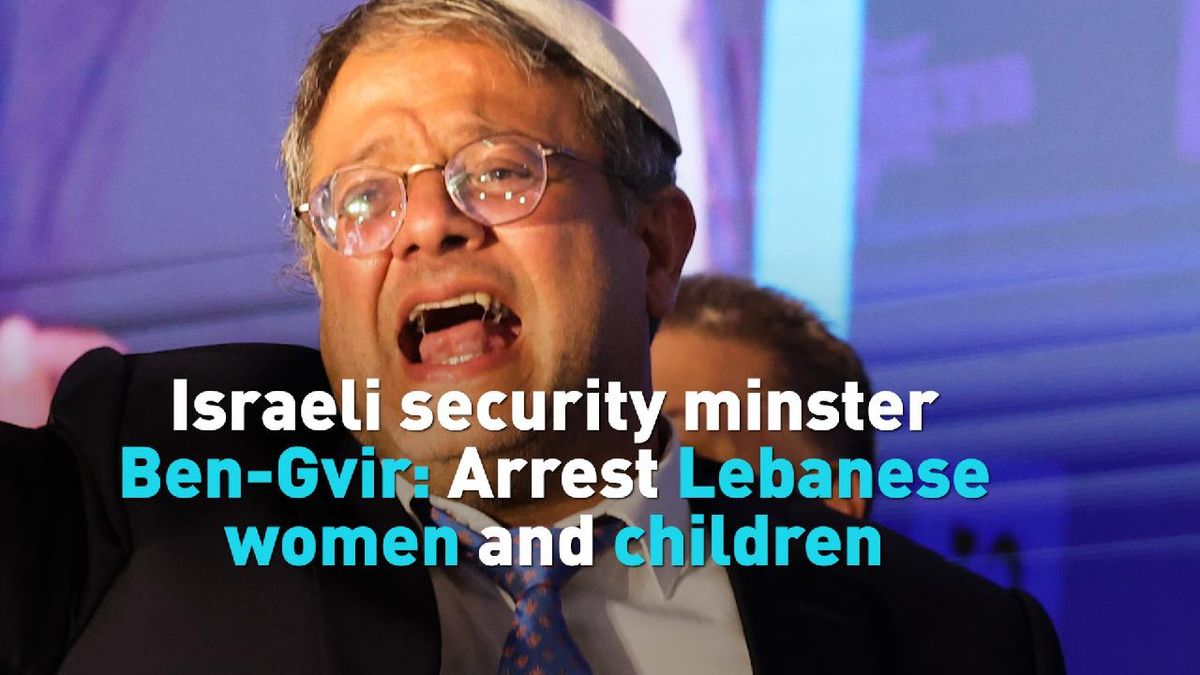
The recent statement by Israeli Security Minister Itamar Ben-Gvir, calling for the arrest of Lebanese women and children to fight Hezbollah, has sent shockwaves across the Middle East. This move, made during a Security Cabinet meeting on June 8, has sparked international concern and raised questions about the motivations behind this escalation.
The Israeli-Lebanese conflict has a long and complex history, with both countries having fought several wars since Israel's establishment in 1948. The most recent conflict, in 2006, resulted in a fragile ceasefire, which has been maintained by a United Nations peacekeeping force. However, tensions have continued to simmer, with both sides accusing each other of violating the ceasefire.
Ben-Gvir's statement is seen as a significant escalation in Israel's strategy against Hezbollah, a Shia Islamist group that has been a key player in Lebanese politics since the 1980s. Hezbollah has been a thorn in Israel's side, with its military capabilities and ideological stance making it a formidable opponent. By calling for the arrest of Lebanese women and children, Ben-Gvir may be attempting to undermine Hezbollah's support base and create a sense of fear and uncertainty among the civilian population.
The implications of Ben-Gvir's statement are far-reaching, with potential consequences for regional stability. A further escalation of violence could lead to a wider conflict, drawing in other regional players, including Iran and Syria. This could have significant implications for the global economy, with oil prices potentially soaring and trade routes being disrupted.
The future consequences of Ben-Gvir's statement are uncertain, but one thing is clear: the situation in Lebanon is volatile and prone to escalation. The international community must remain vigilant and work towards a peaceful resolution to the conflict. The United Nations, in particular, must play a key role in mediating a ceasefire and promoting a lasting peace.
Editor's Note: The analysis is based on publicly available information and may not reflect the full complexity of the situation on the ground.
Source referenced: CGTN
This brief was synthesized by our Editorial Engine and reviewed by The Ground Narrative team.


