TRENDING

Friday, 16 October 2026
----------------------
5 Jumada Al-Awwal 1448 AH
Iran's new Supreme Leader, Mojtaba Khamenei, has pledged vengeance for his father's assassination by a US-Israeli airstrike, signaling a dangerous escalation in the Middle East. This declaration, made amidst a "four-month war" and a fractured truce, raises critical questions about regional stability, the new leader's legitimacy, and the future of US-Iran relations.
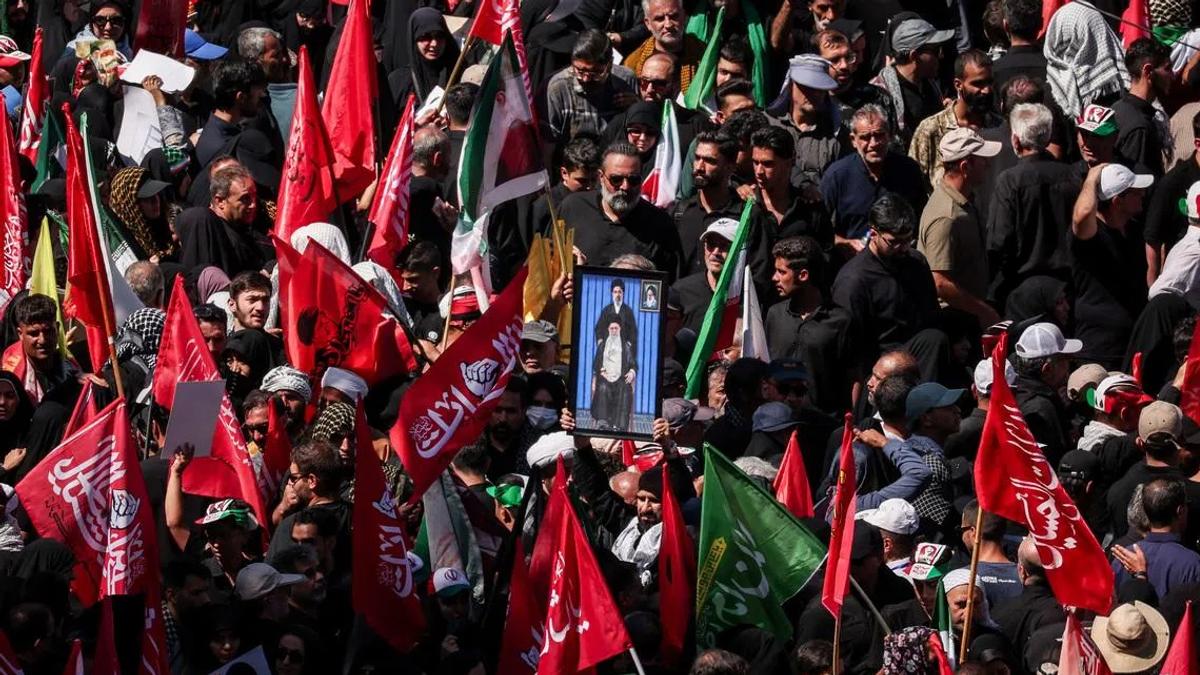
The recent pledge of vengeance by Iran's newly appointed Supreme Leader, Ayatollah Mojtaba Khamenei, for the death of his father and predecessor, Ayatollah Ali Khamenei, marks a significant escalation in the already fraught geopolitical landscape of the Middle East. Delivered via a written statement on state television on July 11, 2026, this declaration not only signals Iran's intent to retaliate for the US-Israeli airstrike that killed the elder Khamenei on February 28, 2026, but also underscores the complex interplay of succession, regional conflict, and international diplomacy.
Ayatollah Mojtaba Khamenei's ascension to the supreme leadership on March 8, 2026, following his father's death, has been shrouded in an unusual degree of secrecy and uncertainty. The new leader has not been seen publicly since the airstrike, with senior sources indicating he sustained facial disfigurement and other injuries. This prolonged absence from the public eye, coupled with the reliance on a written statement rather than a direct address, raises questions about his health, his ability to project authority, and the stability of the Iranian leadership. In a system where the Supreme Leader's public presence and charisma are vital for legitimacy, Mojtaba's invisibility could fuel domestic unease. His appointment, however, was secured with the crucial backing of the powerful Revolutionary Guards, indicating a consolidation of power within the hardline establishment. The call for vengeance, framed as "the demand of the nation" and a "divine mission," serves as a potent tool to rally support, assert his authority, and project strength in the face of perceived external aggression and internal scrutiny.
The pledge of revenge directly targets the United States and Israel, whom Iran holds responsible for the assassination of Ayatollah Ali Khamenei. This event occurred at the outset of what the article describes as a "four-month war," a conflict that has seen a recent exchange of attacks between US and Iranian forces. This flare-up has cast serious doubt over a previously agreed truce between Washington and Tehran, which was ostensibly aimed at de-escalating the conflict and, from Iran's perspective, delivering "major economic benefits." Despite the declared end of the ceasefire by US President Donald Trump, both countries have reportedly agreed to continue talks, highlighting a paradoxical situation where diplomatic channels remain open even amidst military escalation and explicit threats of retaliation. This dual track of engagement and confrontation reflects the deep-seated mistrust and strategic competition that define US-Iran relations, where each side seeks to gain leverage while avoiding an all-out war.
The implications of Iran's vow of vengeance extend far beyond its immediate borders. The Middle East is a region already destabilized by numerous proxy conflicts and geopolitical rivalries. An Iranian retaliatory action, whether direct or through its network of regional proxies, could ignite a broader conflagration, drawing in other regional and international actors. The statement's reference to avenging "all the martyrs of these two wars" suggests a broader historical and ongoing conflict narrative, potentially encompassing Iran's involvement in various regional theaters. Furthermore, Mojtaba Khamenei's appeal to "every free person around the world" to fulfill "a part of this divine mission" indicates an attempt to internationalize the conflict. This rhetoric aims to galvanize anti-Western sentiment globally, potentially mobilizing non-state actors and sympathetic nations to support Iran's cause, thereby expanding the scope of potential retaliation beyond direct state-on-state confrontation.
The current situation presents a precarious balance. Iran's leadership, under a new and largely unseen Supreme Leader, is under immense pressure to demonstrate strength and fulfill its pledge of retaliation. The US and Israel, having conducted the initial strike, face the challenge of deterring further Iranian aggression while managing the risks of escalation. The continuation of talks alongside military posturing suggests a complex strategic calculus on both sides, where neither party appears eager for an uncontrolled escalation, yet both are prepared to assert their interests forcefully. The coming weeks will be critical in determining whether the fragile diplomatic efforts can prevent a full-scale conflict or if the cycle of vengeance will plunge the region into deeper instability. The world watches closely as Iran navigates this critical juncture, with the potential for its actions to reshape the geopolitical landscape of the Middle East for years to come.
Source referenced: STRAITSTIMES
This brief was synthesized by our Editorial Engine and reviewed by The Ground Narrative team.