TRENDING

Friday, 16 October 2026
----------------------
5 Jumada Al-Awwal 1448 AH
The forced hospitalization of prominent Indian activist Sonam Wangchuk, 20 days into a hunger strike, has intensified a nationwide youth protest movement against alleged corruption in India's national examination system. This development highlights growing public disillusionment and poses significant governance challenges for the Indian government.
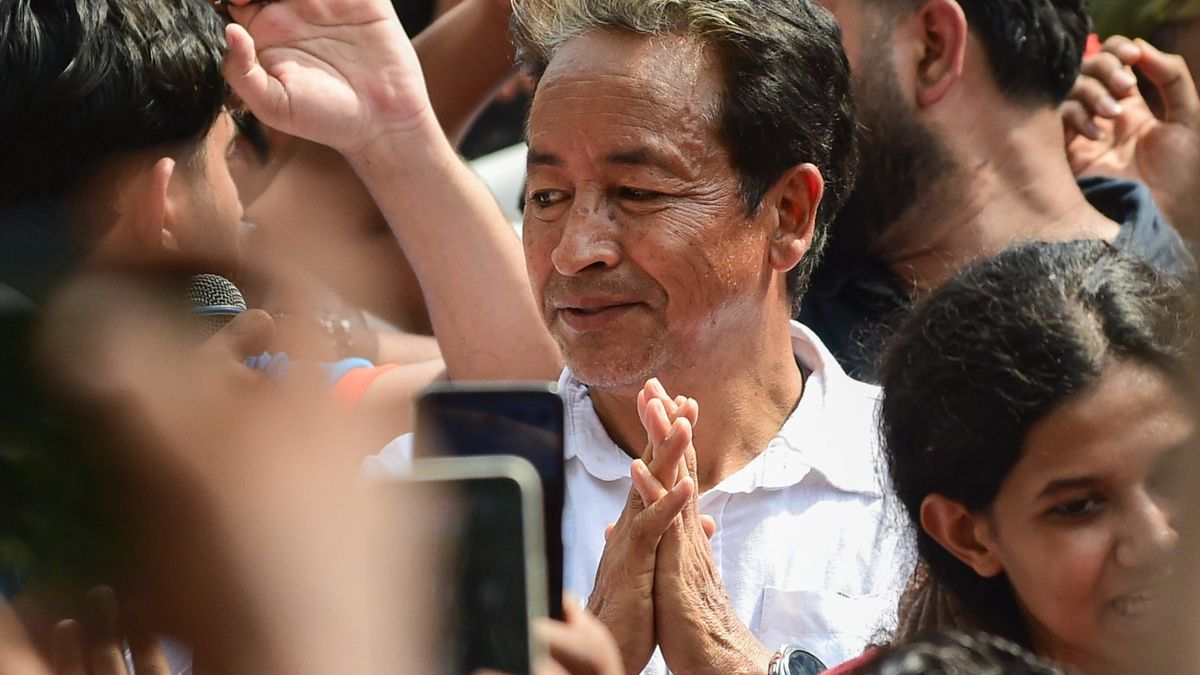
The political landscape in India is currently marked by escalating tensions following the forced hospitalization of Sonam Wangchuk, a renowned Indian activist and education reformer. Wangchuk, 59, was removed by police from a protest site in New Delhi on July 18, 2026, after a 20-day hunger strike. His fast was a central component of a burgeoning youth movement, the 'Cockroach Janta Party' (CJP), which is demanding the resignation of Education Minister Dharmendra Pradhan, a comprehensive overhaul of the national examination system, and compensation for families of students who have died by suicide amidst the crisis.
The police action, carried out on the orders of the High Court citing Wangchuk's deteriorating health and expert medical advice, has ignited further outrage among protesters. While authorities maintained the intervention was for essential medical care, Wangchuk's wife, Gitanjali J Angmo, stated her husband's intention to continue his fast and expressed concerns about enforced medical treatment, underscoring the delicate balance between state intervention and individual autonomy in protest.
The current wave of protests stems from widespread allegations of corruption and mismanagement within India's national examination system. A critical flashpoint occurred in May when the original medical entrance exam, taken by approximately 2.2 million aspiring doctors, was cancelled due to question leaks. This necessitated a retake under heavy security in June, causing immense stress and frustration among students who had dedicated months to rigorous study. The government's temporary ban on the messaging app Telegram, aimed at preventing further leaks, further highlighted the severity of the issue.
This crisis has profound implications for India's vast youth demographic. The initial spark for the CJP movement was a Supreme Court chief justice's comment likening some unemployed young people to 'cockroaches,' an insult that was ironically adopted by the disillusioned youth as a badge of honor. This sentiment reflects a deeper frustration with perceived systemic failures in education and employment policies, which are critical for the future of a nation with one of the world's largest young populations.
The unfolding events carry significant geopolitical and domestic implications for India. Domestically, the widespread youth discontent, fueled by allegations of corruption in a crucial public service like education, poses a direct challenge to the government's legitimacy and governance capabilities. The scale of the movement, evidenced by millions of social media followers and hundreds of physical protesters at Jantar Mantar, indicates a significant erosion of public trust in institutions responsible for ensuring fairness and opportunity.
From a geopolitical perspective, the stability and effective governance of India, a rising global power, are paramount. A nation grappling with widespread youth disillusionment and protests over systemic corruption can face internal instability, potentially diverting focus from its broader strategic objectives and economic growth ambitions. The ability of the Indian government to address these grievances transparently and effectively will be closely watched by international observers, as it reflects on the robustness of its democratic institutions and its capacity to manage internal challenges.
Furthermore, the incident highlights the ongoing tension between the state's prerogative to maintain public order and the fundamental rights to protest and freedom of expression. The deployment of additional police and paramilitary personnel around the protest site and hospital, while framed as precautionary, signals a firm stance by authorities against potential escalation, setting a precedent for how future dissent might be managed.
As further demonstrations are planned to coincide with the start of the Indian parliament's session, the government faces a critical test. The demands of the CJP movement—ministerial resignation, systemic reform, and compensation—are substantial and resonate with a significant segment of the population. The handling of Sonam Wangchuk's situation and the broader protest will be a key indicator of the government's approach to public grievances and its commitment to accountability.
Failure to address the root causes of this disillusionment could lead to sustained social unrest, impacting India's human capital development and long-term economic trajectory. Conversely, a transparent and responsive approach could help restore public trust and reinforce democratic principles. The coming weeks will be crucial in determining the trajectory of this significant domestic challenge and its broader implications for India's standing on the global stage.
Source referenced: ALJAZEERA
This brief was synthesized by our Editorial Engine and reviewed by The Ground Narrative team.