TRENDING

Friday, 16 October 2026
----------------------
5 Jumada Al-Awwal 1448 AH
India's booming salt industry relies on the labor of marginalized Agariva workers, who face extreme conditions in the country's salt deserts. This exposé sheds light on the human cost of the world's most popular seasoning.
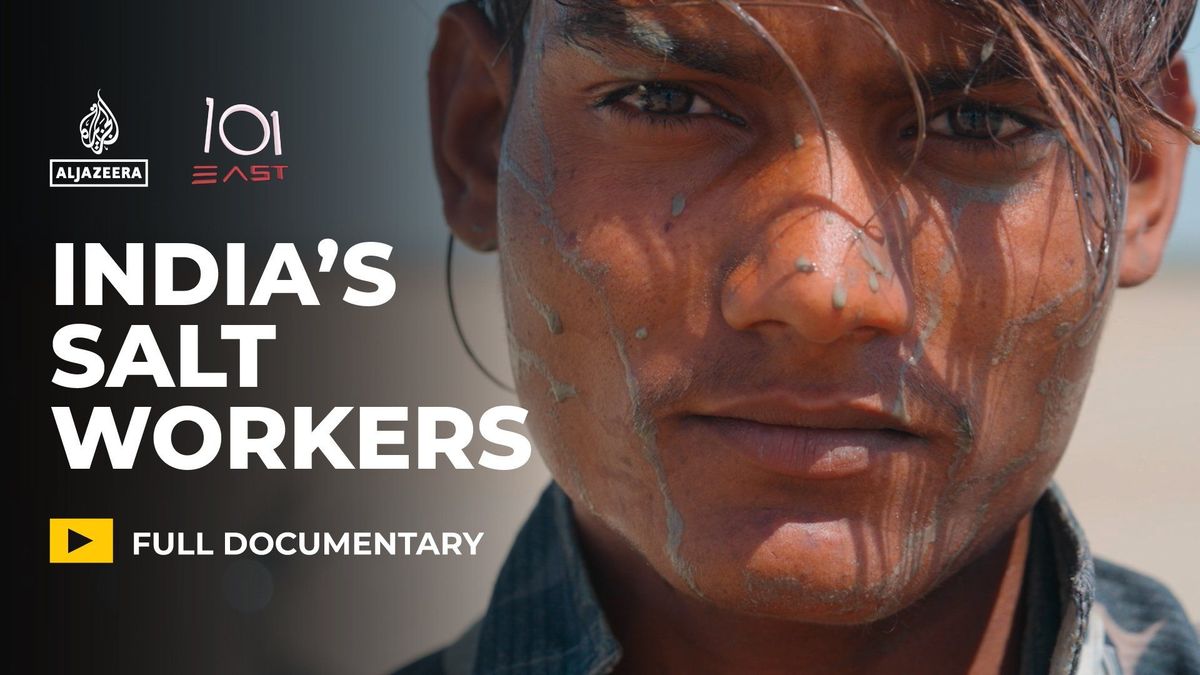
India is the world's third-largest producer and exporter of salt, with a booming industry that supplies the seasoning to dinner tables globally. However, behind this lucrative trade lies a hidden cost: the labor of marginalized Agariva workers, who toil in extreme conditions in the country's salt deserts.
The Agariva community, a Scheduled Tribe in India, has been forced to work in the salt industry for generations. They are the backbone of the industry, responsible for extracting salt from the earth through manual labor. Despite their crucial role, the Agarivas face numerous hardships, including poverty, lack of access to basic amenities, and limited social mobility.
101 East's investigation into the salt industry reveals the harsh realities faced by Agariva workers. They work in extreme temperatures, often without proper protective gear, and are exposed to hazardous chemicals. The workers' living conditions are also deplorable, with many living in makeshift shelters without access to clean water or sanitation.
The salt industry's reliance on Agariva labor has significant regional implications. The industry's growth has led to the displacement of local communities, who are forced to leave their ancestral lands to make way for salt production. This has resulted in social and economic tensions, which could have long-term consequences for regional stability.
India's salt industry has a long history, dating back to the British colonial era. The industry's growth was driven by the British need for salt, which was used to preserve food for their colonial armies. Today, India's salt industry is driven by global demand, with the country exporting salt to countries around the world.
The story of India's salt workers highlights the human cost of global demand. It raises important questions about the ethics of international trade and the treatment of marginalized communities. As the world's population continues to grow, the demand for salt and other commodities will only increase. It is essential that we acknowledge the human cost of this demand and work towards creating a more equitable and sustainable global economy.
Editor's Note: While this analysis provides a comprehensive overview of the salt industry and its impact on Agariva workers, some aspects of the industry's future remain uncertain.
Source referenced: ALJAZEERA
This brief was synthesized by our Editorial Engine and reviewed by The Ground Narrative team.